welcome!

START YOUR EXPERIENCE AND INTERACT WITH THE 3D MAP OF EVENTS, ACCESS THE TIMELINE OF HISTORICAL EVENTS OR ENJOY THE VIDEO introduction

MAPPA INTERATTIVA 3D

INTERAGISCI CON LA MAPPA 3D
ENTER

MAPPA INTERATTIVA 2D

INTERAGISCI CON LA MAPPA 2D
ENTER

TIMELINE

ACCEDI A TUTTI GLI APPROFONDIMENTI STORICI CONTENUTI NELLA MAPPA INTERATTIVA
ENTRA

VIDEO INTEGRALE

GUARDA IL VIDEO DI INTRODUZIONE AGLI EVENTI DURATA 7 MINUTI
GUARDA IL VIDEO

INTERACTIVE MAP

MM

FULL VIDEO

HH

TIMELINE

HH
SELECT LANGUAGE
SELECT LANGUAGE
BACK
CREDITS
CREDITS
VIEW

16 OTTOBRE 1943

Geografia di una Deportazione

Created with Fabric.js 1.7.22

Villa Wolkonsky, via Ludovico di Savoia 11

Ugo Foà e Dante Almansi sono convocati da Herbert Kappler a Villa Wolkonsky per la richiesta dei cinquanta chili d'oro
APPROFONDISCI
Created with Fabric.js 1.7.22

Villa Wolkonsky, via Ludovico di Savoia 11

Ugo Foà e Dante Almansi sono convocati da Herbert Kappler a Villa Wolkonsky per la richiesta dei cinquanta chili d'oro
APPROFONDISCI
Created with Fabric.js 1.7.22

Villa Wolkonsky, via Ludovico di Savoia 11

Ugo Foà e Dante Almansi sono convocati da Herbert Kappler a Villa Wolkonsky per la richiesta dei cinquanta chili d'oro
APPROFONDISCI

26 Settembre 1943

26-28 Settembre 1943

Created with Fabric.js 1.7.22

Comunità Ebraica

Raccolta dell'oro
APPROFONDISCI
Created with Fabric.js 1.7.22

Comunità Ebraica

Raccolta dell'oro
APPROFONDISCI
Created with Fabric.js 1.7.22

Via Tasso 155

Consegna dell'oro
APPROFONDISCI
Created with Fabric.js 1.7.22

Via Tasso 155

Consegna dell'oro
APPROFONDISCI

28 Settembre 1943

29 Settembre 1943

Created with Fabric.js 1.7.22

Comunità Ebraica

Saccheggio dell'Archivio
APPROFONDISCI
Created with Fabric.js 1.7.22

Comunità Ebraica

Saccheggio dell'Archivio
APPROFONDISCI
Created with Fabric.js 1.7.22

Hotel Bernini, piazza Bernini 23

Theodor Dannecker e i suoi ufficiali prendono alloggio all'Hotel Bernini
APPROFONDISCI
Created with Fabric.js 1.7.22

Hotel Bernini, piazza Bernini 23

Theodor Dannecker e i suoi ufficiali prendono alloggio all'Hotel Bernini
APPROFONDISCI

4 Ottobre 1943

5-7 Ottobre 1943

Created with Fabric.js 1.7.22

Via Tasso 155

Telegrammi di Kappler all'Ufficio Centrale per la Sicurezza del Reich a Berlino
APPROFONDISCI
Created with Fabric.js 1.7.22

Via Tasso 155

Telegrammi di Kappler all'Ufficio Centrale per la Sicurezza del Reich a Berlino
APPROFONDISCI
Created with Fabric.js 1.7.22

Comunità Ebraica

Saccheggio della biblioteca
APPROFONDISCI
Created with Fabric.js 1.7.22

Comunità Ebraica

Saccheggio della biblioteca
APPROFONDISCI

14 Ottobre 1943

16 Ottobre 1943

Created with Fabric.js 1.7.22

Tutta Roma

La razzia non risparmia nessuno, neanche le persone malate e incapaci di muoversi. E non risparmia nessuna zona della città, che viene rastrellata metodicamente e integralmente. Meno della metà degli arrestati provengono dal quartiere ebraico, l’altra parte dal resto della città.
APPROFONDISCI
Created with Fabric.js 1.7.22

Tutta Roma

DA DEFINIRE
APPROFONDISCI
Created with Fabric.js 1.7.22

Collegio militare (Palazzo Salviati), via della Lungara 82-83 e Piazza della Rovere

Le persone arrestate durante la razzia del 16 ottobre vengono rinchiuse nel Collegio militare fino al 18 ottobre, quando sono trasferite presso la stazione Tiburtina.
APPROFONDISCI
Created with Fabric.js 1.7.22

Collegio militare (Palazzo Salviati), via della Lungara 82-83 e Piazza della Rovere

Le persone arrestate durante la razzia del 16 ottobre vengono rinchiuse nel Collegio militare fino al 18 ottobre, quando sono trasferite presso la stazione Tiburtina.
APPROFONDISCI

16-18 ottobre 1943

18-23 ottobre 1943

Created with Fabric.js 1.7.22

Stazione Tiburtina - Auschwitz-Birkenau

La mattina del 18 ottobre, 1022 ebrei sono trasportati, a bordo di camion, dal Collegio militare alla stazione Tiburtina. Da qui compiranno un viaggio di cinque giorni che avrà come destinazione il campo di Auschwitz-Birkenau.
APPROFONDISCI
Created with Fabric.js 1.7.22

Stazione Tiburtina - Auschwitz-Birkenau

La mattina del 18 ottobre, 1022 ebrei sono trasportati, a bordo di camion, dal Collegio militare alla stazione Tiburtina. Da qui compiranno un viaggio di cinque giorni che avrà come destinazione il campo di Auschwtiz-Birkenau.
APPROFONDISCI
Created with Fabric.js 1.7.22

Vittime e Sopravvissuti

Biografie dei 16 sopravvissuti al campo di Auschwitz-Birkenau
APPROFONDISCI

16 OTTOBRE 1943

Geografia di una Deportazione

Created with Fabric.js 1.7.22

Villa Wolkonsky (German embassy until the occupation), 11 Via Ludovico di Savoia.

Herbert Kappler called Ugo Foà and Dante Almansi to Villa Wolkonsky to demand a ransom of 50 kgs of gold.
MORE INFORMATIONS
Created with Fabric.js 1.7.22

Villa Wolkonsky, via Ludovico di Savoia 11

Ugo Foà e Dante Almansi sono convocati da Herbert Kappler a Villa Wolkonsky per la richiesta dei cinquanta chili d'oro
APPROFONDISCI
Created with Fabric.js 1.7.22

Villa Wolkonsky, via Ludovico di Savoia 11

Ugo Foà e Dante Almansi sono convocati da Herbert Kappler a Villa Wolkonsky per la richiesta dei cinquanta chili d'oro
APPROFONDISCI

September 26, 1943

September 26-28, 1943

Created with Fabric.js 1.7.22

Jewish Community

Gathering the gold
MORE INFORMATIONS
Created with Fabric.js 1.7.22

Comunità Ebraica

Raccolta dell'oro
APPROFONDISCI
Created with Fabric.js 1.7.22

155 Via Tasso

Handing over the gold
MORE INFORMATIONS
Created with Fabric.js 1.7.22

Via Tasso 155

Consegna dell'oro
APPROFONDISCI

September 28, 1943

September 29, 1943

Created with Fabric.js 1.7.22

Jewish Community

Looting of the Archives
MORE INFORMATIONS
Created with Fabric.js 1.7.22

Comunità Ebraica

Saccheggio dell'Archivio
APPROFONDISCI
Created with Fabric.js 1.7.22

Hotel Bernini, 23 Piazza Bernini

Theodor Dannecker and his officials stayed at the Hotel Bernini
MORE INFORMATIONS
Created with Fabric.js 1.7.22

Hotel Bernini, piazza Bernini 23

Theodor Dannecker e i suoi ufficiali prendono alloggio all'Hotel Bernini
APPROFONDISCI

October 4, 1943

October 5-7, 1943

Created with Fabric.js 1.7.22

155 Via Tasso

Kappler’s telegrams to the Reich Security Main Office in Berlin
MORE INFORMATIONS
Created with Fabric.js 1.7.22

Via Tasso 155

Telegrammi di Kappler all'Ufficio Centrale per la Sicurezza del Reich a Berlino
APPROFONDISCI
Created with Fabric.js 1.7.22

Jewish Community

Looting of the library
MORE INFORMATIONS
Created with Fabric.js 1.7.22

Comunità Ebraica

Saccheggio della biblioteca
APPROFONDISCI

October 14, 1943

October 16, 1943

Created with Fabric.js 1.7.22

Whole Rome

No one was spared from the raid, neither the sick nor the bed bound. And it didn’t spare any areas of the city either; they were methodically and systematically raided. Less than half of those arrested came from the Jewish district, the others came from other areas of the city.
MORE INFORMATIONS
Created with Fabric.js 1.7.22

Tutta Roma

DA DEFINIRE
APPROFONDISCI
Created with Fabric.js 1.7.22

Military College (Palazzo Salviati), 82-83 Via della Lungara and Piazza della Rovere.

The people arrested during the round up on October 16 were held in the Military College until October 18, when they were transferred to Tiburtina station.
MORE INFORMATIONS
Created with Fabric.js 1.7.22

Collegio militare (Palazzo Salviati), via della Lungara 82-83 e Piazza della Rovere

Le persone arrestate durante la razzia del 16 ottobre vengono rinchiuse nel Collegio militare fino al 18 ottobre, quando sono trasferite presso la stazione Tiburtina.
APPROFONDISCI

October 16-18, 1943

October 18-23, 1943

Created with Fabric.js 1.7.22

Tiburtina station - Auschwitz-Birkenau

On October 18 in the morning, 1,022 Jews were transported on trucks from the Military College to Tiburtina station. From here they faced a five-day journey, ending up at Auschwtiz-Birkenau camp.
MORE INFORMATIONS
Created with Fabric.js 1.7.22

Stazione Tiburtina - Auschwitz-Birkenau

La mattina del 18 ottobre, 1022 ebrei sono trasportati, a bordo di camion, dal Collegio militare alla stazione Tiburtina. Da qui compiranno un viaggio di cinque giorni che avrà come destinazione il campo di Auschwtiz-Birkenau.
APPROFONDISCI
Created with Fabric.js 1.7.22

Victims and Survivors

Biographies of the 16 survivors of the Auschwitz-Birkenau camp
MORE INFORMATIONS

16 OTTOBRE 1943

Geografia di una Deportazione

Project created by the Fondazione Museo della Shoah

With the contribution of Roma Capitale

project manager

Marco Caviglia

Curators

Marco Caviglia

Amedeo Osti Guerrazzi

Isabella Insolvibile

staff

David Di Consiglio

Roberta Di Nepi

Micaela Felicioni

Archives

Italy’s Central State Archives
Italian State Railways photographic archive
Historic Archive of the Rome Jewish Community
Istituto Luce Historic Archive
Bundesarchiv, Koblenz
Centro di Documentazione Ebraica Contemporanea
Hotel Bernini Bristol
Jewish Museum of Rome
National Archives and Records Administration
Palazzo Salviati
Military Court of Rome

Private archives

Alberto Di Consiglio private archive
Fortunata Di Segni private archive
Giovanni Marino private archive
Lello Dell’Ariccia private archive
Manoela Pavoncello private archive
Marcello and Sandra Alatri private archive
Renato Di Veroli private archive
Sandro Gai private collection

Multimedia project and development

EnjoyMuseum s.r.l.

ART di Andrea Rotondo

Un particolare ringraziamento a Ilenia Ndoci

Set design

BOTW s.r.l.

Narrators

Micol Pavoncello
Fabio Vitta

Special thanks go to the President of the Fondazione Museo della Shoah, Mario Venezia, for having strongly believed in this project.

26 Settembre 1943

Villa Wolkonsky (Ambasciata tedesca fino all'occupazione tedesca), via Ludovico di Savoia 11

Ugo Foà e Dante Almansi sono convocati da Herbert Kappler a Villa Wolkonsky per la richiesta dei cinquanta chili d'oro

Ugo Foà, Presidente della Comunità Israelitica di Roma tra il 1941 e il 1944, e Dante Almansi, Presidente dell’Unione delle Comunità Israelitiche Italiane dal 1939 al 1944, vengono convocati da Herbert Kappler, Capo della Polizia di Sicurezza tedesca (Sipo) a Roma, a Villa Wolkonsky, sede dell’ambasciata tedesca fino all’occupazione. Kappler chiede la consegna di 50 chili d’oro alla Comunità, pena la deportazione di 200 dei suoi membri.

APPROFONDIMENTI

Created with Fabric.js 1.7.22

Ugo Foà

Created with Fabric.js 1.7.22

Dante Almansi

Created with Fabric.js 1.7.22

Herbert Kappler

Created with Fabric.js 1.7.22

villa Wolkonsky

Created with Fabric.js 1.7.22

Verbale dell'interrogatorio

Created with Fabric.js 1.7.22

Almansi in Rigano, p.27

Settimia Spizzichino

Fondazione Museo della Shoah, Roma Fondo David Calò

Settimia Spizzichino

Nasce il 15 aprile del 1921 ed è la quarta di sei figli. In un primo tempo la famiglia vive a Tivoli dove il padre, Marco Mosè Spizzichino, è commerciante. Dopo la promulgazione delle leggi antiebraiche, persa la licenza del negozio, la famiglia decide di trasferirsi a Roma, presso le figlie Ada e Gentile ormai sposate.
Il 16 ottobre i nazisti irrompono nell’appartamento di via della Reginella 2, dove gli Spizzichino risiedono. Con la prontezza che la contraddistingue, Settimia riesce a salvare la sorella Gentile e i suoi tre figli dichiarandoli non ebrei. Lei viene però deportata con la madre Grazia Di Segni, le sorelle Giuditta e Ada, la nipotina Rosanna di solo 18 mesi.
All’arrivo a Birkenau solo Settimia e Giuditta superano la selezione, mentre le altre vengono mandate alle camere a gas. Giuditta, purtroppo, non sopravvive al lavoro schiavo.
Settimia, immatricolata con il numero 66210, viene successivamente trasferita ad Auschwitz I per essere sottoposta a una terribile sperimentazione medica a cui miracolosamente sopravvive. Nel gennaio del 1945 deve affrontare anche la “marcia della morte” verso il campo di Bergen-Belsen, dove rimane fino all’arrivo degli inglesi. L’11 settembre rientra finalmente a Roma.
Settimia è una delle prime persone sopravvissute ad Auschwitz a testimoniare il dramma della Shoah, impegno che avrebbe onorato per tutta la vita.
Nel 1996 esce il suo libro: Gli anni rubati. Muore il 3 luglio 2000 a Roma.

Nasce il 15 aprile del 1921 ed è la quarta di sei figli. In un primo tempo la famiglia vive a Tivoli dove il padre, Marco Mosè Spizzichino, è commerciante. Dopo la promulgazione delle leggi antiebraiche, persa la licenza del negozio, la famiglia decide di trasferirsi a Roma, presso le figlie Ada e Gentile ormai sposate.
Il 16 ottobre i nazisti irrompono nell’appartamento di via della Reginella 2, dove gli Spizzichino risiedono. Con la prontezza che la contraddistingue, Settimia riesce a salvare la sorella Gentile e i suoi tre figli dichiarandoli non ebrei. Lei viene però deportata con la madre Grazia Di Segni, le sorelle Giuditta e Ada, la nipotina Rosanna di solo 18 mesi.
All’arrivo a Birkenau solo Settimia e Giuditta superano la selezione, mentre le altre vengono mandate alle camere a gas. Giuditta, purtroppo, non sopravvive al lavoro schiavo.
Settimia, immatricolata con il numero 66210, viene successivamente trasferita ad Auschwitz I per essere sottoposta a una terribile sperimentazione medica a cui miracolosamente sopravvive. Nel gennaio del 1945 deve affrontare anche la “marcia della morte” verso il campo di Bergen-Belsen, dove rimane fino all’arrivo degli inglesi. L’11 settembre rientra finalmente a Roma.
Settimia è una delle prime persone sopravvissute ad Auschwitz a testimoniare il dramma della Shoah, impegno che avrebbe onorato per tutta la vita.
Nel 1996 esce il suo libro: Gli anni rubati. Muore il 3 luglio 2000 a Roma.

Fondazione Museo della Shoah, Roma Fondo David Calò

Contattaci

26-28 Settembre 1943

Comunità Ebraica

Raccolta dell'oro

La Comunità ebraica raccoglie i 50 chili d’oro da consegnare ai nazisti.

APPROFONDIMENTI

Created with Fabric.js 1.7.22

Sinagoga

Created with Fabric.js 1.7.22

Verbale dell'interrogatorio

Created with Fabric.js 1.7.22

Verbale dell'interrogatorio

Created with Fabric.js 1.7.22

Almansi in Rigano, p.27

Created with Fabric.js 1.7.22

Video Testimonianza

Created with Fabric.js 1.7.22

Video Testimonianza

28 Settembre 1943

Via Tasso 155

Consegna dell'oro

I 50 chili d’oro sono consegnati a Via Tasso.

APPROFONDIMENTI

Created with Fabric.js 1.7.22

Ugo Foà

Created with Fabric.js 1.7.22

Dante Almansi

29 Settembre 1943

Comunità Ebraica

Saccheggio dell'Archivio

I nazisti saccheggiano l’archivio della Comunità.

APPROFONDIMENTI

Created with Fabric.js 1.7.22

Verbale dell'interrogatorio

4 Ottobre 1943

Hotel Bernini, piazza Bernini 23

Theodor Dannecker e i suoi ufficiali prendono alloggio all'Hotel Bernini

Il comandante del reparto speciale Theodor Dannecker arriva a Roma.

APPROFONDIMENTI

Created with Fabric.js 1.7.22

Theodor Dannecker

Created with Fabric.js 1.7.22

Hotel Bernini

Created with Fabric.js 1.7.22

Hotel Bernini

Created with Fabric.js 1.7.22

Verbale dell'interrogatorio

5-7 Ottobre 1943

Via Tasso 155

Telegrammi di Kappler all'Ufficio Centrale per la Sicurezza del Reich a Berlino

senza descrizione.

APPROFONDIMENTI

Created with Fabric.js 1.7.22

Verbale dell'interrogatorio

Created with Fabric.js 1.7.22

Verbale dell'interrogatorio

14 Ottobre 1943

Comunità Ebraica

Saccheggio delle biblioteche

I nazisti saccheggiano le biblioteche della Comunità e del Collegio Rabbinico.

APPROFONDIMENTI

Created with Fabric.js 1.7.22

Verbale dell'interrogatorio

16 Ottobre 1943

La Razzia

Nonostante la consegna dell’oro, all’alba di sabato 16 ottobre 1943, gli uomini di Dannecker raggiungono le strade di Roma in cui risiedono gli appartenenti alla Comunità. In particolare, l’antico ghetto è circondato e ogni sua via di fuga è bloccata. I soldati entrano nei palazzi e consegnano ai diversi nuclei familiari un foglietto in cui si intima di abbandonare le proprie case entro 20 minuti, portando con sé un bagaglio essenziale e un po’ di viveri. La razzia non risparmia nessuno, neanche le persone malate e incapaci di muoversi. E non risparmia nessuna zona della città, che viene rastrellata metodicamente e integralmente. Meno della metà degli arrestati provengono dal quartiere ebraico, l’altra parte dal resto della città. Molte persone riescono a mettersi in salvo, per la disattenzione dei militari, gli errori negli elenchi, gli avvertimenti e le fughe fortunose, l’aiuto da parte di amici e sconosciuti. La retata si conclude nella tarda mattinata e per i tedeschi, che avevano calcolato di riuscire a catturare 8.000 ebrei, è un insuccesso. Per le circa 1.250 persone che sono state prese, e che vengono portate al Collegio militare, è invece l’inizio della tragedia.

APPROFONDIMENTI

Created with Fabric.js 1.7.22

Verbale dell'interrogatorio

Created with Fabric.js 1.7.22

Verbale dell'interrogatorio

Created with Fabric.js 1.7.22

Almansi in Rigano, p.27

Created with Fabric.js 1.7.22

Video Testimonianza

Created with Fabric.js 1.7.22

Video Testimonianza

Created with Fabric.js 1.7.22

Video Testimonianza

Created with Fabric.js 1.7.22

Video Testimonianza

16-18 ottobre 1943

Collegio militare (Palazzo Salviati), via della Lungara 82-83 e Piazza della Rovere

Le persone arrestate durante la razzia del 16 ottobre vengono rinchiuse nel Collegio militare fino al 18 ottobre, quando sono trasferite presso la stazione Tiburtina.

Durante la detenzione nel Collegio militare avviene una prima selezione. Vengono rilasciati i non ebrei, gli stranieri protetti, i “misti” e i coniugi di matrimonio misto, circa 230 persone. Alcuni, invece, riescono anche a scappare.

APPROFONDIMENTI

Created with Fabric.js 1.7.22

Adolfo Di Veroli

Created with Fabric.js 1.7.22

Marcella Perugia

Created with Fabric.js 1.7.22

Cortile del Collegio militare

Created with Fabric.js 1.7.22

Allievi del Collegio militare

Created with Fabric.js 1.7.22

Palazzo Salviati

Created with Fabric.js 1.7.22

Verbale dell'interrogatorio

Created with Fabric.js 1.7.22

Verbale dell'interrogatorio

Created with Fabric.js 1.7.22

Verbale dell'interrogatorio

Created with Fabric.js 1.7.22

Verbale dell'interrogatorio

Created with Fabric.js 1.7.22

Almansi in Rigano, p.27

Created with Fabric.js 1.7.22

Video Testimonianza

Created with Fabric.js 1.7.22

Video Testimonianza

18-23 ottobre 1943

Stazione Tiburtina - Auschwitz-Birkenau

La mattina del 18 ottobre, 1022 ebrei sono trasportati, a bordo di camion, dal Collegio militare alla stazione Tiburtina. Da qui compiranno un viaggio di cinque giorni che avrà come destinazione il campo di Auschwitz-Birkenau.

APPROFONDIMENTI

Created with Fabric.js 1.7.22

Stazione Tiburtina

Created with Fabric.js 1.7.22

Amedeo Tagliacozzo

Created with Fabric.js 1.7.22

Verbale dell'interrogatorio

Created with Fabric.js 1.7.22

Verbale dell'interrogatorio

Created with Fabric.js 1.7.22

Verbale dell'interrogatorio

Created with Fabric.js 1.7.22

Verbale dell'interrogatorio

Created with Fabric.js 1.7.22

Verbale dell'interrogatorio

Created with Fabric.js 1.7.22

Almansi in Rigano, p.27

Created with Fabric.js 1.7.22

Video Testimonianza

Created with Fabric.js 1.7.22

Video Testimonianza

Created with Fabric.js 1.7.22

Video Testimonianza

Biografie dei 16 sopravvissuti al campo di Auschwitz-Birkenau

Created with Fabric.js 1.7.22

Settimia Spizzichino

Created with Fabric.js 1.7.22

Luciano Camerino

Created with Fabric.js 1.7.22

Cesare Efrati

Created with Fabric.js 1.7.22

Leone Sabatello

Created with Fabric.js 1.7.22

Michele Amati

Created with Fabric.js 1.7.22

Cesare Di Segni

Created with Fabric.js 1.7.22

Sabatino Finzi

Created with Fabric.js 1.7.22

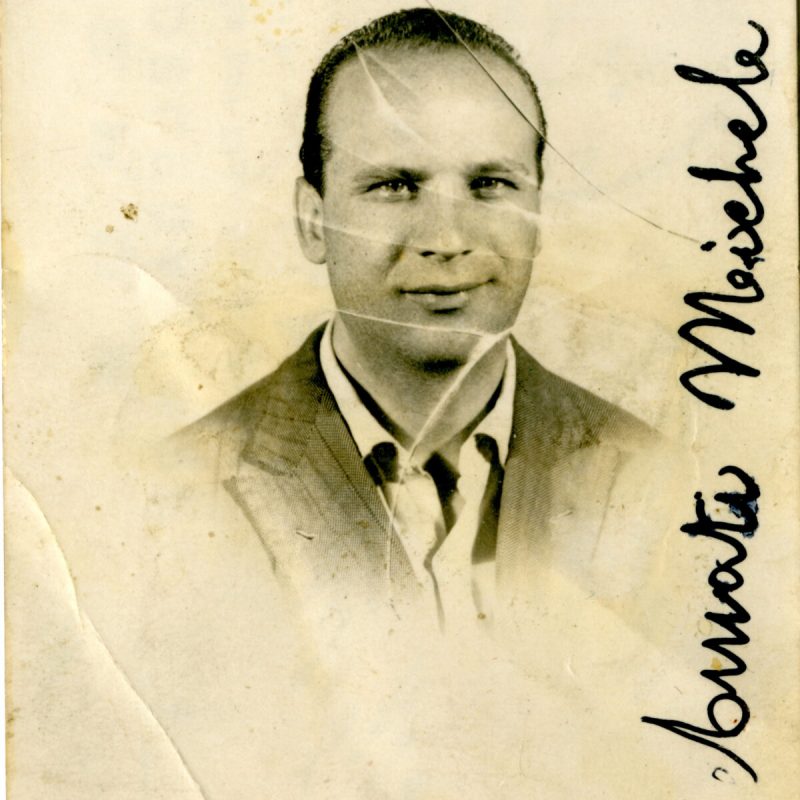
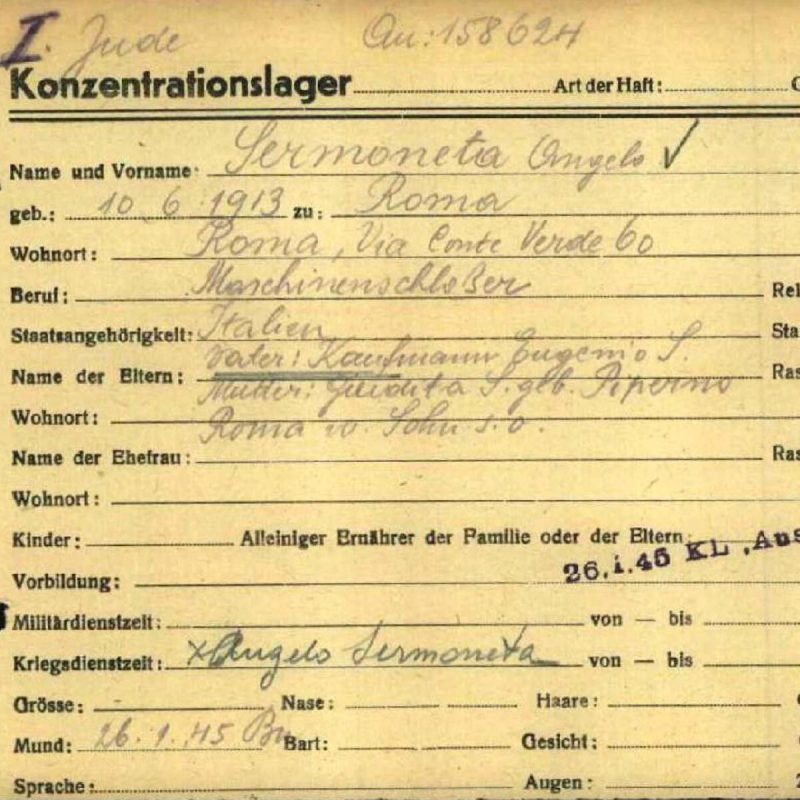
Angelo Sermoneta

Created with Fabric.js 1.7.22

Lazzaro Anticoli

Created with Fabric.js 1.7.22

Lello Di Segni

Created with Fabric.js 1.7.22

Ferdinando Nemes

Created with Fabric.js 1.7.22

Isacco Sermoneta

Created with Fabric.js 1.7.22

Enzo Camerino

Created with Fabric.js 1.7.22

Angelo Efrati

Created with Fabric.js 1.7.22

Mario Piperno

Created with Fabric.js 1.7.22

Arminio Wachsberger

Created with Fabric.js 1.7.22

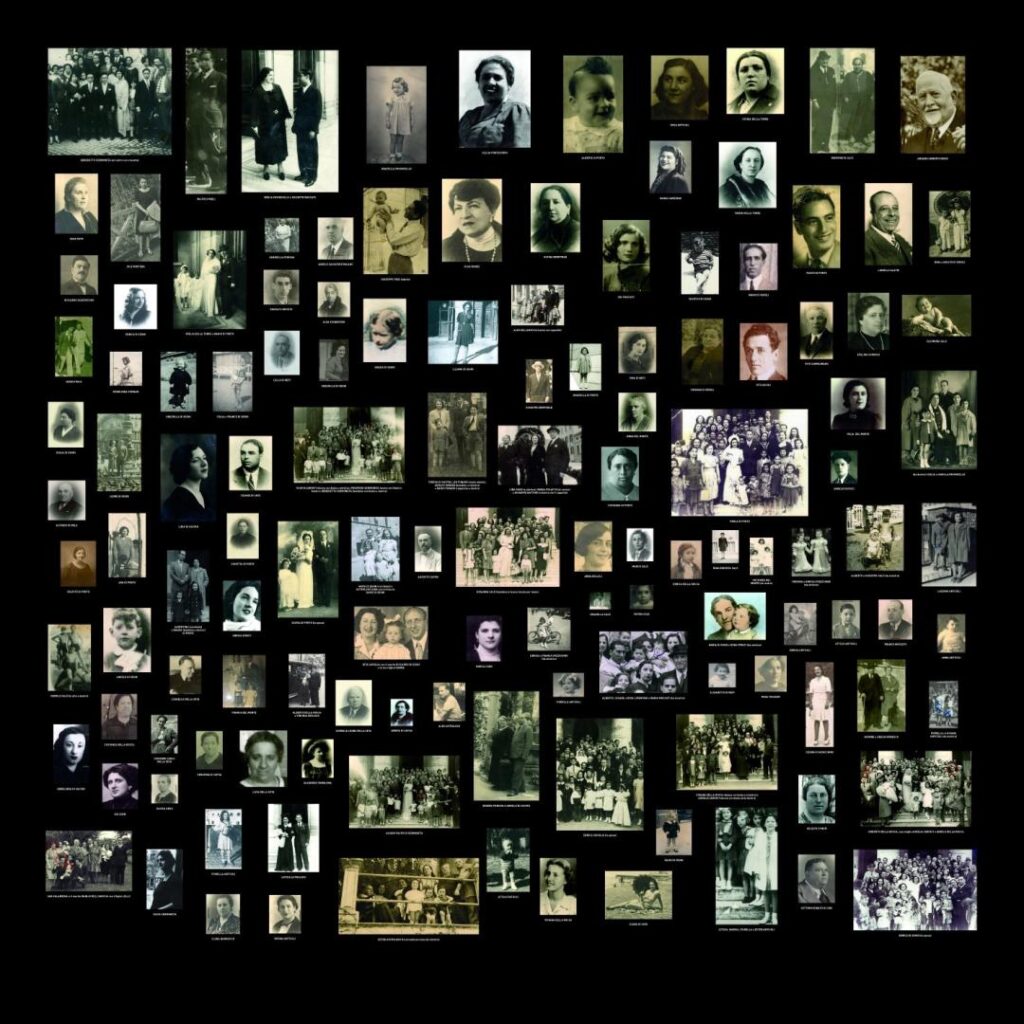
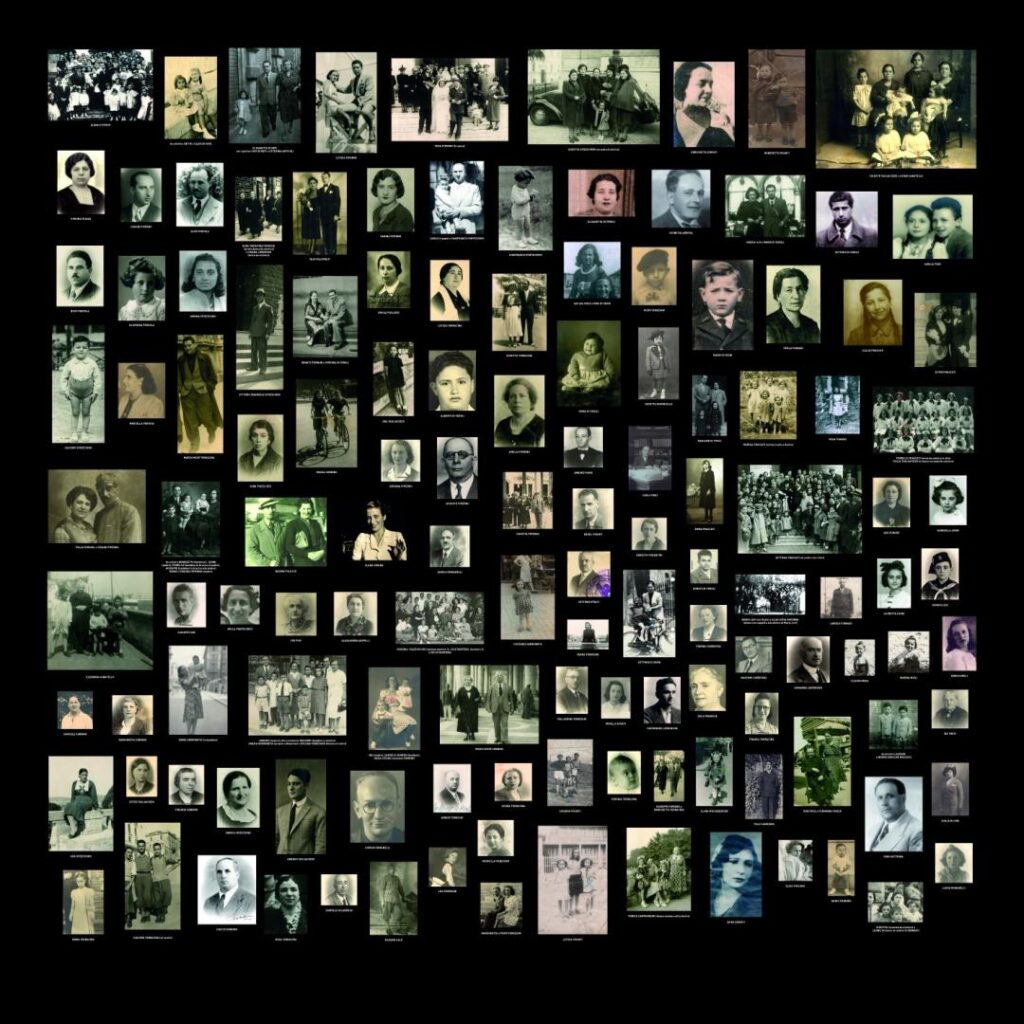
Le Vittime

Created with Fabric.js 1.7.22

Le Vittime

September 26, 1943

Villa Wolkonsky (German embassy until the occupation), 11 Via Ludovico di Savoia.

Herbert Kappler called Ugo Foà and Dante Almansi to Villa Wolkonsky to demand a ransom of 50 kgs of gold.

“Ugo Foà, President of Rome’s Jewish Community from 1941 to 1944, and Dante Almansi, President of the Italian Union of Jewish Communities from 1939 to 1944, were summoned to Villa Wolkonsky (base of the German embassy until the occupation) by Herbert Kappler, Head of the German Security Police (SIPO) in Rome.
Kappler ordered the community to hand over 50 kg of gold, otherwise 200 of its members would be deported.”

MORE INFORMATIONS

Created with Fabric.js 1.7.22

Ugo Foà

Created with Fabric.js 1.7.22

Dante Almansi

Created with Fabric.js 1.7.22

Herbert Kappler

Created with Fabric.js 1.7.22

villa Wolkonsky

Created with Fabric.js 1.7.22

Verbale dell'interrogatorio

Created with Fabric.js 1.7.22

Almansi in Rigano, p.27

September 26-28, 1943

Jewish Community

Gathering the gold

The Jewish community collected the 50 kgs of gold to hand over to the Nazis.

MORE INFORMATIONS

Created with Fabric.js 1.7.22

Sinagogue

Created with Fabric.js 1.7.22

Verbale dell'interrogatorio

Created with Fabric.js 1.7.22

Verbale dell'interrogatorio

Created with Fabric.js 1.7.22

Almansi in Rigano, p.27

Created with Fabric.js 1.7.22

Video Testimony

Created with Fabric.js 1.7.22

Video Testimony

September 28, 1943

155 Via Tasso

Handing over the gold

The 50 kgs of gold were delivered to Via Tasso.

MORE INFORMATIONS

Created with Fabric.js 1.7.22

Ugo Foà

Created with Fabric.js 1.7.22

Dante Almansi

September 29, 1943

Jewish Community

Looting of the Archives

The Nazis seized the Community’s archives.

MORE INFORMATIONS

Created with Fabric.js 1.7.22

Verbale dell'interrogatorio

October 4, 1943

Hotel Bernini, 23 Piazza Bernini

Theodor Dannecker and his officials stayed at the Hotel Bernini

The Commander of the special department, Theodor Dannecker, arrived in Rome.

MORE INFORMATIONS

Created with Fabric.js 1.7.22

Theodor Dannecker

Created with Fabric.js 1.7.22

Hotel Bernini

Created with Fabric.js 1.7.22

Hotel Bernini

Created with Fabric.js 1.7.22

Verbale dell'interrogatorio

October 5-7, 1943

155 Via Tasso

Kappler’s telegrams to the Reich Security Main Office in Berlin

senza descrizione.

MORE INFORMATIONS

Created with Fabric.js 1.7.22

Verbale dell'interrogatorio

Created with Fabric.js 1.7.22

Verbale dell'interrogatorio

October 14, 1943

Jewish Community

Looting of the library

The Nazis plundered the Community’s library

MORE INFORMATIONS

Created with Fabric.js 1.7.22

Verbale dell'interrogatorio

October 16, 1943

Raid

Although the Community had handed over the required amount of gold, at dawn on Saturday October 16, 1943, Dannecker’s men went to the streets of Rome where Jewish people lived, especially the ancient ghetto, it was surrounded and every escape route had been blocked. The soldiers entered the buildings and gave families a leaflet. They ordered them to leave their homes within 20 minutes, and to take one essential piece of luggage and some food. No one was spared from the raid, neither the sick nor the bed bound. And it didn’t spare any areas of the city either; they were methodically and systematically raided. Less than half of those arrested came from the Jewish district, the others came from other areas of the city. Many people managed to save themselves thanks to distracted soldiers, register mistakes, warnings, fortunate escapes and the help of friends and strangers. By late morning the round ups were finished. For the Germans, this was a failure, they calculated they would have captured about 8,000 Jews. However for those approximately 1,250 people who had been arrested and taken to the Military College, this was the beginning of a tragedy.

MORE INFORMATIONS

Created with Fabric.js 1.7.22

Verbale dell'interrogatorio

Created with Fabric.js 1.7.22

Verbale dell'interrogatorio

Created with Fabric.js 1.7.22

Almansi in Rigano, p.27

Created with Fabric.js 1.7.22

Video Testimony

Created with Fabric.js 1.7.22

Video Testimony

Created with Fabric.js 1.7.22

Video Testimony

Created with Fabric.js 1.7.22

Video Testimony

October 16-18, 1943

Military College (Palazzo Salviati), 82-83 Via della Lungara and Piazza della Rovere.

The people arrested during the round up on October 16 were held in the Military College until October 18, when they were transferred to Tiburtina station.

Those held in the Military College underwent an initial selection process. Around 230 non-Jews, protected foreigners, people of “mixed” origins and spouses in mixed marriages were freed. Meanwhile, others managed to escape.

MORE INFORMATIONS

Created with Fabric.js 1.7.22

Adolfo Di Veroli

Created with Fabric.js 1.7.22

Marcella Perugia

Created with Fabric.js 1.7.22

Courtyard of the Military College

Created with Fabric.js 1.7.22

Military College pupils

Created with Fabric.js 1.7.22

Palazzo Salviati

Created with Fabric.js 1.7.22

Verbale dell'interrogatorio

Created with Fabric.js 1.7.22

Verbale dell'interrogatorio

Created with Fabric.js 1.7.22

Verbale dell'interrogatorio

Created with Fabric.js 1.7.22

Verbale dell'interrogatorio

Created with Fabric.js 1.7.22

Almansi in Rigano, p.27

Created with Fabric.js 1.7.22

Video Testimony

Created with Fabric.js 1.7.22

Video Testimony

October 18-23, 1943

Tiburtina station - Auschwitz-Birkenau

On October 18 in the morning, 1,022 Jews were transported on trucks from the Military College to Tiburtina station. From here they faced a five-day journey, ending up at Auschwitz-Birkenau camp.

MORE INFORMATIONS

Created with Fabric.js 1.7.22

Tiburtina station

Created with Fabric.js 1.7.22

Amedeo Tagliacozzo

Created with Fabric.js 1.7.22

Verbale dell'interrogatorio

Created with Fabric.js 1.7.22

Verbale dell'interrogatorio

Created with Fabric.js 1.7.22

Verbale dell'interrogatorio

Created with Fabric.js 1.7.22

Verbale dell'interrogatorio

Created with Fabric.js 1.7.22

Verbale dell'interrogatorio

Created with Fabric.js 1.7.22

Almansi in Rigano, p.27

Created with Fabric.js 1.7.22

Video Testimony

Created with Fabric.js 1.7.22

Video Testimony

Created with Fabric.js 1.7.22

Video Testimony

Biographies of the 16 survivors of the Auschwitz-Birkenau camp

Created with Fabric.js 1.7.22

Settimia Spizzichino

Created with Fabric.js 1.7.22

Luciano Camerino

Created with Fabric.js 1.7.22

Cesare Efrati

Created with Fabric.js 1.7.22

Leone Sabatello

Created with Fabric.js 1.7.22

Michele Amati

Created with Fabric.js 1.7.22

Cesare Di Segni

Created with Fabric.js 1.7.22

Sabatino Finzi

Created with Fabric.js 1.7.22

Angelo Sermoneta

Created with Fabric.js 1.7.22

Lazzaro Anticoli

Created with Fabric.js 1.7.22

Lello Di Segni

Created with Fabric.js 1.7.22

Ferdinando Nemes

Created with Fabric.js 1.7.22

Isacco Sermoneta

Created with Fabric.js 1.7.22

Enzo Camerino

Created with Fabric.js 1.7.22

Angelo Efrati

Created with Fabric.js 1.7.22

Mario Piperno

Created with Fabric.js 1.7.22

Arminio Wachsberger

Created with Fabric.js 1.7.22

The Victims

Created with Fabric.js 1.7.22

The Victims

Ritratto di Ugo Foà (1887-1953), presidente della Comunità Israelitica di Roma nei primi anni '40 e per tutto il periodo dell'occupazione nazista, in veste di procuratore generale della Corte d'appello di Roma (1934 - 1938).

Federico Spoltore, olio su tela. Museo Ebraico di Roma

Ritratto di Ugo Foà (1887-1953), presidente della Comunità Israelitica di Roma nei primi anni '40 e per tutto il periodo dell'occupazione nazista, in veste di procuratore generale della Corte d'appello di Roma (1934 - 1938).

Federico Spoltore, olio su tela. Museo Ebraico di Roma

Dante Almansi (1877-1949), giurista, prefetto, consigliere della Corte dei Conti dal 1930 fino alla promulgazione delle leggi antiebraiche. Presidente dell'Unione delle Comunità Israelitiche Italiane dal 1939 al 1944.

Renzo De Felice, Storia degli ebrei italiani sotto il fascismo, Torino, Einaudi, 1988

Dante Almansi (1877-1949), giurista, prefetto, consigliere della Corte dei Conti dal 1930 fino alla promulgazione delle leggi antiebraiche. Presidente dell'Unione delle Comunità Israelitiche Italiane dal 1939 al 1944.

Renzo De Felice, Storia degli ebrei italiani sotto il fascismo, Torino, Einaudi, 1988

Herbert Kappler (1907-1978), Capo della Polizia di Sicurezza tedesca (Sipo) a Roma.

Bundesarchiv, Berlin

Herbert Kappler (1907-1978), Capo della Polizia di Sicurezza tedesca (Sipo) a Roma.

Bundesarchiv, Berlin

Villa Wolkonsky durante l'occupazione nazista.

The National Archives, Kew, London

Villa Wolkonsky durante l'occupazione nazista.

The National Archives, Kew, London

Verbale dell'interrogatorio di Kappler, avvenuto il 22 agosto 1947, sulla convocazione dei due presidenti Foà e Almansi per la richiesta dei 50 chili d'oro.

Tribunale Militare di Roma

Verbale dell'interrogatorio di Kappler, avvenuto il 22 agosto 1947, sulla convocazione dei due presidenti Foà e Almansi per la richiesta dei 50 chili d'oro.

Tribunale Militare di Roma

Dante Almansi sul suo colloquio con Herbert Kappler, in Silvia Haia Antonucci, Claudio Procaccia, Gabriele Rigano, Giancarlo Spizzichino, Roma, 16 ottobre 1943. Anatomia di una deportazione, Milano, Guerini e associati, 2006.

“Voi e i vostri correligionari avete la cittadinanza italiana, ma di ciò a me importa poco. Noi tedeschi vi consideriamo unicamente ebrei e come tali nostri nemici. Anzi, per essere più chiari, noi vi consideriamo come un gruppo distaccato, ma non isolato dei peggiori fra i nemici contro i quali stiamo combattendo. E come tali dobbiamo trattarvi. Però non sono le vostre vite né i vostri figli che vi prenderemo se adempirete alle nostre richieste. È il vostro oro che vogliamo per dare nuove armi al nostro paese. Entro 36 ore dovete versarmene 50 Kg. Se lo verserete non vi sarà fatto del male. In caso diverso, 200 fra voi verranno presi e deportati in Germania alla frontiera russa o altrimenti resi innocui.”

Da G. Debenedetti, 16 ottobre 1943, Torino, Einaudi, 2001.

“Effettivamente, la sera del 26 settembre 1943, il presidente della Comunità Israelitica di Roma e quello dell’Unione delle Comunità Italiane – tramite il dott. Cappa, funzionario della Questura – erano stati convocati per le ore 18 all’Ambasciata Germanica. Li ricevette, paurosamente cortese e «distinto», il Maggiore delle SS Herbert Kappler, che li fece accomodare e per qualche momento parlò del più e del meno in tono di ordinaria conversazione. Poi entrò nel merito: gli ebrei di Roma erano doppiamente colpevoli, come italiani […] per il tradimento contro la Germania, e come ebrei perché appartenenti alla razza degli eterni nemici della Germania. Perciò il governo del Reich imponeva loro una taglia di 50 chilogrammi d’oro, da versarsi entro le ore 11 del successivo martedì 28. In caso di inadempienza, razzia e deportazione in Germania di 200 ebrei. Praticamente: poco più di un giorno e mezzo per trovare 50 chili d’oro.”

Sinagoga.

Sinagoga.

Ricevute rilasciate in occasione della raccolta dei 50 chili d'oro richiesti da Kappler alla Comunità Ebraica di Roma.

Museo Ebraico di Roma

Ricevute rilasciate in occasione della raccolta dei 50 chili d'oro richiesti da Kappler alla Comunità Ebraica di Roma.

Museo Ebraico di Roma

Ricevute rilasciate in occasione della raccolta dei 50 chili d'oro richiesti da Kappler alla Comunità Ebraica di Roma.

Museo Ebraico di Roma

Ricevute rilasciate in occasione della raccolta dei 50 chili d'oro richiesti da Kappler alla Comunità Ebraica di Roma.

Museo Ebraico di Roma

Testimonianza di Rina Calò, da Silvia Haia Antonucci, Claudio Procaccia, Gabriele Rigano, Giancarlo Spizzichino (a cura di), Roma, 16 ottobre 1943. Anatomia di una deportazione, Roma, Guerini e Associati, 2006.

“Prima del 16 ottobre ricordo che spesso i fascisti venivano in Piazza e ci terrorizzavano. In piazza c’era, poi, Elena «La matta», che raccontava qualcosa sul pericolo delle retate da parte dei nazisti e dei fascisti, ma nessuno le dava retta.”

Da G. Debenedetti, 16 ottobre 1943, Torino, Einaudi, 2001.

“Frattanto però le cose avevano cominciato a mettersi meglio. Ormai tutta Roma aveva saputo del sopruso tedesco, e se ne era commossa. Guardinghi, come temendo un rifiuto, come intimiditi di venir a offrir dell’oro ai ricchi ebrei, alcuni «ariani» si presentarono. Entravano impacciati in quel locale adiacente alla Sinagoga, non sapendo se dovessero togliersi il cappello o tenere il capo coperto, come notoriamente vuole l’uso rituale degli ebrei. Quasi umilmente domandavano se potevano anche loro… se sarebbe stato gradito… Purtroppo non lasciarono i nomi, che si vorrebbero ricordare per i momenti di sfiducia nei propri simili. Torna a mente, e par bella, una ripetuta anche da George Eliot: «il latte dell’umana bontà».”

Da G. Debenedetti, 16 ottobre 1943, Torino, Einaudi, 2001.

“Non che abbassarsi alla formalità di ricevere, di «incassare» quell’oro, il Kappler non degnò neppure mostrarsi. Fece dire in anticamera, da una segretaria, che la taglia doveva essere versata in via Tasso. Forse è questa la prima apparizione di via Tasso nella cronaca gialla e nera dell’occupazione tedesca. Il convoglio riparte da villa Wolkonski, svolta l’angolo, giunge nella via malfamata. In via Tasso gli ebrei si trovano di fronte a un certo Capitano Schultz, certo più crudele che lo Schultz della nostra vecchia grammatica latina. Costui era assistito da un orafo e da un pesatore tedeschi. […] Ma le 20 erano trascorse da un pezzo, e né i presidenti né gli orafi avevano ancora fatto ritorno alle loro abitazioni. Il tic-tac degli orologi, nel silenzio di quelle case, era come il tarlo dell’angoscia, scandiva per i familiari il passo  delle congetture in minuto più moleste. Un trillo assurdo del telefono: ma non erano loro, erano gli amici, quelli che più si erano adoperati per la ricerca dell’oro, e adesso si ritiravano dall’apparecchio con parole che volevano essere di fiducia, e invece erano già di compianto.
Finalmente i quattro uomini rientrarono. Era in loro quel misto di sollievo e di collasso, che subentra in tutta la persona al termine di una grandissima fatica. Il senso, un po’, di chi torna dall’avere accompagnato al cimitero una persona cara, per un cammino lungo e una giornata inclemente, quando si è già estenuati da notti di veglia e di affanno. Ristorarsi, buttarsi in letto, tentare di non pensarci più.”

Video testimonianze di Rina Pavoncello e Sabatino Finzi, tratte dal documentario "La Razzia. Roma, 16 ottobre 1943", di Ruggero Gabbai.

Video testimonianze di Lello Di Segni e Graziella Sonnino, tratte dal documentario "La Razzia. Roma, 16 ottobre 1943", di Ruggero Gabbai.

Aldo Gay, opera senza nome, matita 1943. Il pittore illustra il dramma dei ricatto dell'oro in un disegno di quei giorni.

Collezione privata famiglia Gai

Aldo Gay, opera senza nome, matita 1943. Il pittore illustra il dramma dei ricatto dell'oro in un disegno di quei giorni.

Collezione privata famiglia Gai

Aldo Gay, opera senza nome, matita 1943. Il pittore illustra il dramma dei ricatto dell'oro in un disegno di quei giorni.

Collezione privata famiglia Gai

Aldo Gay, opera senza nome, matita 1943. Il pittore illustra il dramma dei ricatto dell'oro in un disegno di quei giorni.

Collezione privata famiglia Gai

Rapporto del 1944 della Questura di Roma sul sequestro degli elenchi degli iscritti avvenuto negli uffici della Comunità ebraica.

Su concessione del Ministero dei beni e delle attività culturali e del turismo, Archivio Centrale dello Stato, 1426/2016

Rapporto del 1944 della Questura di Roma sul sequestro degli elenchi degli iscritti avvenuto negli uffici della Comunità ebraica.

Su concessione del Ministero dei beni e delle attività cultuarli e del turismo, Archivio Centrale dello Stato, 1426/2016

Theodor Dannecker.

Bundesarchiv, Berlin

Theodor Dannecker.

Bundesarchiv, Berlin

L'Hotel Bernini negli anni '40.

Hotel Bernini Bristol

L'Hotel Bernini negli anni '40.

Hotel Bernini Bristol

L'Hotel Bernini oggi.

Hotel Bernini Bristol

L'Hotel Bernini oggi.

Hotel Bernini Bristol

Telegramma della Questura di Roma al Ministero dell’Interno sull’arrivo di ufficiali delle SS all’Hotel Bernini.

Archivio Centrale dello Stato, Direzione Generale di Pubblica sicurezza. Divisione affari generali e riservati, II Guerra mondiale, A5G, b. 146

Telegramma della Questura di Roma al Ministero dell’Interno sull’arrivo di ufficiali delle SS all’Hotel Bernini.

Archivio Centrale dello Stato, Direzione Generale di Pubblica sicurezza. Divisione affari generali e riservati, II Guerra mondiale, A5G, b. 146

5 ottobre 1943: «[…] 50 chili d'oro degli ebrei di Roma stanno per essere spediti direttamente al capo della Polizia di Sicurezza».

The National Archives, Kew, London

5 ottobre 1943: «[…] 50 chili d'oro degli ebrei di Roma stanno per essere spediti direttamente al capo della Polizia di Sicurezza».

The National Archives, Kew, London

7 ottobre 1943: «50 chili d'oro ebraico vengono mandati al capo della Polizia di Sicurezza. Suppongo che questo faciliti alla banca del Reich l'acquisizione di valuta estera per il raggiungimento dei nostri scopi».

The National Archives, Kew, London

7 ottobre 1943: «50 chili d'oro ebraico vengono mandati al capo della Polizia di Sicurezza. Suppongo che questo faciliti alla banca del Reich l'acquisizione di valuta estera per il raggiungimento dei nostri scopi».

The National Archives, Kew, London

L'11 ottobre 1943, Dante Almansi, Presidente dell'Unione delle Comunità Israelitiche Italiane, e Ugo Foà, Presidente della Comunità Israelitica di Roma, comunicano al Ministero dell'Interno l'irruzione dei nazisti nelle biblioteche della Comunità ebraica e del Collegio Rabbinico e la loro intenzione di saccheggiarle.

Su concessione del Ministero dei beni e delle attività culturali e del turismo, Archivio Centrale dello Stato, 1426/2016

L'11 ottobre 1943, Dante Almansi, Presidente dell'Unione delle Comunità Israelitiche Italiane, e Ugo Foà, Presidente della Comunità Israelitica di Roma, comunicano al Ministero dell'Interno l'irruzione dei nazisti nelle biblioteche della Comunità ebraica e del Collegio Rabbinico e la loro intenzione di saccheggiarle.

Su concessione del Ministero dei beni e delle attività culturali e del turismo, Archivio Centrale dello Stato, 1426/2016

Biglietto consegnato dai nazisti agli ebrei durante la razzia del 16 ottobre.

Archivio privato Renato Di Veroli

Biglietto consegnato dai nazisti agli ebrei durante la razzia del 16 ottobre.

Archivio privato Renato Di Veroli

16 ottobre 1943, rapporto di Kappler al Capo Supremo delle SS e della Polizia, Karl Wolff "In data odierna, intrapresa e conclusa l’azione concernente gli ebrei secondo il piano studiato messo a punto nel modo ritenuto migliore. Impiegate tutte le forze di Polizia di Sicurezza e d’ordine disponibili. Polizia italiana non coinvolta causa sua inaffidabilità riguardo tale questione. Arresti individuali nei 26 distretti d’azione quindi possibili solo in successione. Impossibile realizzare blocco di intere strade causa status Roma città aperta e insufficienza effettivi polizia tedesca: 365 uomini in tutto. Durante l’operazione protrattasi dalle 5.30 alle 14.00, arrestate nelle abitazioni di ebrei e condotte in luogo di raccolta presso collegio militare 1259 persone. Rilasciati gli stranieri, tra cui un cittadino vaticano, i figli e familiari di matrimoni misti inclusi i coniugi ebrei, domestici e inquilini ariani, rimangono in stato d’arresto 1007 ebrei. Trasposto predisposto per lunedì 18 ore 9.00. Scorta costituita da 30 uomini della Polizia d’Ordine. Comportamento della popolazione italiana: evidente resistenza passiva, in molti casi addirittura interventi d’aiuto. In particolare, ad esempio, i poliziotti hanno trovato sulla porta di un appartamento un fascista in camicia nera con documenti in regola che evidentemente aveva preso possesso dell’abitazione ebraica solo un’ora prima. Rilevati palesi tentativi da parte di vicini di accogliere ebrei in casa propria durante le irruzione negli appartamenti. Presumibilmente ripetuti episodi analoghi. Durante l’operazione non si sono manifestati elementi antisemiti della popolazione mentre la maggior parte di questa ha persino tentato di tener i poliziotti lontano dagli ebrei."

Bundesarchiv Berlin

16 ottobre 1943, rapporto di Kappler al Capo Supremo delle SS e della Polizia, Karl Wolff "In data odierna, intrapresa e conclusa l’azione concernente gli ebrei secondo il piano studiato messo a punto nel modo ritenuto migliore. Impiegate tutte le forze di Polizia di Sicurezza e d’ordine disponibili. Polizia italiana non coinvolta causa sua inaffidabilità riguardo tale questione. Arresti individuali nei 26 distretti d’azione quindi possibili solo in successione. Impossibile realizzare blocco di intere strade causa status Roma città aperta e insufficienza effettivi polizia tedesca: 365 uomini in tutto. Durante l’operazione protrattasi dalle 5.30 alle 14.00, arrestate nelle abitazioni di ebrei e condotte in luogo di raccolta presso collegio militare 1259 persone. Rilasciati gli stranieri, tra cui un cittadino vaticano, i figli e familiari di matrimoni misti inclusi i coniugi ebrei, domestici e inquilini ariani, rimangono in stato d’arresto 1007 ebrei. Trasposto predisposto per lunedì 18 ore 9.00. Scorta costituita da 30 uomini della Polizia d’Ordine. Comportamento della popolazione italiana: evidente resistenza passiva, in molti casi addirittura interventi d’aiuto. In particolare, ad esempio, i poliziotti hanno trovato sulla porta di un appartamento un fascista in camicia nera con documenti in regola che evidentemente aveva preso possesso dell’abitazione ebraica solo un’ora prima. Rilevati palesi tentativi da parte di vicini di accogliere ebrei in casa propria durante le irruzione negli appartamenti. Presumibilmente ripetuti episodi analoghi. Durante l’operazione non si sono manifestati elementi antisemiti della popolazione mentre la maggior parte di questa ha persino tentato di tener i poliziotti lontano dagli ebrei."

Bundesarchiv Berlin

Diario di Fortunata di Segni

<< ll sedici ottobre 1943 i tedeschi poterono sfogarsi bene di tutto l’odio che avevano per noi.
Giorno indimenticabile che resterà vivo in noi per tutta la vita e il ricordo per generazioni e generazioni, non si potrà mai scordare il sedici ottobre ed ogni volta che si ricorderà ci guarderemo attorno come per paura che dietro di noi ci sia un tedesco.
Prima non ci avevano detto nulla perché credevamo di non aver tempo ma poi il tempo l’ebbero ed allora…
Il 15 ottobre 1943 a notte si udirono i colpi di bombe a mano, traffiche di mitalia, vampate di fuoco, tutti credevamo suonasse l’allarme, nulla, verso l’una dopo la mezzanotte tutto tornò calmo. Stanchi della brutta nottata ci addormentammo subito. Fummo svegliati bruscamente dai gran colpi che venivano dati alla porta.
Guarda l’orologio, erano le cinque.
Chi sarà mai? Cosa sarà successo, si sentirà male qualcuno?
In un lampo fummo tutti in piedi, mamma andò ad aprire. Era zia Clelia che abitava al piano di sotto era tutta sconvolta e pallida con voce tremante ci disse: Ma come? Voi state tutti a letto, fuggite! Che si stanno prendendo tutti gli ebrei. Sentii il sangue gelarsi nelle vene e un brivido passarmi per tutta la vita. Ci precipitammo alla finestra e subito una scena straziante ci colpì. Una famiglia intera in mezzo a quattro tedeschi venivano portati via. I bambini piangevano i genitori cercavano di farli fuggire i tedeschi urlavano per farli camminare e se restavano addietro erano presi a calci.
Eravamo rimasti piedrificati alla finestra, ma cercando di dominarci ci vestimmo alla meglio per far fuggire gli uomini. Mamma uscì per prima, vedendo che giù al portone non vi era nessuno fece cenno a me di far uscire tutti due per volta. Cercavamo di essere più disinvolti che potevamo ma chi li avesse guardati avrebbe letto sul loro viso il terrore.
Tutte le vie di Portico D’Ottavia erano bloccate dai tedeschi in modo che per quelli che abitavano nel centro non vi era via di scampo. I nostri uomini con l’aiuto del Signore riuscirono a fuggire.
Noi credevamo che cercavano soltanto gli uomini così tutte le donne e i bambini restarono a casa. Quando i tedeschi bussavano per le case non trovando gli uomini si portarono via tutte le donne e bambini. Erano scene strazianti a vedersi, donne che urlavano, bambini che piangevano, tedeschi che urlavano per farli camminare prendendoli a calci, la gente, i cristiani li guardavano dicendo: poveretti! Povera gente, ma dove li porteranno? Ma nessuno faceva qualcosa per farli fuggire e per prendere qualche bambino. Si portavano via paralitici, vecchi moribondi, donne che erano a letto in stato interessante o che avevano appena dato alla luce un bambino, niente, non vi era pietà per nessuno li facevano vestire li caricavano sui camion come bestie e se li portavano via.
Nella nostra famiglia erano tutti salvi, ma dei nostri parenti non ne sapevamo nulla. Noi ci eravamo salvati per miracolo, perché, dopo aver fatto fuggire gli uomini mamma era tornata a casa dietro di se si era chiusa il portone. Ci preparammo a fuggire, avevamo preso della biancheria personale se non si poteva tornare a casa, quando da giù al portone, si udirono dei gran colpi. Restammo tutti senza fiato.
Io chiusi gli occhi e dissi [ill.] ma pensavo che non ci saremmo salvati. Piano piano eravamo scesi e mamma guardò dal buco della serratura, la vedemmo tirarsi addietro pallidissima. Fuori dal portone vi erano quattro tedeschi che volevano entrare per forza.
Per fortuna gli rispose la portiera del palazzo vicino: sono andati via non c’è più nessuno. Ritornare, noi ritornare, risposero i tedeschi e se ne andarono. Appena se ne furono andati mandammo un sospiro di sollievo eravamo salvi. >>

Testimonianza di Benedetto Vivanti in Marcello Pezzetti (a cura di), 16 ottobre 1943. La razzia, Roma, Gangemi, 2017.

“Alla fontana, quella grande, che sta a piazza delle Cinque Scole, venivano i camion, si fermavano là. Sparaveno, rivolverate… noi c’havevamo paura. Io abitavo a piazza Costaguti e la gente diceva: ‘fuggite, fuggite! I tedeschi vi prendono tutti!’
Quando abbiamo saputo che i tedeschi andavano a casa a prendere le famije, io e un altro amico mio, che abitavamo insieme, fuggivamo sui tetti. Furono presi e portati via mia madre, due sorelle e un nipotino. Mio padre fuggì via. Nun se sapeva, perché dicevano di prendere solamente gli uomini, per lavoro. Ecco cos’era. Ma prendevano tutti, tutti quanti. Dopo, finito, io scesi giù.”

Testimonianza di Marisa Camerini da Silvia Haia Antonucci, Claudio Procaccia, Gabriele Rigano, Giancarlo Spizzichino (a cura di), Roma, 16 ottobre 1943. Anatomia di una deportazione, Roma, Guerini e Associati, 2006.

“All’inizio il 16 ottobre per noi fu una giornata come tutte le altre. Però cambiò tutto quando mio padre, che andava in giro per lavoro, vide che a piazza Vittorio c’erano dei camion su cui caricavano delle persone, e gli dissero che erano ebrei. Telefonò subito a mamma e le disse: ‘Scappa, scappa, scappa, per carità!’ Mia madre era una donna molto pratica, fuggimmo senza prendere niente, ma mise in un pentolino pizzette di carne.”

Testimonianza di Giuliana Gay, da Silvia Haia Antonucci, Claudio Procaccia, Gabriele Rigano, Giancarlo Spizzichino (a cura di), Roma, 16 ottobre 1943. Anatomia di una deportazione, Roma, Guerini e Associati, 2006.

“Il 16 ottobre eravamo a casa [a via Arenula], verso l’alba sentimmo dei passi, il rumore forte che fanno gli scarponi sulla strada, e sentimmo anche il frastuono dei camion. Ci affacciammo alla finestra che dava sul giardinetto di piazza Cairoli, e vedemmo i camion sotto casa. L’ultimo camion verso ponte Garibaldi, stava già caricando delle persone che noi conoscevamo. Lì per lì non sapevamo cosa fare, ci vestimmo. Da casa mamma telefonò a una sua cugina che abitava in Prati vicino al cinema Adriano, Costanza Fornari sposata con Alfredo Citoni che l’unica della sua famiglia a essere rimasta a Roma, per raccontarle cosa stava succedendo al ghetto, e le disse: ‘Scappa da casa!’, ma sul momento lei non le volle credere. Dopo un po’ ci ripensò: ‘Ma se hanno telefonato, qualcosa è successo’, e per fortuna scappò, perché poi i nazisti arrivarono anche lì.”

Testimonianza di Milena Zarfati in Marcello Pezzetti (a cura di), 16 ottobre 1943. La razzia, Roma, Gangemi, 2017.

“E noi ci salvammo perché dove abitavo, a via degli Specchi, c’era uno scantinato, allora mio padre ci mise tutti lì dentro. Presero lui; però, mentre li mettevano in fila, lui passava sempre dietro, praticamente è stato sempre l’ultimo. Ad un momento i tedeschi si saranno voltati ed è riuscito a scappare. Mia sorella, incinta, con mia nipote sono state prese e non fecero più ritorno.”

Da Giacomo Debenedetti, 16 ottobre 1943, Torino, Einaudi, 2001.

“Le file vengono spinte verso la goffa palazzina delle Antichità e Belle Arti, che sorge al gomito del Portico d’Ottavia di fronte a via Catalana, tra la Chiesa di Sant’Angelo e il Teatro di Marcello. Ai piedi della palazzina si stende una breve area di scavi, ingombra di ruderi, qualche metro più bassa che la strada. Entro questa fossa venivano raccolti gli ebrei, e messi in riga ad aspettare il ritorno dei tre o quattro camion, che facevano la spola tra il Ghetto e il luogo dove era stata stabilita la prima tappa.”

Testimonianza di Gabriella Ajò, da Silvia Haia Antonucci, Claudio Procaccia, Gabriele Rigano, Giancarlo Spizzichino (a cura di), Roma, 16 ottobre 1943. Anatomia di una deportazione, Roma, Guerini e Associati, 2006.

“Abitavo a via Portico d’Ottavia n.9 insieme alla mia famiglia e non ci siamo mossi di lì […].
Ricordo che una signora che si era affacciata dalla cucina per chiamare la figlia che abitava con la suocera al piano di sotto al suo, e strillava: ‘Rina, Rina.’ Lei era già scappata di casa, e aveva ancora in mano il biberon per dare il latte alla figlia e, sentendosi chiamare, voleva ritornare dalla madre, ma qualcuno la fermò e le disse: ‘Ma ‘ndo via?’, e così riuscì a salvarsi insieme alla bambina. E’ stata una giornata atroce.”

Testimonianza di Leone Sabatello, da Silvia Haia Antonucci, Claudio Procaccia, Gabriele Rigano, Giancarlo Spizzichino (a cura di), Roma, 16 ottobre 1943. Anatomia di una deportazione, Roma, Guerini e Associati, 2006.

“Abitavamo a via Portico d’Ottavia 9 […]. Il 16 ottobre pioveva, stavo dormendo, verso le 5,30 o le 6, mio padre sente dei rumori, si affaccia dalla finestra e vede una squadra di soldati e alcune famiglie che uscivano con le valigie e venivano raggruppate in quella che oggi è piazza 16 Ottobre. Anche io sono stato portato lì. I nazisti sono entrati dentro casa mia, avevano un foglio con l’elenco dei nomi. Cercavano anche mio fratello, ma lui era a Ciampino. I nazisti ci dissero che dovevamo fare un lungo viaggio e quindi dovevamo portarci dei viveri. Ci siamo vestiti e siamo scesi. Ci hanno caricati sui camion e ci hanno portati al Collegio Militare, dove qualcuno ha anche provato a farci convertire.”

Da Giacomo Debenedetti, 16 ottobre 1943, Torino, Einaudi, 2001.

“Un giovanotto si stacca dalla fila: ha ottenuto di andare a prendere un caffè, sotto la sorveglianza di una SS, che però non accetterà di ‘tenergli compagnia’. Deglutisce rumorosamente, la tazzina gli trema nelle mani, e anche le gambe gli ballano sotto. Gira gli occhi smarriti verso i tavolini, dove si è seduto a giocare a carte nelle sere che avevano ancora un indomani. Con una specie di sorriso timido e stanco, domanda al caffettiere:
‘Che faranno di noi?’”

Da Giacomo Debenedetti, 16 ottobre 1943, Torino, Einaudi, 2001.

“Pare che il primo allarme l’abbia dato una donna di nome Letizia: una grossa ragazza attempata, tutta tumida di tratti e di forme, con gli occhi fissi e i labbroni di fuori, che le immobilizzano sulla faccia un sorriso inerte e senza comunicativa. Dal quale esce una voce assente, contrariata, estranea a ciò che dice. Verso le 5, costei fu udita gridare:
‘Oh Dio, i mammoni’
‘Mammoni’ in gergo giudìo-romanesco significa gli sbirri, le guardie, la forza pubblica. Erano infatti i tedeschi che, col loro passo pesante e cadenzato (conosciamo persone per cui questo passo è rimasto il simbolo, lo spaventoso equivalente auditivo del terrore tedesco), cominciavano a bloccare le strade e case del Ghetto.”

Testimonianza di Speranza Ajò, da Silvia Haia Antonucci, Claudio Procaccia, Gabriele Rigano, Giancarlo Spizzichino (a cura di), Roma, 16 ottobre 1943. Anatomia di una deportazione, Roma, Guerini e Associati, 2006.

“Abitavo vicino alla Piramide Cestia in via Bartolomeo Bassi e non mi sono mossa da lì fino al 16 ottobre 1943. […]
Il 16 ottobre mattina, verso le 7, mio marito Corrado, era uscito per andare a lavorare con il carrettino. Mia suocera era stata avvertita dalla figlia, quella grande, Celeste, che le aveva detto: ‘Mamma, guarda che stanno a portà via un sacco di giovanotti.’ Non le aveva detto della retata, e che in realtà portavano via tutti. Allora mia suocera, che abitava a Testaccio, viene da me e mi dice: ‘Dimmi Sperà, è uscito Corrado?’, le rispondo di sì, e allora si era tranquillizzata perché ero rimasta a casa solo io con le creature, mio marito era già uscito, e pensava che non corressimo pericolo. In questo frattempo scende la portiera che puliva le scale e mi chiede che cosa stava succedendo. Le ho risposto: ‘Signora Marì, è arrivata adesso mia suocera e mi ha detto che stanno a prende i giovanotti’. Lei ha detto: ‘Sinora mia, io adesso vado a comprà il pane e le faccio sapere qualcosa.’ Lei, appena esce, all’angolo vede che portano via una vecchia con la bambina, di corsa rientra dentro al portone e mi dice: ‘Esca, esca, esca!’. Metto di corsa il cappottino a Peppino, che aveva 4 anni, un asciugamano a Luciano, che aveva 3 mesi,e io faccio appena in tempo ad abbottonarmi una camicetta; usciamo e passiamo dalla parte opposta rispetto a dove era il camion dei nazisti, verso la stazione Ostiense.”

Testimonianza di Mario Limentani in Marcello Pezzetti (a cura di), 16 ottobre 1943. La razzia, Roma, Gangemi, 2017.

“Io abitavo proprio a Reginella. Alle cinque de matina abbiamo sentito un trambusto, abbiamo guardato, vedevamo tutti i tedeschi che entravano nelle case. Allora, per fortuna, dove abitavo io, nella cucina c’era un terrazzo co una specie di cunicolo che dava sotto, al magazzino. E allora noi omini ce siamo gettati giù. Credevamo che venissero per portarci a lavorà. Però, dopo pochi minuti, le donne, guardando dalle finestre, hanno visto che portavano via i bambini, i vecchi, tutti quanti. Hanno cominciato a strillare, tutto il palazzo nostro strillava. Allora io sò risalito co mio fratello da mia cognata. Ho preso tre bambini che erano suoi e le ho fatto: ‘scendiamo! Vieni con me’ Ma lei: ‘No. Vai avanti che aspetto papà e mamma!’ C’aveva il padre e la madre che erano anziani e ‘na sorella. Mentre io stavo aggrappato a la ringhiera de la finestra sentivo che buttaveno giù la porta. Le ultime sue parole: ‘Vai via! Nun ce posso fa in tempo io… Dio provvederà!’ Mentre me buttavo giù, hanno spalancato la porta, hanno preso tutti quanti e l’hanno portati via. Son rimasto quattro, cinque ore al sottosuolo e vedevamo sopra le SS che camminavano e portavano via ‘sta gente.”

Testimonianza di Settimia Spizzichino da Settimia Spizzichino, Isa Nepi Olper, Gli anni rubati. Le memorie di Settimia Spizzichino, reduce dai Lager di Auschwitz e Bergen-Belsen, Cava De’ Tirreni, Comune di Cava De’ Tirreni, 1996.

“Sentimmo passare dei camion e poi dei passi pesanti, passi militari.
Pensammo a delle esercitazioni. Non sapevamo che stavano circondando il Ghetto.
All’improvviso la piazza esplose. Sentimmo ordini in tedesco, grida, imprecazioni.
Ci affacciammo alla finestra. Vedemmo i soldati tedeschi che spingevano la gente fuori dalle case e l’avviavano in lunghe file verso il Portico d’Ottavia.
‘Prendono gli ebrei!’ – sussurrò mio padre. Scappare non si poteva, i tedeschi stavano arrivando in direzione della nostra casa. Allora papà ci fece entrare in una stanzetta e accostò la porta, ordinandoci di stare nel silenzio più assoluto; poi andò ad aprire la porta di casa lasciandola spalancata. ‘Penseranno che siamo scappati” – disse piano – tornando.
Forse ce l’avremmo fatta. Ma Giuditta perse la testa quando udì i passi dei tedeschi per le scale. Scappò via, si diresse verso i soldati. Se li trovò davanti, si voltò verso di noi. Così ce li portò lì, dove stavamo nascosti.
Ci fecero uscire dalla stanza, ci dettero un biglietto di istruzioni: avevamo venti minuti per prepararci e prendere con noi oro, gioielli e cibo per otto giorni di viaggio.”

Da Giacomo Debenedetti, 16 ottobre 1943, Torino, Einaudi, 2001.

“Dalla via del Portico d’Ottavia giungono lamenti mischiati con grida. La signora S. si affaccia dall’angolo di via Sant’Ambrogio col Portico. Com’è vero che prendono tutti, ma proprio tutti, peggio di quanto si potesse immaginare. Nel mezzo della via passano, in fila indiana un po’ sconnessa, le famiglie rastrellate: una SS in testa e una in coda sorvegliano i piccoli manipoli, li tengono suppergiù incolonnati, li spingono avanti col calcio dei mitragliatori, quantunque nessuno opponga altra resistenza che il pianto, i gemiti, le richieste di pietà, le smarrite interrogazioni.”

Testimonianza di Alberto Sed da Silvia Haia Antonucci, Claudio Procaccia, Gabriele Rigano, Giancarlo Spizzichino (a cura di), Roma, 16 ottobre 1943. Anatomia di una deportazione, Roma, Guerini e Associati, 2006.

“Abitavo in via Sant’Angelo in Pescheria n.28, alle spalle di Portico d’Ottavia. […] Il 16 ottobre stavo a casa, abbiamo sentito gridare: ‘Guarda che stanno a prende tutti gli ebrei, non solo gli uomini, pure i ragazzini, i bambini’. Davanti a casa nostra c’era un terrazzo che dava sul palazzo di fronte, da lì venivano le grida. Mamma prese del pane tostato – si tostava proprio perché così durava di più – siamo scappati da dietro e non abbiamo trovato sbarramenti dei nazisti.”

Testimonianze tratte dal documentario "La Razzia. Roma, 16 ottobre 1943", di Ruggero Gabbai

Video testimonianza di Lorella Zarfati, familiare di vittime della razzia

Testimonianza di Emanuele Di Porto, testimone della razzia.

Video testimonianza di Emilia Efrati, testimone della persecuzione antiebraica.

Adolfo Di Veroli (1935-1943). Il bambino sofferente per un'incisione alla natica, medicato nel Collegio militare dal dott. Serafino Santomauro il 17 ottobre.

Archivio privato Renato di Veroli

Adolfo Di Veroli (1935-1943). Il bambino sofferente per un'incisione alla natica, medicato nel Collegio militare dal dott. Serafino Santomauro il 17 ottobre.

Archivio privato Renato di Veroli

Marcella Perugia (1920-1943). Il 17 ottobre del 1943, all'interno del Collegio militare, Marcella dà alla luce un bambino che sarà ucciso insieme a lei a Birkenau il successivo 23 ottobre.

Archivio privato Alberto Di Consiglio

Marcella Perugia (1920-1943). Il 17 ottobre del 1943, all'interno del Collegio militare, Marcella dà alla luce un bambino che sarà ucciso insieme a lei a Birkenau il successivo 23 ottobre.

Archivio privato Alberto Di Consiglio

Il cortile del Collegio militare, nella sede di Palazzo Salviati, accoglie i suoi allievi durante una cerimonia militare (1930).

Archivio fotografico Istituto Luce A00021517

Il cortile del Collegio militare, nella sede di Palazzo Salviati, accoglie i suoi allievi durante una cerimonia militare (1930).

Archivio fotografico Istituto Luce A00021517

Allievi del Collegio militare nel cortile della sede di Palazzo Salviati su Via della Lungara (1942).

Archivio fotografico Istituto Luce A00140537

Allievi del Collegio militare nel cortile della loro sede di Palazzo Salviati su via della Lungara (1942).

Archivio fotografico Istituto Luce A00140537

Palazzo Salviati, oggi.

Archivio fotografico Istituto Luce

Palazzo Salviati, oggi.

Archivio fotografico Istituto Luce

Il dottor Serafino Santomauro attesta di aver medicato, il giorno 17 ottobre 1943, all'interno del Collegio militare, un bambino di nove anni, Adolfo Di Veroli (1935-1943), sofferente per un'incisione alla natica. Il dottore dichiara anche di aver assistito una donna partoriente. Si tratta di Marcella Perugia (1920-1943), che morirà nelle camere a gas di Birkenau insieme a suo figlio, rimasto senza nome.

Archivio privato Renato di Veroli

Il dottor Serafino Santomauro attesta di aver medicato, il giorno 17 ottobre 1943, all'interno del Collegio militare, un bambino di nove anni, Adolfo Di Veroli (1935-1943), sofferente per un'incisione alla natica. Il dottore dichiara anche di aver assistito una donna partoriente. Si tratta di Marcella Perugia (1920-1943), che morirà nelle camere a gas di Birkenau insieme a suo figlio, rimasto senza nome.

Archivio privato Renato di Veroli

Biglietto scritto da Silvia Sermoneta (1897-1943) durante la permanenza al Collegio militare: "Prego chi avrà in mano questo biglietto di recapitarlo subito che [è] un caso pietoso per un malato grave". Il riferimento è al marito Lello di Nepi (1882-1943), che infatti morirà durante il tragitto in treno. Segue una lista di oggetti necessari per affrontare la deportazione: "Dobbiamo fare un lungo viaggio e abbiamo bisogno urgente. Se Lei non mi aiuta si muore in viaggio".

Archivio privato Manoela Pavoncello

Biglietto scritto da Silvia Sermoneta (1897-1943) durante la permanenza al Collegio Militare: "Prego chi avrà in mano questo biglietto di recapitarlo subito che [è] un caso pietoso per un malato grave". Il riferimento è al marito Lello di Nepi (1882-1943), che infatti morirà durante il tragitto in treno. Segue una lista di oggetti necessari per affrontare la deportazione: "Dobbiamo fare un lungo viaggio e abbiamo bisogno urgente. Se Lei non mi aiuta si muore in viaggio".

Archivio privato Manoela Pavoncello

17 Ottobre 1943: telegramma di von Weizsäcker, ambasciatore tedesco presso la Santa Sede, al Ministero degli Esteri del Reich sulla reazione del Vaticano alla razzia degli ebrei. L’ambasciatore non fa menzione dell’incontro avuto con il cardinal Maglione, il quale gli ha prospettato l’eventualità di una protesta ufficiale del Papa. “Posso confermare la reazione del Vaticano di fronte alla deportazione degli ebrei da Roma, come vi ha riferito mons. Hudal. La curia è particolarmente colpita dal fatto che la vicenda si sia svolta, per così dire, sotto le finestre del Papa. La reazione potrebbe essere attenuata se gli ebrei fossero utilizzati per il lavoro coatto in Italia. Gli ambienti ostili di Roma colgono l’occasione per costringere il Vaticano a uscire dal suo riserbo. Si afferma che nelle città francesi dove sono accaduti fatti analoghi i vescovi abbiano preso apertamente posizione. E il Papa, come capo supremo della Chiesa e vescovo di Roma, non potrebbe fare di meno. Si è cominciato a paragonare il Papa attuale con il ben più energico Pio XI. La propaganda dei nostri nemici all’estero coglierà certamente questa occasione per provocare tensioni fra la curia e noi.”

Politisches Archiv des Auswärtigen Amts, Berlin

Archivio fotografico Istituto Luce

Palazzo Salviati, oggi.

Archivio fotografico Istituto Luce

Il 28 Ottobre 1943, l’ambasciatore von Weizsäcker comunica al Ministero degli Esteri a Berlino che il Papa non ha preso apertamente posizione sulla deportazione degli ebrei: “Il Papa non si è lasciato convincere a rilasciare alcuna dichiarazione pubblica contro la deportazione degli ebrei da Roma, sebbene sembri aver subito pressioni da più parti. Nonostante egli si renda conto che tale atteggiamento gli verrà rimproverato dai nostri nemici e dai circoli protestanti nei paesi anglosassoni con intenti di propaganda anticattolica, in questa delicata questione egli si è prodigato per non compromettere i rapporti con il governo del Reich e le autorità tedesche a Roma. Dato che non si dovrebbero più prendere altre misure contro gli ebrei qui a Roma, possiamo considerare liquidata questa questione spiacevole nel quadro dei rapporti tedesco vaticani. In questo senso, da parte vaticana è stato dato un chiaro segnale. L’Osservatore Romano del 25/26 Ottobre ha pubblicato, ben in rilievo, un comunicato ufficioso sull’attività caritatevole del Papa, in cui possiamo leggere nello stile ornato e criptico del Vaticano che la sollecitudine paterna del Papa si estende a tutti gli uomini quale che sia la loro nazionalità, religione e razza. L’instancabile e molteplice attività di Pio XII si è intensificata in questi ultimi tempi in seguito alle accresciute sofferenze di tanti sventurati. Credo che non sia necessario protestare contro questa pubblicazione, in quanto il testo, di cui vi allego la traduzione, sarà interpretato solo da un esiguo numero di persone come un riferimento diretto alla questione ebraica.”

Politisches Archiv des Auswärtigen Amts, Berlin

Archivio fotografico Istituto Luce

Palazzo Salviati, oggi.

Archivio fotografico Istituto Luce

Testimonianza di Settimia Spizzichino, in Settimia Spizzichino, Isa di Nepi Olper, Gli anni rubati. Le memorie di Settimia Spizzichino, reduce dai Lager di Auschwitz e Bergen – Belsen, Comune di Cava de’Tirreni, 1996.

“Ma il Camion non si fermò al carcere di Regina Coeli. Andò avanti, fino al Collegio Militare. Ci portarono in una grande aula. Restammo lì per ore. Che cosa mi passava per la testa in quei momenti non riseco a ricordarlo con precisione; che cosa pensassero i miei compagni di sventura emergeva dalle loro confuse domande, spiegazioni, preghiere. Ci avrebbero portati a lavorare? E dove? Ci avrebbero internati in un campo di concentramento?…”
“Ci chiamarono ad uno ad uno per registrarci e ci imposero di consegnare oro e soldi. Noi non avevamo niente, quel poco che era rimasto stava nascosto a casa, in un bottiglione. Molti consegnarono tutto, alcuni cercarono invano di nascondere qualche cosa…”

Da G. Debenedetti, 16 ottobre 1943, Torino, Einaudi, 2001.

“Gli ebrei furono ammassati nel Collegio Militare. I camion entravano, andavano a fermarsi davanti al porticato di fondo. Le operazioni di scarico si svolgevano con la stessa ruvidezza e sommarietà con cui erano avvenute quelle di carico. I nuovi arrivati erano fatti schierare per tre, a qualche distanza da gruppi consimili, che già stazionavano sotto la sorveglianza di numerose sentinelle tedesche armate fino ai denti”

Testimonianza di Armino Wachsberger, in Arminio Wachsberger, L’interprete. Dalle leggi razziali alla Shoah, storia di un italiano sopravvissuto alla bufera, a cura di Clara e Silvia Wachsberger, Milano, Proedi, 2010.

“Le SS giravano per il cortile imbracciando le armi e sbraitando ordini in tedesco, chi non li comprendeva veniva immediatamente colpito dai calci dei loro fucili. Non ne potevo più di quella violenza gratuita, così mi rivolsi a quello che intuii potesse essere il comandante di quella operazione. Era un giovane capitano, si chiamava Theo Dannecker. […] Gli parlai in tedesco e gli dissi che gli avrei fatto volentieri da interprete…”

“Ci sistemarono a gruppi nelle varie aule del Collegio Militare. A pomeriggio inoltrato arrivò l’ordine che stabiliva che ci sarebbe stata una particolare selezione per liberare le persone di origine cattolica finite lì per errore nonché i figli di matrimonio misto. Dannecker mi chiamò, mi fece salire sopra un tavolo insieme a lui, io dovetti tradurre le sue parole: ‘Chi non è ebreo, si metta in fila qui; se trovo un ebreo che ha il coraggio di dichiarare di non esserlo, nello stesso momento in cui scopro la menzogna il mentitore sarà eliminato. E noi tedeschi non abbiamo l’abitudine di scherzare.”

“C’erano anche due donne che mi dissero di essere appena scappate con i loro familiari da Ferrara: Bianca Ravenna Levi e sua figlia Piera. Avevano raggiunto dei parenti a Roma, convinte che questa città fosse più sicura, come molti al nord: tutti pensavano che gli Alleati sarebbero arrivati ben presto a proteggerli. Erano chiaramente molto a rischio per quanto riguardava la carta d’identità, […] Con loro c’era anche la sorella di Bianca, Alba, arrestata con il marito e il figlio. Quando sentì della selezione dei mezzi ebrei, spinse avanti la sorella e la nipote, che approfittassero di quel non essere negli elenchi degli ebrei romani. Con questo gesto riuscì a salvarle, mentre lei e la sua famiglia non tornarono.”

“In totale furono liberate 252 persone. Ricordo invece il coraggio di una donna italiana, non ebrea, infermiera di un giovane ebreo epilettico, che non volle separarsi da lui e che quindi seguì la nostra stessa sorte. Non tornò.”

Testimonianza di Settimia Spizzichino, in Settimia Spizzichino, Isa di Nepi Olper, Gli anni rubati. Le memorie di Settimia Spizzichino, reduce dai Lager di Auschwitz e Bergen – Belsen, Comune di Cava de’Tirreni, 1996.

“Restammo al Collegio Militare per due giorni, sempre su quelle panche, mangiando quel poco che ci eravamo portati da casa. Poi, un mattino ci caricarono di nuovo sui camion grigi. I camion si mossero. Qualcuno gettò fuori dei biglietti che avevano scritto per avvertire i familiari. Era un grosso rischio, ma so che alcuni di quei biglietti furono recapitati. Ci fecero scendere alla stazione Tiburtina.”

Testimonianza di Armino Wachsberger, in Arminio Wachsberger, L’interprete. Dalle leggi razziali alla Shoah, storia di un italiano sopravvissuto alla bufera, a cura di Clara e Silvia Wachsberger, Milano, Proedi, 2010.

“Restammo lì il 16 e il 17 ottobre, in condizioni tremende. Le persone erano in prevalenza donne, bambini, malati, anziani. Ricordo che una giovane, Marcella Perugia, partorì un maschietto. Dormivano tutti per terra, in attesa dell’ordine per la partenza.”

Testimonianza di Iris Origo, da Iris Origo, Guerra in Val D’orcia, Chianciano Terme, Biblos, 2014.

E il 16 ottobre c’è stata la “razzia” degli ebrei di Roma, […] A Chiusi è stato scaricato il cadavere d’un vecchio deceduto durante il viaggio.

Video testimonianze di Settimia Spizzichino e Arminio Wachsberger, tratte dal documentario

"La Razzia. Roma, 16 ottobre 1943", di Ruggero Gabbai

Video testimonianza di Guidobaldo Passigli, testimone della persecuzione antiebraica.

La stazione Tiburtina di Roma agli inizi del Novecento. Il 18 ottobre 1943 parte da qui il treno per Auschwitz-Birkenau con gli ebrei rastrellati due giorni prima.

Archivio fotografico Ferrovie dello Stato

La stazione Tiburtina di Roma agli inizi del Novecento. Il 18 ottobre 1943 parte da qui il treno per Auschwitz-Birkenau con gli ebrei rastrellati due giorni prima.

Archivio fotografico Ferrovie dello Stato

Roma, 18 ottobre 1943, stazione Tiburtina. Amedeo Tagliacozzo (1898-1944), deportato con la madre Eleonora e la nipotina Ada, lancia del treno un biglietto con scritto: "Tutti e tre bene in partenza oggi da Roma. Avvertire portiere Roma via Salaria n. 174. Che avverta. Grazie. Amedeo". Non faranno ritorno.

Archivio personale Lello Dell'Ariccia

Amedeo Tagliacozzo

Archivio personale di Fernando Tagliacozzo

"Bigliettino di Amedeo Tagliacozzo lanciato dal treno prima della partenza per Auschwitz. Tagliacozzo cerca di dare notizie di sé, della mamma e della nipotina al resto della famiglia. Nessuno di loro farà ritorno. “Roma 18-10-43. Tutti e tre bene in partenza oggi da Roma. Avvertite portiere Roma via Salaria n. 174. Che avverta. Grazie. Amedeo”.

Archivio personale Lello Dell’Ariccia

Il 18 ottobre 1943 la Questura di Roma informa il Ministero dell'Interno della partenza dalla stazione Tiburtina del treno contenente circa mille persone tra uomini, donne e bambini. Il fonogramma segnala che "non è avvenuto nessun incidente".

Archivio Centrale dello Stato

Il 18 ottobre 1943 la Questura di Roma informa il Ministero dell'Interno della partenza dalla stazione Tiburtina del treno contenente circa mille persone tra uomini, donne e bambini. Il fonogramma segnala che "non è avvenuto nessun incidente".

Archivio Centrale dello Stato

Telegramma, intercettato dagli Alleati, spedito da Dannecker all'ufficio Affari ebraici (IV B4) del RSHA di Berlino: "Al momento un unico treno merci ha lasciato Roma il 18.10.43, ore 19.00. Trasporta 1007 ebrei. Il trasporto è accompagnato da 20 uomini (più un capo trasporto). Responsabile del trasporto l'SS. Oberschaführer Arndze [?] […]".

The National Archives, Kew, London

Telegramma, intercettato dagli Alleati, spedito da Dannecker all'ufficio Affari ebraici (IV B4) del RSHA di Berlino: "Al momento un unico treno merci ha lasciato Roma il 18.10.43, ore 19.00. Trasporta 1007 ebrei. Il trasporto è accompagnato da 20 uomini (più un capo trasporto). Responsabile del trasporto l'SS. Oberschaführer Arndze [?] […]".

The National Archives, Kew, London

Biglietto lanciato dal treno in partenza dalla stazione Tiburtina da Lionello Alatri, vicepresidente dell’Unione delle Comunità Israelitiche Italiane. Alatri cerca di inviare alcune informazioni ai suoi cari e ai parenti di altre persone che si trovano nel suo stesso vagone. Scrive anche di essere seriamente preoccupato per le condizioni di salute del suocero, Eugenio Elia Chimichi. Lionello Alatri proviene da una famiglia molto nota in città: il nonno Samuele Alatri era stato eletto deputato alla Camera alla prima legislatura del Regno. Lionello, direttore di un'importante fabbrica di tessuti all’ingrosso, era stato prima membro, poi commissario e presidente del sindacato fascista dei prodotti tessili. Fu anche reggente della Banca d’Italia, consigliere disconto del Banco di Napoli, del Banco di Sicilia, della Banca di Novara e consigliere della magistratura del lavoro. Questo biglietto rappresenta l’ultimo contatto con la sua famiglia. Verrà ucciso al suo arrivo ad Auschwitz.

Archivio personale Marcello e Sandra Alatri

Biglietto lanciato dal treno in partenza dalla stazione Tiburtina da Lionello Alatri, vicepresidente dell’Unione delle Comunità Israelitiche Italiane. Alatri cerca di inviare alcune informazioni ai suoi cari e ai parenti di altre persone che si trovano nel suo stesso vagone. Scrive anche di essere seriamente preoccupato per le condizioni di salute del suocero, Eugenio Elia Chimichi. Lionello Alatri proviene da una famiglia molto nota in città: il nonno Samuele Alatri era stato eletto deputato alla Camera alla prima legislatura del Regno. Lionello, direttore di un'importante fabbrica di tessuti all’ingrosso, era stato prima membro, poi commissario e presidente del sindacato fascista dei prodotti tessili. Fu anche reggente della Banca d’Italia, consigliere disconto del Banco di Napoli, del Banco di Sicilia, della Banca di Novara e consigliere della magistratura del lavoro. Questo biglietto rappresenta l’ultimo contatto con la sua famiglia. Verrà ucciso al suo arrivo ad Auschwitz.

Archivio personale Marcello e Sandra Alatri

Biglietto lanciato il 18 ottobre 1943 dal treno diretto ad Auschwitz. Il testo riporta: "Avvertire a Roma. Negozio via Nazionale che la moglie e la madre stanno insieme, case di Mieli e Di Cave. Saluti". Un cittadino di Padova, Gino Giocondi, lo spedisce a Roma.

Archivio CDEC, Fondo Vicissitudini dei Singoli, b. 17, fasc. 517, "Eva Sornaga"

Padova, 18 ottobre 1943. Un bambino lancia questo biglietto dal treno diretto ad Auschwitz. Un cittadino di Padova, Gino Giocondi, lo spedisce a Roma.

Fondazione Centro di Documentazione Ebraica Contemporanea, Milano

Testimonianza di Settimia Spizzichino, in Settimia Spizzichino, Isa di Nepi Olper, Gli anni rubati. Le memorie di Settimia Spizzichino, reduce dai Lager di Auschwitz e Bergen – Belsen, Comune di Cava de’Tirreni, 1996.

“Ci fecero scendere alla Stazione Tiburtina. Fummo spinti su un treno che sostava su un binario morto; ci caricarono sui carri bestiame. E quando fummo saliti li chiusero e li piombarono […]. A sera il convoglio si mosse. Per dove non sapevamo. Verso il Nord, ci faceva pensare il nome delle stazioni che si riusciva a intravedere dalle fessure. Eravamo una cinquantina nel vagone, stipati uno contro l’altro. Qualcuno aveva fatto un buco nel pavimento per i propri bisogni. Un viaggio interminabile, sempre chiusi lì dentro, tranne quando il treno si fermava in aperta campagna e ci facevano scendere per i bisogni più urgenti; qualche volta riuscivamo anche a bere, sempre guardati a vista. Di mangiare non se ne parlava, dopo che avevamo consumato quello che avevamo portati. 

A Padova la Crocerossa bloccò il treno e ci fu portata una scodella di minestra. […] Ma stavo guardando da una fessura, e vidi portare a terra un corpo; il cadavere di un uomo, il primo. […] Molti altri morirono su quel treno e rimasero lì fino all’arrivo. Mi sentivo male, e non era soltanto l’emozione o la paura; avevo forti dolori al ventre. «Non ti preoccupare – diceva mia madre – appena arriviamo ti porto da un dottore». Un dottore… come poteva sapere mia madre cos’è un dottore in un Lager? Come poteva prevedere quello che si aspettava?

[…] Il sesto giorno di viaggio all’alba il treno si fermò. In aperta campagna: un binario e basta, non si vedeva altro. Solo, lontano, un fabbricato e tutto attorno, per chilometri, filo spinato. Non sapevamo che era percorso dalla corrente elettrica ad alto voltaggio. L’avremmo imparato.”

Da G. Debenedetti, 16 ottobre 1943, Torino, Einaudi, 2001.

“Verso l’alba del lunedì, i razziati furono messi su autofurgoni e condotti alla stazione di Roma-Tiburtino, dove li stivarono su carri bestiame, che per tutta la mattina rimasero su un binario morto. Una ventina di tedeschi armati impedivano a chiunque di avvicinarsi al convoglio.
Alle ore 13.30 fu dato in consegna al macchinista Quirino Zazza, costui apprese quasi subito che nei carri bestiami «erano racchiusi» – così si esprime una sua relazione – «numerosi borghesi promiscui per sesso e per età, che poi gli risultarono appartenere a razza ebraica».
Il treno si mosse alle 14.00. Una giovane che veniva da Milano per raggiungere i suoi parenti a Roma racconta che a Fara Sabina (ma più probabilmente a Orte) incrociò il «treno piombato» da cui uscivano voci di purgatorio. Di là dalla grata di uno dei carri, le parve di riconoscere il viso di una bambina sua parente. Tentò di chiamarla, ma un altro viso si avvicinò alla grata, e le accennò di tacere. Questo invito al silenzio, a non tentare più di rimetterli nel consorzio umano, è l’ultima parola, l’ultimo segno di vita che ci sia giunto da loro. Nei pressi di Orte, il treno trovò un semaforo chiuso e dovette fermarsi per una decina di minuti. «A richiesta dei viaggiatori invagonati» – è ancora il macchinista che parla – alcuni carri furono sbloccati perché «chi ne avesse bisogno fosse andato per le funzioni corporali». Si verificarono alcuni tentativi di fuga, subito repressi con una nutrita sparatoria. A Chiusi altra breve fermata per scaricare il cadavere di una vecchia, deceduta durante il viaggio. A Firenze il signor Zazza smonta, senza essere riuscito a parlare con nessuno di coloro a cui aveva fatto percorrere la prima tappa verso la deportazione. Cambiato il personale di servizio, il treno proseguì per Bologna. Né il Vaticano, né la Croce Rossa, né la Svizzera né altri Stati neutrali sono riusciti ad avere notizie dei deportati. Si calcola che solo quelli del 16 ottobre ammontino a più di mille, ma certamente la cifra è inferiore al vero perché molte famiglie furono portate via al completo, senza che lasciassero traccia di sé, ne parenti o amici che potessero segnalare la scomparsa.”

Testimonianza di Armino Wachsberger, in Arminio Wachsberger, L’interprete. Dalle leggi razziali alla Shoah, storia di un italiano sopravvissuto alla bufera, a cura di Clara e Silvia Wachsberger, Milano, Proedi, 2010.

“Il 18 ottobre, un lunedì, ci svegliarono prima dell’alba e ci diedero l’ordine di radunarci con tutte le nostre cose. Gli stessi camion neri che ci avevano trasferito lì al Collegio Militare, erano pronti in cortile per accoglierci nuovamente. I convogli attraversarono tutta Roma ancora deserta a causa del coprifuoco, poi percorsero la via Tiburtina arrivando all’omonima stazione ferroviaria. Non si fermarono alla stazione passeggeri però, si spinsero più in là, dove si trovava lo scalo nel quale venivano caricati il bestiame le merci. Scendemmo dai camion e ci trovammo quasi al centro degli scali, in una zona evidentemente ben lontana dalla vista degli altri passeggeri, quelli “normali”. Fermo sui binari si vedeva un lungo treno merci di colore rossiccio, con le porte scorrevoli spalancate che lasciavano intravedere l’interno quasi completamente buio. Era composto da circa una ventina di vagoni. La sola idea di entrare lì era per noi ripugnante e umiliante al tempo stesso. Le SS costrinsero tutti i prigionieri a salire sui vagoni bestiame, fino a riempirli all’inverosimile. Appena un vagone era stracarico di passeggeri, i soldati facevano scorrere le porte e lo chiudevano con una sbarra di ferro che lo sigillava all’esterno. Io rimasi fuori sino a operazione terminata perché dovevo tradurre gli ordini delle SS, poi salii sull’ultimo vagone con la mia famiglia…”

“Il 20 ottobre il treno raggiunse il passo del Brennero e si fermò alla frontiera. Il personale italiano abbandonò il convoglio e fu sostituito da quello tedesco. I carri bestiame furono aperti. Eravamo ormai ridotti allo stremo, senza più forze, immobili, infreddoliti dagli abiti troppo leggeri per quell’altitudine…”

“La sera del terzo giorno il convoglio si fermò a Furth Im Wald, in Baviera. Alcune Crocerossine tedesche salirono sul treno, portando un po’ di minestra d’orzo a noi prigionieri ormai ridotti in condizioni pietose…”

“I vagoni furono aperti e ci fecero scendere. Vidi un cartello in tedesco che indicava una latrina per prigionieri di guerra russi. Fummo sollecitati ad usarla, e con l’occasione tentammo a fatica di fare un po’ di pulizia nei vagoni, anche se avevamo il divieto assoluto di toccare i cadaveri, ormai sempre più numerosi. Qualche ora dopo riprendemmo il viaggio. Eravamo ridotti come larve, anche la speranza, l’ultima a morire, stava svanendo, il treno ormai proseguiva avvolto in un inquietante silenzio.”

Video testimonianze di Sabatino Finzi e Settimia Spizzichino, tratte dal documentario

"La Razzia. Roma, 16 ottobre 1943", di Ruggero Gabbai

Video testimonianze di Arminio Wachsberger e Settimia Spizzichino, tratte dal documentario

"La Razzia. Roma, 16 ottobre 1943", di Ruggero Gabbai

Video testimonianze di Sabatino Finzi, Leone Sabatello, Arminio Wachsberger, Settimia Spizzichino e Lello Di Segni, tratte dal documentario

"La Razzia. Roma, 16 ottobre 1943", di Ruggero Gabbai

Settimia Spizzichino

Fondazione Museo della Shoah, Roma Fondo David Calò

SETTIMIA SPIZZICHINO

Nasce il 15 aprile del 1921 ed è la quarta di sei figli. In un primo tempo la famiglia vive a Tivoli dove il padre, Marco Mosè Spizzichino, è commerciante. Dopo la promulgazione delle leggi antiebraiche, persa la licenza del negozio, la famiglia decide di trasferirsi a Roma, presso le figlie Ada e Gentile ormai sposate.
Il 16 ottobre i nazisti irrompono nell’appartamento di via della Reginella 2, dove gli Spizzichino risiedono. Con la prontezza che la contraddistingue, Settimia riesce a salvare la sorella Gentile e i suoi tre figli dichiarandoli non ebrei. Lei però viene deportata con la madre Grazia Di Segni, le sorelle Giuditta e Ada, la nipotina Rosanna di solo 18 mesi.
All’arrivo a Birkenau solo Settimia e Giuditta superano la selezione, mentre le altre vengono mandate alle camere a gas. Giuditta, purtroppo, non sopravvive al lavoro schiavile.
Settimia, immatricolata con il numero 66210, viene successivamente trasferita ad Auschwitz I per essere sottoposta a una terribile sperimentazione medica. Sopravvive per miracolo. Nel gennaio del 1945 deve affrontare anche la “marcia della morte” verso il campo di Bergen-Belsen, dove rimane fino all’arrivo degli inglesi. L’11 settembre di quell’anno rientra finalmente a Roma.
Settimia è una delle prime persone sopravvissute ad Auschwitz a testimoniare il dramma della Shoah. Inizia subito dopo la guerra e continuerà per tutta la vita.
Nel 1996 pubblica il suo libro, Gli anni rubati.
È morta a Roma il 3 luglio 2000, all’età di 79 anni.


Nasce il 15 aprile del 1921 ed è la quarta di sei figli. In un primo tempo la famiglia vive a Tivoli dove il padre, Marco Mosè Spizzichino, è commerciante. Dopo la promulgazione delle leggi antiebraiche, persa la licenza del negozio, la famiglia decide di trasferirsi a Roma, presso le figlie Ada e Gentile ormai sposate.
Il 16 ottobre i nazisti irrompono nell’appartamento di via della Reginella 2, dove gli Spizzichino risiedono. Con la prontezza che la contraddistingue, Settimia riesce a salvare la sorella Gentile e i suoi tre figli dichiarandoli non ebrei. Lei però viene deportata con la madre Grazia Di Segni, le sorelle Giuditta e Ada, la nipotina Rosanna di solo 18 mesi.
All’arrivo a Birkenau solo Settimia e Giuditta superano la selezione, mentre le altre vengono mandate alle camere a gas. Giuditta, purtroppo, non sopravvive al lavoro schiavile.
Settimia, immatricolata con il numero 66210, viene successivamente trasferita ad Auschwitz I per essere sottoposta a una terribile sperimentazione medica. Sopravvive per miracolo. Nel gennaio del 1945 deve affrontare anche la “marcia della morte” verso il campo di Bergen-Belsen, dove rimane fino all’arrivo degli inglesi. L’11 settembre di quell’anno rientra finalmente a Roma.
Settimia è una delle prime persone sopravvissute ad Auschwitz a testimoniare il dramma della Shoah. Inizia subito dopo la guerra e continuerà per tutta la vita.
Nel 1996 pubblica il suo libro, Gli anni rubati.
È morta a Roma il 3 luglio 2000, all’età di 79 anni.

Fondazione Museo della Shoah, Roma Fondo David Calò

binary comment

Fondazione Museo della Shoah, Roma Fondo Famiglia Camerino

LUCIANO CAMERINO

Figlio di Italo e Giulia Di Cori, nasce a Roma il 23 luglio 1926. Ha un fratello, Enzo, e una sorella, Wanda. Il padre è titolare di un’azienda che, a Monza, produce prefabbricati in legno per l’Abissinia. Dopo la promulgazione delle leggi antiebraiche, le condizioni economiche della famiglia peggiorano sensibilmente. Nel 1943 Luciano vive in viale delle Milizie 11, nel quartiere Prati. Qui viene arrestato il 16 ottobre, con tutta la famiglia: i genitori di 50 e 49 anni, i fratelli di 15 e 25 anni, e uno zio materno, Settimio Renato Di Cori, che all’epoca ha 44 anni (1899-1943).
Quando i nazisti fanno irruzione in casa, i Camerino credono si tratti di una conseguenza dell’aiuto che la famiglia ha prestato ad alcuni soldati e carabinieri italiani che dopo l’armistizio avevano cercato di sottrarsi ai rastrellamenti. Sul camion che li porta al Collegio Militare, la presenza di correligionari, vicini di casa, li convince che si tratta invece di una retata di ebrei.
Tranne lo zio, ucciso subito, ad Auschwitz-Birkenau tutta la famiglia è inserita nel campo per il lavoro schiavile. Della madre e della sorella, tuttavia, si perdono presto le tracce. . Luciano, a cui è assegnato il numero di matricola 158510, viene inviato con Enzo e il padre nel sottocampo di Jawischowitz a lavorare nelle miniere di carbone. Nel giro di poco tempo, però, il padre Italo muore.
Nel gennaio 1945 Luciano viene inserito nelle colonne in marcia verso Buchenwald, dove arriva il 22 gennaio ed è liberato in primavera.
Tornato a Roma, come il fratello Enzo, nel 1949 Luciano sposa Graziella Terracina. Avranno tre figlie: Giulia, Fiorella e Marina. Nel 1966, Luciano decide di raggiungere Firenze nei giorni della tragica alluvione per aiutare la Comunità ebraica locale a mettere in salvo i rotoli della Torah. Qui muore a causa di un malore, all’età di 40 anni.

Figlio di Italo e Giulia Di Cori, nasce a Roma il 23 luglio 1926. Ha un fratello, Enzo, e una sorella, Wanda. Il padre è titolare di un’azienda che, a Monza, produce prefabbricati in legno per l’Abissinia. Dopo la promulgazione delle leggi antiebraiche, le condizioni economiche della famiglia peggiorano sensibilmente. Nel 1943 Luciano vive in viale delle Milizie 11, nel quartiere Prati. Qui viene arrestato il 16 ottobre, con tutta la famiglia: i genitori di 50 e 49 anni, i fratelli di 15 e 25 anni, e uno zio materno, Settimio Renato Di Cori, che all’epoca ha 44 anni (1899-1943).
Quando i nazisti fanno irruzione in casa, i Camerino credono si tratti di una conseguenza dell’aiuto che la famiglia ha prestato ad alcuni soldati e carabinieri italiani che dopo l’armistizio avevano cercato di sottrarsi ai rastrellamenti. Sul camion che li porta al Collegio Militare, la presenza di correligionari, vicini di casa, li convince che si tratta invece di una retata di ebrei.
Tranne lo zio, ucciso subito, ad Auschwitz-Birkenau tutta la famiglia è inserita nel campo per il lavoro schiavile. Della madre e della sorella, tuttavia, si perdono presto le tracce. . Luciano, a cui è assegnato il numero di matricola 158510, viene inviato con Enzo e il padre nel sottocampo di Jawischowitz a lavorare nelle miniere di carbone. Nel giro di poco tempo, però, il padre Italo muore.
Nel gennaio 1945 Luciano viene inserito nelle colonne in marcia verso Buchenwald, dove arriva il 22 gennaio ed è liberato in primavera.
Tornato a Roma, come il fratello Enzo, nel 1949 Luciano sposa Graziella Terracina. Avranno tre figlie: Giulia, Fiorella e Marina. Nel 1966, Luciano decide di raggiungere Firenze nei giorni della tragica alluvione per aiutare la Comunità ebraica locale a mettere in salvo i rotoli della Torah. Qui muore a causa di un malore, all’età di 40 anni.

Fondazione Museo della Shoah, Roma Fondo David Calò

Efrati Cesare

Fondazione Museo della Shoah, Roma Fondo Emilia Efrati

CESARE EFRATI

Detto “Palletta”, figlio di Abramo Umberto e Maria Di Segni , nasce a Roma il 2 maggio 1927 ed è il settimo di tredici fratelli.
Il 16 ottobre viene catturato nella sua casa in via del Portonaccio 112 (zona Casal Bertone) con il padre di 43 anni, la madre di 46 e sette fratelli: Enrica di 20 anni, Angelo di 19, Fortunata di 15, Grazia di 13, Rina di 9, Dora di 5 e il piccolo Marco di 2.
All’arrivo ad Auschwitz, solo Cesare (numero di matricola 158551), suo padre Abramo Umberto e suo fratello Angelo sono selezionati per i lavori forzati; il resto della famiglia viene ucciso subito dopo la selezione, nelle camere a gas.
Il padre muore nelle settimane successive; i due fratelli, dopo un periodo di quarantena a Birkenau, vengono trasferiti nel sottocampo di Jawischowitz e mandati a lavorare nelle miniere di carbone. Con la “marcia della morte”, nel gennaio del 1945, Cesare viene inviato a Buchenwald dove è liberato nel mese di aprile.
Tornato a Roma e ritrovato il fratello Angelo, scopre che un altro dei suoi fratelli, Lazzaro, detto “Burrasca”, 23 anni nel 1943, era stato catturato nella capitale. Inviato a Fossoli, nel maggio del 1944 giunse ad Auschwitz-Birkenau per poi morire Ebensee, sottocampo di Mauthausen, il 26 aprile 1945. Sono, però, vivi altri quattro fratelli – Rosa, Samuele, Anselmo ed Emilia – che erano rimasti nascosti durante il lungo periodo dell’ occupazione tedesca della capitale.
Commerciante di stoffe, nel dopoguerra sposa Giovanna Lucci con la quale ha sei figli: Umberto, Dora, Lazzaro, Rosa, Enrica e Anselmo.
Muore a Roma il 20 maggio 2008, all’età di 81 anni.

Detto “Palletta”, figlio di Abramo Umberto e Maria Di Segni , nasce a Roma il 2 maggio 1927 ed è il settimo di tredici fratelli.
Il 16 ottobre viene catturato nella sua casa in via del Portonaccio 112 (zona Casal Bertone) con il padre di 43 anni, la madre di 46 e sette fratelli: Enrica di 20 anni, Angelo di 19, Fortunata di 15, Grazia di 13, Rina di 9, Dora di 5 e il piccolo Marco di 2.
All’arrivo ad Auschwitz, solo Cesare (numero di matricola 158551), suo padre Abramo Umberto e suo fratello Angelo sono selezionati per i lavori forzati; il resto della famiglia viene ucciso subito dopo la selezione, nelle camere a gas.
Il padre muore nelle settimane successive; i due fratelli, dopo un periodo di quarantena a Birkenau, vengono trasferiti nel sottocampo di Jawischowitz e mandati a lavorare nelle miniere di carbone. Con la “marcia della morte”, nel gennaio del 1945, Cesare viene inviato a Buchenwald dove è liberato nel mese di aprile.
Tornato a Roma e ritrovato il fratello Angelo, scopre che un altro dei suoi fratelli, Lazzaro, detto “Burrasca”, 23 anni nel 1943, era stato catturato nella capitale. Inviato a Fossoli, nel maggio del 1944 giunse ad Auschwitz-Birkenau per poi morire Ebensee, sottocampo di Mauthausen, il 26 aprile 1945. Sono, però, vivi altri quattro fratelli – Rosa, Samuele, Anselmo ed Emilia – che erano rimasti nascosti durante il lungo periodo dell’ occupazione tedesca della capitale.
Commerciante di stoffe, nel dopoguerra sposa Giovanna Lucci con la quale ha sei figli: Umberto, Dora, Lazzaro, Rosa, Enrica e Anselmo.
Muore a Roma il 20 maggio 2008, all’età di 81 anni.

Fondazione Museo della Shoah, Roma Fondo David Calò

Sabatello Leone

Fondazione Museo della Shoah, Roma Fondo Leone Sabatello

LEONE SABATELLO

Detto “Leoncino”, figlio di Alberto Abramo e di Celeste Tagliacozzo, nasce a Roma il 18 marzo 1927. La sua è una famiglia numerosa: è, infatti, l’ultimo di sette fratelli.
Il 16 ottobre Leone si trova in casa, in via del Portico d’Ottavia 9, con i genitori (entrambi di 51 anni), uno zio paralitico, Giovanni Sabatello, di 55 anni, le cinque sorelle, Graziella (27 anni), Italia (25), Emma (24), Enrica (22) e Letizia (20). È presente anche la cognata Enrica Tagliacozzo (31 anni) con le due nipotine, Alba Celeste (3 anni) e la neonata Liana Ornella. Unico assente, il fratello Rubino, ospite di amici cattolici a Ciampino, che lo nascondono. Al momento dell’arresto, la cognata Enrica potrebbe fuggire perché in terrazzo a lavare i panni, ma si consegna all’istante per non abbandonare le sue bambine.
Nel viaggio verso Auschwitz, durante la sosta a Padova, a Leone è concesso di scendere per procurarsi dell’acqua. Al suo ritorno trova il vagone già chiuso, ma lui, con urla disperate, riesce a farlo riaprire e a riunirsi alla sua famiglia.
All’arrivo ad Auschwitz, è il solo a essere selezionato per il lavoro; tutti gli altri vengono immediatamente uccisi nelle camera a gas. Con il numero di matricola 158621, è assegnato al sottocampo di Jawischowitz, per lavorare nelle miniere di Brzeszcze fino all’evacuazione del complesso. Finisce nel KL Buchenwald e viene liberato nei pressi di Berlino nell’aprile del 1945.
Dopo la guerra, tornato a Roma, ricomincia a lavorare occupandosi del trasporto di materiali. Nel 1948 sposa Rina Calò, con la quale avrà cinque figli: Alba Celeste, Alberto, Giudit, Graziella e Marina.
Non si è mai rassegnato all’idea che nessuna delle sue cinque sorelle sia sopravvissuta.
È morto a Roma il 5 ottobre 2008, all’età di 81 anni.

Detto “Leoncino”, figlio di Alberto Abramo e di Celeste Tagliacozzo, nasce a Roma il 18 marzo 1927. La sua è una famiglia numerosa: è, infatti, l’ultimo di sette fratelli.
Il 16 ottobre Leone si trova in casa, in via del Portico d’Ottavia 9, con i genitori (entrambi di 51 anni), uno zio paralitico, Giovanni Sabatello, di 55 anni, le cinque sorelle, Graziella (27 anni), Italia (25), Emma (24), Enrica (22) e Letizia (20). È presente anche la cognata Enrica Tagliacozzo (31 anni) con le due nipotine, Alba Celeste (3 anni) e la neonata Liana Ornella. Unico assente, il fratello Rubino, ospite di amici cattolici a Ciampino, che lo nascondono. Al momento dell’arresto, la cognata Enrica potrebbe fuggire perché in terrazzo a lavare i panni, ma si consegna all’istante per non abbandonare le sue bambine.
Nel viaggio verso Auschwitz, durante la sosta a Padova, a Leone è concesso di scendere per procurarsi dell’acqua. Al suo ritorno trova il vagone già chiuso, ma lui, con urla disperate, riesce a farlo riaprire e a riunirsi alla sua famiglia.
All’arrivo ad Auschwitz, è il solo a essere selezionato per il lavoro; tutti gli altri vengono immediatamente uccisi nelle camera a gas. Con il numero di matricola 158621, è assegnato al sottocampo di Jawischowitz, per lavorare nelle miniere di Brzeszcze fino all’evacuazione del complesso. Finisce nel KL Buchenwald e viene liberato nei pressi di Berlino nell’aprile del 1945.
Dopo la guerra, tornato a Roma, ricomincia a lavorare occupandosi del trasporto di materiali. Nel 1948 sposa Rina Calò, con la quale avrà cinque figli: Alba Celeste, Alberto, Giudit, Graziella e Marina.
Non si è mai rassegnato all’idea che nessuna delle sue cinque sorelle sia sopravvissuta.
È morto a Roma il 5 ottobre 2008, all’età di 81 anni.

Fondazione Museo della Shoah, Roma Fondo David Calò

Amati Michele

Fondazione Museo della Shoah, Roma Fondo Michele Amati

MICHELE AMATI

Figlio del commerciante Adolfo Amati e di Celeste Piperno, nasce a Roma il 20 ottobre 1926. Ha quattro fratelli: Alberto, Rosa, Giovanni e Giuditta. Abitano tutti in via dei Genovesi, nel rione di Trastevere.
Il 16 ottobre Michele, la sorella Rosa di 21 anni e il fratello Alberto di 13 vengono arrestati a casa dello zio materno Peppe Piperno, in via del Tempio 4.
All’arrivo ad Auschwitz-Birkenau, i fratelli vengono uccisi immediatamente nelle camere a gas. Michele e lo zio, che ha 45 anni, vengono invece sottoposti al lavoro schiavile. Ricevono i numeri di matricola 158498 e 158592 e sono trasferiti nel sottocampo di Jawischowitz. Lavorano nelle miniere di carbone di Brzeszcze. Ammalatosi di polmonite, Michele viene inviato nell’ospedale di Auschwitz I, accompagnato dallo zio. In questo campo rimangono fino al gennaio del 1945, quando sono costretti ad affrontare la marcia di trasferimento verso il lager di Buchenwald. Nel mese di aprile, durante gli ultimi giorni di vita del campo, Michele riesce a fuggire unendosi a un gruppo di comunisti tedeschi e, combattendo, raggiunge le linee americane. Lo zio Peppe, invece, si ammala e muore subito dopo la liberazione.
Dopo la guerra, Michele sposa Ester Del Monte. Hanno tre figli: Adolfo, Roberto e Cesare. Negli anni successivi alla guerra svolge il lavoro di venditore ambulante.
È morto a Roma il 26 giugno 1984, all’età di 58 anni.

Figlio del commerciante Adolfo Amati e di Celeste Piperno, nasce a Roma il 20 ottobre 1926. Ha quattro fratelli: Alberto, Rosa, Giovanni e Giuditta. Abitano tutti in via dei Genovesi, nel rione di Trastevere.
Il 16 ottobre Michele, la sorella Rosa di 21 anni e il fratello Alberto di 13 vengono arrestati a casa dello zio materno Peppe Piperno, in via del Tempio 4.
All’arrivo ad Auschwitz-Birkenau, i fratelli vengono uccisi immediatamente nelle camere a gas. Michele e lo zio, che ha 45 anni, vengono invece sottoposti al lavoro schiavile. Ricevono i numeri di matricola 158498 e 158592 e sono trasferiti nel sottocampo di Jawischowitz. Lavorano nelle miniere di carbone di Brzeszcze. Ammalatosi di polmonite, Michele viene inviato nell’ospedale di Auschwitz I, accompagnato dallo zio. In questo campo rimangono fino al gennaio del 1945, quando sono costretti ad affrontare la marcia di trasferimento verso il lager di Buchenwald. Nel mese di aprile, durante gli ultimi giorni di vita del campo, Michele riesce a fuggire unendosi a un gruppo di comunisti tedeschi e, combattendo, raggiunge le linee americane. Lo zio Peppe, invece, si ammala e muore subito dopo la liberazione.
Dopo la guerra, Michele sposa Ester Del Monte. Hanno tre figli: Adolfo, Roberto e Cesare. Negli anni successivi alla guerra svolge il lavoro di venditore ambulante.
È morto a Roma il 26 giugno 1984, all’età di 58 anni.

Fondazione Museo della Shoah, Roma Fondo David Calò

Di Segni Cesare

Fondazione Museo della Shoah, Roma Fondo Lello Di Segni

CESARE DI SEGNI

Figlio di Samuele ed Enrica Di Veroli, nasce a Roma il 5 ottobre 1899. Venditore ambulante, sposa Enrica Zarfati con la quale ha quattro figli: Lello, Angelo, Mario e Graziella.
A causa della legislazione antiebraica, Cesare perde la licenza di ambulante e da quel momento le condizioni economiche della famiglia peggiorano notevolmente.
Il 16 ottobre , la famiglia Di Segni viene catturata nella casa di via del Portico d’Ottavia 9. Con loro c’è anche la suocera, Celestina Di Veroli, di 71 anni. La moglie Enrica ha 41 anni, i figli 17, 13, 8 e 5.
All’arrivo ad Auschwitz, solo Cesare e il figlio più grande, Lello, sono inseriti nel campo per i lavori forzati. Vengono tatuati loro i numeri di matricola 158525 e 158526. Tutti gli altri sono uccisi immediatamente nelle camere a gas. Lello viene subito trasferito in un altro campo, mentre Cesare rimane a Birkenau fino all’arrivo dei sovietici, il 27 gennaio 1945.
Padre e figlio si ricongiungono molti mesi dopo, a Roma, e cominciano a lavorare insieme come ambulanti. La vita di Cesare rimane però condizionata da una grave malattia.
È morto a Roma il 23 dicembre 1978, all’età di 79 anni.

Figlio di Samuele ed Enrica Di Veroli, nasce a Roma il 5 ottobre 1899. Venditore ambulante, sposa Enrica Zarfati con la quale ha quattro figli: Lello, Angelo, Mario e Graziella.
A causa della legislazione antiebraica, Cesare perde la licenza di ambulante e da quel momento le condizioni economiche della famiglia peggiorano notevolmente.
Il 16 ottobre , la famiglia Di Segni viene catturata nella casa di via del Portico d’Ottavia 9. Con loro c’è anche la suocera, Celestina Di Veroli, di 71 anni. La moglie Enrica ha 41 anni, i figli 17, 13, 8 e 5.
All’arrivo ad Auschwitz, solo Cesare e il figlio più grande, Lello, sono inseriti nel campo per i lavori forzati. Vengono tatuati loro i numeri di matricola 158525 e 158526. Tutti gli altri sono uccisi immediatamente nelle camere a gas. Lello viene subito trasferito in un altro campo, mentre Cesare rimane a Birkenau fino all’arrivo dei sovietici, il 27 gennaio 1945.
Padre e figlio si ricongiungono molti mesi dopo, a Roma, e cominciano a lavorare insieme come ambulanti. La vita di Cesare rimane però condizionata da una grave malattia.
È morto a Roma il 23 dicembre 1978, all’età di 79 anni.

Fondazione Museo della Shoah, Roma Fondo David Calò

Finzi Sabatino

Fondazione Museo della Shoah, Roma Fondo Sabatino Finzi

SABATINO FINZI

Nasce a Roma l’8 gennaio 1927 da Giuseppe Finzi, ebreo livornese rappresentante di tessuti, e Zaira Zarfati , romana. Di famiglia benestante, abita con i genitori e la sorella minore Amelia nel cuore del quartiere ebraico, in via del Tempio 4.
Il 16 ottobre lo arrestano con tutta la famiglia, compresi i nonni materni Angelo Zarfati, di 67 anni ed Ester Di Porto, di 65, e uno zio materno, Leone Zarfati, quarantenne..
All’arrivo ad Auschwitz-Birkenau i nonni, la mamma Zaira (40 anni) e la sorella Amelia (12 anni) vengono immediatamente inviati verso le strutture di messa a morte. Sabatino e il padre Giuseppe sono inseriti nel campo con i numeri di matricola 158556 e 158557. Dopo un periodo di quarantena, Sabatino viene assegnato al sottocampo di Jawischowitz, dove lavora nelle miniere di carbone. Il 17 gennaio 1945 è incluso nelle squadre di prigionieri che devono affrontare un drammatico trasferimento verso l’interno del Reich. Arriva a Buchenwald il 22 gennaio e rimane nel suo peggior settore, il Kleines Lager (“piccolo campo”, dal tasso di mortalità elevatissimo, adibito ad alloggiare migliaia di prigionieri ebrei provenienti dall’evacuazione del complesso di Auschwitz) fino alla liberazione, l’11 aprile 1945. Il padre Giuseppe, che affronta la stessa marcia, muore in un sottocampo di Buchenwald, Ohrdruf, poco prima della liberazione.
Ritornato a Roma, Sabatino sposa Ester Pavoncello, da lui chiamata affettuosamente “Pupa”, con la quale ha due figli, Giuseppe e Giorgio, che lo affiancano quando apre un’officina per la lavorazione di metalli alla Magliana. Diventa nonno di quattro nipoti, due dei quali portano il suo nome. Uno, fatalmente, nasce il 16 ottobre.
Sabatino è morto a Roma il 24 maggio 2012, all’età di 85 anni.

Nasce a Roma l’8 gennaio 1927 da Giuseppe Finzi, ebreo livornese rappresentante di tessuti, e Zaira Zarfati , romana. Di famiglia benestante, abita con i genitori e la sorella minore Amelia nel cuore del quartiere ebraico, in via del Tempio 4.
Il 16 ottobre lo arrestano con tutta la famiglia, compresi i nonni materni Angelo Zarfati, di 67 anni ed Ester Di Porto, di 65, e uno zio materno, Leone Zarfati, quarantenne..
All’arrivo ad Auschwitz-Birkenau i nonni, la mamma Zaira (40 anni) e la sorella Amelia (12 anni) vengono immediatamente inviati verso le strutture di messa a morte. Sabatino e il padre Giuseppe sono inseriti nel campo con i numeri di matricola 158556 e 158557. Dopo un periodo di quarantena, Sabatino viene assegnato al sottocampo di Jawischowitz, dove lavora nelle miniere di carbone. Il 17 gennaio 1945 è incluso nelle squadre di prigionieri che devono affrontare un drammatico trasferimento verso l’interno del Reich. Arriva a Buchenwald il 22 gennaio e rimane nel suo peggior settore, il Kleines Lager (“piccolo campo”, dal tasso di mortalità elevatissimo, adibito ad alloggiare migliaia di prigionieri ebrei provenienti dall’evacuazione del complesso di Auschwitz) fino alla liberazione, l’11 aprile 1945. Il padre Giuseppe, che affronta la stessa marcia, muore in un sottocampo di Buchenwald, Ohrdruf, poco prima della liberazione.
Ritornato a Roma, Sabatino sposa Ester Pavoncello, da lui chiamata affettuosamente “Pupa”, con la quale ha due figli, Giuseppe e Giorgio, che lo affiancano quando apre un’officina per la lavorazione di metalli alla Magliana. Diventa nonno di quattro nipoti, due dei quali portano il suo nome. Uno, fatalmente, nasce il 16 ottobre.
Sabatino è morto a Roma il 24 maggio 2012, all’età di 85 anni.

Fondazione Museo della Shoah, Roma Fondo David Calò

Angelo Sermoneta

Internarional Tracing Service, Bad Arolsen

ANGELO SERMONETA

Nasce a Roma il 10 giugno 1916. La madre, Giuditta Piperno, muore prima della guerra, nel 1934; il padre, Eugenio, commesso, si risposa nel 1937 con Angelina Piperno.
Commerciante di professione, il 16 ottobre Angelo viene catturato in via Conte Verde 16 insieme al padre (58 anni), alla sua seconda moglie (50 anni), alla sorella Celeste (32), già vedova, e alle sue due figlie Gemma (10 anni) e Giuditta (7) Anticoli.
All’arrivo ad Auschwitz, sono mandati tutti a morire nelle camere a gas tranne solo Angelo, che viene immesso nel campo con il numero di matricola 158624. È successivamente assegnato al sottocampo di Jawischowitz per lavorare con altri ebrei romani nelle miniere di carbone di Brzeszcze. Alla fine di marzo 1944, è trasferito a Monowitz, dove è assegnato a lavori di costruzione presso la fabbrica Buna della IG Farben, il più grande complesso chimico tedesco.
All’inizio del 1945 Angelo viene inserito nelle colonne di prigionieri in marcia per Buchenwald, dove arriva il 26 gennaio e si dichiara meccanico. Un mese dopo è trasferito nel sottocampo di Holzen, nei pressi di Hannover, poi ancora a Buchenwald e infine nel KL di Dachau, dove è liberato nell’aprile 1945.
Nel 1946 sposa Renata Sabatucci.

Nasce a Roma il 10 giugno 1916. La madre, Giuditta Piperno, muore prima della guerra, nel 1934; il padre, Eugenio, commesso, si risposa nel 1937 con Angelina Piperno.
Commerciante di professione, il 16 ottobre Angelo viene catturato in via Conte Verde 16 insieme al padre (58 anni), alla sua seconda moglie (50 anni), alla sorella Celeste (32), già vedova, e alle sue due figlie Gemma (10 anni) e Giuditta (7) Anticoli.
All’arrivo ad Auschwitz, sono mandati tutti a morire nelle camere a gas tranne solo Angelo, che viene immesso nel campo con il numero di matricola 158624. È successivamente assegnato al sottocampo di Jawischowitz per lavorare con altri ebrei romani nelle miniere di carbone di Brzeszcze. Alla fine di marzo 1944, è trasferito a Monowitz, dove è assegnato a lavori di costruzione presso la fabbrica Buna della IG Farben, il più grande complesso chimico tedesco.
All’inizio del 1945 Angelo viene inserito nelle colonne di prigionieri in marcia per Buchenwald, dove arriva il 26 gennaio e si dichiara meccanico. Un mese dopo è trasferito nel sottocampo di Holzen, nei pressi di Hannover, poi ancora a Buchenwald e infine nel KL di Dachau, dove è liberato nell’aprile 1945.
Nel 1946 sposa Renata Sabatucci.

Fondazione Museo della Shoah, Roma Fondo David Calò

Lazzaro Anticoli

Fondazione Museo della Shoah, Roma Fondo Anticoli

LAZZARO ANTICOLI

Figlio del carrettiere Marco Mosè e di Giuditta Di Veroli, nasce a Roma il 3 gennaio 1910. Nel febbraio 1941 sposa Emma Di Castro e due mesi più tardi ha la sua prima figlia, Grazia, alla quale seguono, nel giugno del 1943, due gemelli, Rosella e Mario.
Il 16 ottobre viene arrestato nella sua casa di via del Tempio 4 con la moglie, i suoi tre bambini, i genitori e tre delle sue sorelle: Emma di 27 anni, incinta del quarto figlio, Rosa di 25 e Celeste di 18.
All’arrivo ad Auschwitz i genitori (65 e 59 anni), la moglie Emma di 26 anni e i tre figlioletti vengono subito mandati alle camere a gas. Lazzaro è invece immatricolato col numero 158501. Dopo la quarantena è assegnato al sottocampo di Jawischowitz per lavorare nelle miniere di carbone. Nel gennaio del 1945 affronta la durissima marcia per il Lager di Buchenwald, dove si dichiara meccanico e fabbro. Viene liberato a Stolberg, in Renania, nel maggio 1945. È l’unico di tutta la sua famiglia a fare ritorno.
Il reinserimento di Lazzaro nella quotidianità è molto difficile. È affetto da un’invalidità permanente causata da un congelamento subìto in prigionia. Nel 1950, però, sposa Elisa Di Cori e con lei ha tre figli: Cesare, Roberto e Grazia.
È morto a Roma il 18 gennaio 2000, all’età di 90 anni.

Figlio del carrettiere Marco Mosè e di Giuditta Di Veroli, nasce a Roma il 3 gennaio 1910. Nel febbraio 1941 sposa Emma Di Castro e due mesi più tardi ha la sua prima figlia, Grazia, alla quale seguono, nel giugno del 1943, due gemelli, Rosella e Mario.
Il 16 ottobre viene arrestato nella sua casa di via del Tempio 4 con la moglie, i suoi tre bambini, i genitori e tre delle sue sorelle: Emma di 27 anni, incinta del quarto figlio, Rosa di 25 e Celeste di 18.
All’arrivo ad Auschwitz i genitori (65 e 59 anni), la moglie Emma di 26 anni e i tre figlioletti vengono subito mandati alle camere a gas. Lazzaro è invece immatricolato col numero 158501. Dopo la quarantena è assegnato al sottocampo di Jawischowitz per lavorare nelle miniere di carbone. Nel gennaio del 1945 affronta la durissima marcia per il Lager di Buchenwald, dove si dichiara meccanico e fabbro. Viene liberato a Stolberg, in Renania, nel maggio 1945. È l’unico di tutta la sua famiglia a fare ritorno.
Il reinserimento di Lazzaro nella quotidianità è molto difficile. È affetto da un’invalidità permanente causata da un congelamento subìto in prigionia. Nel 1950, però, sposa Elisa Di Cori e con lei ha tre figli: Cesare, Roberto e Grazia.
È morto a Roma il 18 gennaio 2000, all’età di 90 anni.

Fondazione Museo della Shoah, Roma Fondo David Calò

Di Segni Lello

Fondazione Museo della Shoah, Roma Fondo Lello Di Segni

LELLO DI SEGNI

Nato a Roma il 4 novembre 1926, è il figlio maggiore di Cesare, venditore ambulante, ed Enrica Zarfati. Le leggi antiebraiche del 1938 comportano la perdita della licenza del padre e a quel punto anche Lello, sebbene giovanissimo, è costretto a iniziare a lavorare.
Il 16 ottobre Lello viene catturato con tutto la famiglia: la madre di 41 anni, il padre di 44, la nonna materna, Celestina Di Veroli, di 71, e i tre fratelli minori, Angelo di 13 anni, Mario di 8 e Graziella di 5.
A Birkenau, solo Lello e il padre superano la selezione. Il giovane è immesso nel campo per il lavoro schiavile e immatricolato con il numero 158526. Quasi subito padre e figlio vengono separati: Lello infatti viene trasferito nel Lager istituito a Varsavia sulle rovine del ghetto. Qui è costretto, per mesi, a un lavoro durissimo di scavi tra le macerie. Nell’estate del 1944 è trasferito ad Allach, un sottocampo di Dachau, dove viene assegnato a una fabbrica di motori. È liberato dagli americani a Dachau nell’aprile del 1945.
Il 10 giugno di quell’anno Lello fa ritorno a Roma, dove contro ogni previsione ritrova il padre Cesare: il loro è uno dei rarissimi casi di sopravvivenza di padre e figlio dalla deportazione ad Auschwitz. Nel dopoguerra, Lello lavora come venditore ambulante, si sposa con Silvia Tagliacozzo e ha un figlio, Roberto. Successivamente, apre un negozio di abbigliamento intimo, che gestisce fino al pensionamento. All’inizio degli anni Novanta decide di raccontare al mondo la tragedia della razzia e della deportazione.
Nel 2008 pubblica la sua testimonianza con il titolo Buono sogno sia lo mio, a cura di Edoardo Gaj.

È morto a Roma il 26 ottobre 2018, all’età di 92 anni.


Nato a Roma il 4 novembre 1926, è il figlio maggiore di Cesare, venditore ambulante, ed Enrica Zarfati. Le leggi antiebraiche del 1938 comportano la perdita della licenza del padre e a quel punto anche Lello, sebbene giovanissimo, è costretto a iniziare a lavorare.
Il 16 ottobre Lello viene catturato con tutto la famiglia: la madre di 41 anni, il padre di 44, la nonna materna, Celestina Di Veroli, di 71, e i tre fratelli minori, Angelo di 13 anni, Mario di 8 e Graziella di 5.
A Birkenau, solo Lello e il padre superano la selezione. Il giovane è immesso nel campo per il lavoro schiavile e immatricolato con il numero 158526. Quasi subito padre e figlio vengono separati: Lello infatti viene trasferito nel Lager istituito a Varsavia sulle rovine del ghetto. Qui è costretto, per mesi, a un lavoro durissimo di scavi tra le macerie. Nell’estate del 1944 è trasferito ad Allach, un sottocampo di Dachau, dove viene assegnato a una fabbrica di motori. È liberato dagli americani a Dachau nell’aprile del 1945.
Il 10 giugno di quell’anno Lello fa ritorno a Roma, dove contro ogni previsione ritrova il padre Cesare: il loro è uno dei rarissimi casi di sopravvivenza di padre e figlio dalla deportazione ad Auschwitz. Nel dopoguerra, Lello lavora come venditore ambulante, si sposa con Silvia Tagliacozzo e ha un figlio, Roberto. Successivamente, apre un negozio di abbigliamento intimo, che gestisce fino al pensionamento. All’inizio degli anni Novanta decide di raccontare al mondo la tragedia della razzia e della deportazione.
Nel 2008 pubblica la sua testimonianza con il titolo Buono sogno sia lo mio, a cura di Edoardo Gaj.
È morto a Roma il 26 ottobre 2018, all’età di 92 anni.

Fondazione Museo della Shoah, Roma Fondo David Calò

Scheda di "Nemes Fernando" [vedi Libro della Memoria] *** Local Caption *** cartoncino con fotografia

Fondo Centro di Documentazione Ebraica Contemporanea, Milano

FERDINANDO NEMES

Figlio di Enrico e Giovanna Friedrich, nasce a Fiume l’8 giugno 1921. Ultimo di quattro figli, perde i genitori da giovane.
Da poco a Roma, il 16 ottobre viene catturato dai nazisti in via Arenula 53 e deportato ad Auschwitz, dove è immatricolato col numero 158638. Con un folto gruppo di ebrei romani viene assegnato al sottocampo di Jawischowitz per lavorare nelle miniere di carbone di Brzeszcze. Quando il complesso di Auschwitz viene evacuato, Ferdinando viene mandato nel campo di Buchenwald, dove si dichiara “odontotecnico” e successivamente “bracciante”. Il 26 febbraio del 1945 viene trasferito a Bergen-Belsen, dove è liberato nella primavera successiva. Al ritorno scopre che anche la sorella Maria , residente a Milano, era stata arrestata nel gennaio del 1944. Deportata ad Auschwitz, era deceduta a Theresienstadt un anno dopo, a 29 anni.

Figlio di Enrico e Giovanna Friedrich, nasce a Fiume l’8 giugno 1921. Ultimo di quattro figli, perde i genitori da giovane.
Da poco a Roma, il 16 ottobre viene catturato dai nazisti in via Arenula 53 e deportato ad Auschwitz, dove è immatricolato col numero 158638. Con un folto gruppo di ebrei romani viene assegnato al sottocampo di Jawischowitz per lavorare nelle miniere di carbone di Brzeszcze. Quando il complesso di Auschwitz viene evacuato, Ferdinando viene mandato nel campo di Buchenwald, dove si dichiara “odontotecnico” e successivamente “bracciante”. Il 26 febbraio del 1945 viene trasferito a Bergen-Belsen, dove è liberato nella primavera successiva. Al ritorno scopre che anche la sorella Maria , residente a Milano, era stata arrestata nel gennaio del 1944. Deportata ad Auschwitz, era deceduta a Theresienstadt un anno dopo, a 29 anni.

Fondazione Museo della Shoah, Roma Fondo David Calò

Isacco Sermoneta AF102.F.001

Fondazione Museo della Shoah, Roma Fondo Alberto Sermoneta

ISACCO SERMONETA

Figlio di Abramo e Costanza Della Rocca, nasce a Roma l’8 marzo 1912. Nel 1938 sposa Pacifica Efrati con la quale ha tre bambine, Costanza, Emma e Franca, che nel 1943 hanno rispettivamente 4 anni, 2 anni e pochi mesi.
Quando, il 16 ottobre, i nazisti fanno irruzione nella loro casa di via del Tempio 4, trovano e arrestano Pacifica (26 anni) con le tre bambine, ma non Isacco, il quale però, saputo cosa è successo, si consegna ai nazisti per non abbandonarle.
All’arrivo ad Auschwitz-Birkenau, Isacco viene selezionato per il lavoro, mentre moglie e figlie vengono subito uccise. Dopo un periodo di quarantena, da Birkenau viene trasferito nel campo allestito sulle macerie del ghetto di Varsavia. Nel luglio del 1944 viene inviato all’interno del Reich, a Dachau, dove è immatricolato col numero 90622 e si dichiara rappresentante di stoffe. Viene messo a lavorare in alcuni sottocampi e da uno di questi tenta la fuga, ma è catturato nei boschi da un civile e consegnato nuovamente alle SS, che lo riportano in campo. Con l’avvicinarsi del fronte, viene caricato su un carro merci verso destinazione ignota. Durante una sosta nei pressi di Monaco di Baviera, Isacco tenta di nuovo di fuggire e questa volta ha successo. È libero il 1° maggio 1945, poco prima dell’arrivo degli americani.
Tornato a Roma, non si risposa. Gestisce un negozio di ricordi nel cuore del quartiere ebraico ed è attivo nel coordinamento delle funzioni religiose, svolgendo la funzione di parnas del Tempio Spagnolo.
È morto a Roma il 24 ottobre del 1991, all’età di 79 anni.

Figlio di Abramo e Costanza Della Rocca, nasce a Roma l’8 marzo 1912. Nel 1938 sposa Pacifica Efrati con la quale ha tre bambine, Costanza, Emma e Franca, che nel 1943 hanno rispettivamente 4 anni, 2 anni e pochi mesi.
Quando, il 16 ottobre, i nazisti fanno irruzione nella loro casa di via del Tempio 4, trovano e arrestano Pacifica (26 anni) con le tre bambine, ma non Isacco, il quale però, saputo cosa è successo, si consegna ai nazisti per non abbandonarle.
All’arrivo ad Auschwitz-Birkenau, Isacco viene selezionato per il lavoro, mentre moglie e figlie vengono subito uccise. Dopo un periodo di quarantena, da Birkenau viene trasferito nel campo allestito sulle macerie del ghetto di Varsavia. Nel luglio del 1944 viene inviato all’interno del Reich, a Dachau, dove è immatricolato col numero 90622 e si dichiara rappresentante di stoffe. Viene messo a lavorare in alcuni sottocampi e da uno di questi tenta la fuga, ma è catturato nei boschi da un civile e consegnato nuovamente alle SS, che lo riportano in campo. Con l’avvicinarsi del fronte, viene caricato su un carro merci verso destinazione ignota. Durante una sosta nei pressi di Monaco di Baviera, Isacco tenta di nuovo di fuggire e questa volta ha successo. È libero il 1° maggio 1945, poco prima dell’arrivo degli americani.
Tornato a Roma, non si risposa. Gestisce un negozio di ricordi nel cuore del quartiere ebraico ed è attivo nel coordinamento delle funzioni religiose, svolgendo la funzione di parnas del Tempio Spagnolo.
È morto a Roma il 24 ottobre del 1991, all’età di 79 anni.

Fondazione Museo della Shoah, Roma Fondo David Calò

binary comment

Fondazione Museo della Shoah, Roma Fondo Famiglia Camerino

ENZO CAMERINO

Figlio di Italo e Giulia Di Cori , nasce a Roma il 2 dicembre 1928. Ha un fratello, Luciano , e una sorella, Wanda . Il padre è titolare di un’azienda che, a Monza, produce prefabbricati in legno per l’Abissinia. Dopo la promulgazione delle leggi antiebraiche, le condizioni economiche della famiglia peggiorano sensibilmente. Persa la fabbrica, il padre si dedica alla vendita di cioccolata all’ingrosso ed Enzo, lasciata la scuola “Umberto I”, aiuta la famiglia lavorando nel negozio di un barbiere.
Il 16 ottobre Enzo viene arrestato con tutta la famiglia, compreso lo zio materno Settimio Renato Di Cori (1899-1943), nell’abitazione in viale delle Milizie 11, nel quartiere Prati.
Deportati nel complesso di Auschwitz-Birkenau, vengono tutti inseriti nel campo per lavorare tranne lo zio di 44 anni, inviato alle camere a gas. Enzo, immatricolato col numero 158509, dopo la quarantena viene impiegato con il fratello Luciano, di 17 anni, e il padre, di 50 anni, nel sottocampo di Jawischowitz. Il lavoro in miniera si rivela insostenibile per il padre, che ha più di 50 anni e muore agli inizi del gennaio 1944. Nel gennaio 1945 Enzo e Luciano sono costretti a raggiungere il campo di Buchenwald con una spaventosa marcia a piedi e poi in carri-bestiame ferroviari scoperti. Sono liberati nel mese di aprile di quell’anno. Enzo torna a Roma il 12 giugno. Della sua famiglia farà ritorno, oltre a lui, solo il fratello Luciano. La madre, che nel 1943 aveva 49 anni e la sorella Wanda, di 25, scompaiono nei lager in date imprecisate del 1944.
Nel 1951, Enzo sposa Silvana Pontecorvo e con lei ha due figli: Italo e Giulia. Nel 1957 la famiglia emigra a Montreal, in Canada. Negli anni Novanta, però, Enzo torna spesso a Roma e ad Auschwitz a testimoniare la triste sorte degli ebrei della capitale.
Nonno di quattro nipoti, è morto in Canada il 2 dicembre 2014, il giorno del suo compleanno, all’età di 86 anni.

Figlio di Italo e Giulia Di Cori , nasce a Roma il 2 dicembre 1928. Ha un fratello, Luciano , e una sorella, Wanda . Il padre è titolare di un’azienda che, a Monza, produce prefabbricati in legno per l’Abissinia. Dopo la promulgazione delle leggi antiebraiche, le condizioni economiche della famiglia peggiorano sensibilmente. Persa la fabbrica, il padre si dedica alla vendita di cioccolata all’ingrosso ed Enzo, lasciata la scuola “Umberto I”, aiuta la famiglia lavorando nel negozio di un barbiere.
Il 16 ottobre Enzo viene arrestato con tutta la famiglia, compreso lo zio materno Settimio Renato Di Cori (1899-1943), nell’abitazione in viale delle Milizie 11, nel quartiere Prati.
Deportati nel complesso di Auschwitz-Birkenau, vengono tutti inseriti nel campo per lavorare tranne lo zio di 44 anni, inviato alle camere a gas. Enzo, immatricolato col numero 158509, dopo la quarantena viene impiegato con il fratello Luciano, di 17 anni, e il padre, di 50 anni, nel sottocampo di Jawischowitz. Il lavoro in miniera si rivela insostenibile per il padre, che ha più di 50 anni e muore agli inizi del gennaio 1944. Nel gennaio 1945 Enzo e Luciano sono costretti a raggiungere il campo di Buchenwald con una spaventosa marcia a piedi e poi in carri-bestiame ferroviari scoperti. Sono liberati nel mese di aprile di quell’anno. Enzo torna a Roma il 12 giugno. Della sua famiglia farà ritorno, oltre a lui, solo il fratello Luciano. La madre, che nel 1943 aveva 49 anni e la sorella Wanda, di 25, scompaiono nei lager in date imprecisate del 1944.
Nel 1951, Enzo sposa Silvana Pontecorvo e con lei ha due figli: Italo e Giulia. Nel 1957 la famiglia emigra a Montreal, in Canada. Negli anni Novanta, però, Enzo torna spesso a Roma e ad Auschwitz a testimoniare la triste sorte degli ebrei della capitale.
Nonno di quattro nipoti, è morto in Canada il 2 dicembre 2014, il giorno del suo compleanno, all’età di 86 anni.

Fondazione Museo della Shoah, Roma Fondo David Calò

Efrati Angelo

Fondazione Museo della Shoah, Roma Fondo Emilia Efrati

ANGELO EFRATI

Detto “Angelino la Bestia”, nasce a Roma il 29 aprile 1924. Suo padreAbramo Umberto ha un negozio nel quartiere ebraico mentre la madre, Maria Di Segni, si dedica alla loro numerosa famiglia: Angelo ha, infatti, dodici fratelli.

Il 16 ottobre viene catturato nella sua casa di via Portonaccio 112 (zona Casal Bertone) con il padre di 43 anni, la madre di 46 e sette fratelli: Enrica di 20 anni, Cesare di 16, Fortunata di 15, Grazia di 13, Rina di 9, Dora di 5 e il piccolo Marco di 2.

Ad Auschwitz-Birkenau, dopo la selezione iniziale, solo Angelo (numero di matricola 158550), Cesare e il padre Abramo Umberto sono immessi nel campo; tutti gli altri sono uccisi col gas. 

Il padre muore quasi subito, in quarantena; i due fratelli sono inviati nel sottocampo di Jawischowitz. Nella primavera del 1944 Angelo si ammala e viene ricoverato a Birkenau, dove rimane fino al suo trasferimento ad Auschwitz III-Monowitz. Qui è sottoposto al lavoro schiavile  nella fabbrica “Buna” dell’industria chimica IG Farben. Successivamente, viene trasferito nel sottocampo di Janinagrube per lavorare di nuovo in miniera. Prima dell’evacuazione del complesso di Auschwitz è inviato nel campo di Stutthof, dove rimane fino all’aprile del 1945, quando è imbarcato su una nave diretta nel nord della Germania. Di fronte alla baia di Neustadt la nave è affondata dagli Alleati, ma Angelo si getta in mare e miracolosamente si salva.

Tornato a Roma, ritrova il fratello Cesare e altri quattro fratelli che erano riusciti a nascondersi, mentre scopre che il fratello Lazzaro, detto “Burrasca”, 23 anni nel 1943, era finito a Fossoli e poi ad Auschwitz-Birkenau, e poi era morto a Ebensee il 26 aprile 1945. 

Nel dopoguerra, Angelo si dedica al commercio di tessuti. Nel 1948sposa Angelica Pavoncello con la quale avrà due figli, Maria e Umberto. 

È morto a Roma il 23 dicembre 2008, sei mesi dopo la scomparsa del fratello Cesare, all’età di 84 anni.


Detto “Angelino la Bestia”, nasce a Roma il 29 aprile 1924. Suo padreAbramo Umberto ha un negozio nel quartiere ebraico mentre la madre, Maria Di Segni, si dedica alla loro numerosa famiglia: Angelo ha, infatti, dodici fratelli.

Il 16 ottobre viene catturato nella sua casa di via Portonaccio 112 (zona Casal Bertone) con il padre di 43 anni, la madre di 46 e sette fratelli: Enrica di 20 anni, Cesare di 16, Fortunata di 15, Grazia di 13, Rina di 9, Dora di 5 e il piccolo Marco di 2.

Ad Auschwitz-Birkenau, dopo la selezione iniziale, solo Angelo (numero di matricola 158550), Cesare e il padre Abramo Umberto sono immessi nel campo; tutti gli altri sono uccisi col gas. 

Il padre muore quasi subito, in quarantena; i due fratelli sono inviati nel sottocampo di Jawischowitz. Nella primavera del 1944 Angelo si ammala e viene ricoverato a Birkenau, dove rimane fino al suo trasferimento ad Auschwitz III-Monowitz. Qui è sottoposto al lavoro schiavile  nella fabbrica “Buna” dell’industria chimica IG Farben. Successivamente, viene trasferito nel sottocampo di Janinagrube per lavorare di nuovo in miniera. Prima dell’evacuazione del complesso di Auschwitz è inviato nel campo di Stutthof, dove rimane fino all’aprile del 1945, quando è imbarcato su una nave diretta nel nord della Germania. Di fronte alla baia di Neustadt la nave è affondata dagli Alleati, ma Angelo si getta in mare e miracolosamente si salva.

Tornato a Roma, ritrova il fratello Cesare e altri quattro fratelli che erano riusciti a nascondersi, mentre scopre che il fratello Lazzaro, detto “Burrasca”, 23 anni nel 1943, era finito a Fossoli e poi ad Auschwitz-Birkenau, e poi era morto a Ebensee il 26 aprile 1945. 

Nel dopoguerra, Angelo si dedica al commercio di tessuti. Nel 1948sposa Angelica Pavoncello con la quale avrà due figli, Maria e Umberto. 

È morto a Roma il 23 dicembre 2008, sei mesi dopo la scomparsa del fratello Cesare, all’età di 84 anni.


Fondazione Museo della Shoah, Roma Fondo David Calò

Piperno Mario Buchenwald

Internarional Tracing Service, Bad Arolsen

MARIO PIPERNO

Nasce a Roma il 6 giugno 1916 dal rigattiere Mosè e da Colomba Citoni . Da poco sposato con Ester Sonnino , il 16 ottobre viene arrestato con la moglie (20 anni), i genitori (71 e 63 anni) e il fratello Angelo (33 anni) in viale del Re 114 (oggi viale di Trastevere). La sorella Enrica, 40 anni, viene catturata nella stessa retata in via S. Francesco a Ripa 136 con la figlia Clara Di Segni di 18 anni .
Tutti deportati ad Auschwitz-Birkenau, solo Mario e suo fratello sono immessi nel campo con i numeri di matricola 158596 e 158597 e inviati nel sottocampo di Jawischowitz. Mario, che durante l’immatricolazione si era dichiarato “autista”, successivamente si ammala e viene ricoverato nell’ospedale del campo di Auschwitz III – Monowitz, dove rimane a lavorare.
Nel gennaio del 1945 viene inserito nelle colonne in marcia verso l’interno del Reich. Raggiunge Buchenwald il 26 gennaio, dove si dichiara fabbro, e infine Dachau, dove viene liberato nel mese di aprile. Poco prima della liberazione, si rende protagonista di un atto straordinario: pur essendo in pericolo di vita, non rinuncia a donare gran parte della sua razione di cibo a un connazionale particolarmente bisognoso, il prigioniero politico Gigi Mazullo, salvandogli così la vita.
Mario è l’unico della sua famiglia a tornare a casa: del fratello Angelo, infatti, si perdono le tracce dopo il suo arrivo a Buchenwald il 22 gennaio 1945.
È morto a Ostia, Roma, il 21 maggio 2003, all’età di 87 anni.

Nasce a Roma il 6 giugno 1916 dal rigattiere Mosè e da Colomba Citoni . Da poco sposato con Ester Sonnino , il 16 ottobre viene arrestato con la moglie (20 anni), i genitori (71 e 63 anni) e il fratello Angelo (33 anni) in viale del Re 114 (oggi viale di Trastevere). La sorella Enrica, 40 anni, viene catturata nella stessa retata in via S. Francesco a Ripa 136 con la figlia Clara Di Segni di 18 anni .
Tutti deportati ad Auschwitz-Birkenau, solo Mario e suo fratello sono immessi nel campo con i numeri di matricola 158596 e 158597 e inviati nel sottocampo di Jawischowitz. Mario, che durante l’immatricolazione si era dichiarato “autista”, successivamente si ammala e viene ricoverato nell’ospedale del campo di Auschwitz III – Monowitz, dove rimane a lavorare.
Nel gennaio del 1945 viene inserito nelle colonne in marcia verso l’interno del Reich. Raggiunge Buchenwald il 26 gennaio, dove si dichiara fabbro, e infine Dachau, dove viene liberato nel mese di aprile. Poco prima della liberazione, si rende protagonista di un atto straordinario: pur essendo in pericolo di vita, non rinuncia a donare gran parte della sua razione di cibo a un connazionale particolarmente bisognoso, il prigioniero politico Gigi Mazullo, salvandogli così la vita.
Mario è l’unico della sua famiglia a tornare a casa: del fratello Angelo, infatti, si perdono le tracce dopo il suo arrivo a Buchenwald il 22 gennaio 1945.
È morto a Ostia, Roma, il 21 maggio 2003, all’età di 87 anni.

Fondazione Museo della Shoah, Roma Fondo David Calò

Wachsberger Arminio AF132.F.023

Fondazione Museo della Shoah, Roma Fondo Famiglia Wachsberger

ARMINIO WACHSBERGER

Nasce a Fiume il 4 novembre 1913. Figlio del rabbino capo della città, David, e di Matilde Miriam Gellis, ungherese di origine, ha sette fratelli.
Durante il servizio di leva, Arminio è assegnato alla sede romana del Ministero dell’Aeronautica. Rimane poi nella capitale lavorando come impiegato e come interprete. Nel 1937 sposa Regina Polacco e l’anno seguente nasce la figlia Clara, che si ammala presto di poliomielite.
Il 16 ottobre viene arrestato nella sua casa in Lungotevere Ripa 6 con la moglie (31 anni), la figlia (5 anni), i suoceri Moise Polacco (68 anni) e Carlotta Cesana (67), e Vittorio, un bambino di due anni, figlio del cognato che si trova fuori Roma. Nelle fasi concitate che seguono l’arresto, Arminio riesce a buttare dal camion, nelle braccia della portiera del palazzo, il piccolo Vittorio, salvandogli così la vita.
Al Collegio militare, Dannecker, il responsabile della retata, lo utilizza come interprete. Questo ruolo gli viene affidato dal dottor Mengele anche sulla Judenrampe di Birkenau, all’arrivo del convoglio, ed egli lo svolgerà fino alla liberazione. La moglie e la figlia Clara sono uccise immediatamente dopo la selezione.
Immatricolato con il numero 158639, Arminio viene trasferito a Varsavia, nel campo istituito sulle rovine del ghetto. Nel luglio del 1944, quando il campo è liquidato, è mandato all’interno del Reich, a Dachau e in alcuni dei suoi sottocampi, dove si trova al momento della liberazione, nell’aprile del 1945.
Arminio decide a quel punto di rimanere in Germania per svolgere il ruolo di direttore amministrativo di un campo per Displaced Persons, a Feldafing, piccolo paese a sud di Monaco di Baviera. Qui conosce e sposa Olga Wiener, ungherese sopravvissuta ad Auschwitz. Nel 1946, a Monaco, diventa padre di una bambina che riceve il nome della prima figlia uccisa dai nazisti: Clara. Nel 1949 ritorna in Italia, a Milano, e lavora di nuovo per la Ammonia, la ditta chimica che lo aveva coraggiosamente assunto dopo l’8 settembre del 1943. Nel 1954 diventa ancora padre di una bimba, Silvia.
È morto il 24 aprile del 2002, a Milano, all’età di 89 anni.

Nasce a Fiume il 4 novembre 1913. Figlio del rabbino capo della città, David, e di Matilde Miriam Gellis, ungherese di origine, ha sette fratelli.
Durante il servizio di leva, Arminio è assegnato alla sede romana del Ministero dell’Aeronautica. Rimane poi nella capitale lavorando come impiegato e come interprete. Nel 1937 sposa Regina Polacco e l’anno seguente nasce la figlia Clara, che si ammala presto di poliomielite.
Il 16 ottobre viene arrestato nella sua casa in Lungotevere Ripa 6 con la moglie (31 anni), la figlia (5 anni), i suoceri Moise Polacco (68 anni) e Carlotta Cesana (67), e Vittorio, un bambino di due anni, figlio del cognato che si trova fuori Roma. Nelle fasi concitate che seguono l’arresto, Arminio riesce a buttare dal camion, nelle braccia della portiera del palazzo, il piccolo Vittorio, salvandogli così la vita.
Al Collegio militare, Dannecker, il responsabile della retata, lo utilizza come interprete. Questo ruolo gli viene affidato dal dottor Mengele anche sulla Judenrampe di Birkenau, all’arrivo del convoglio, ed egli lo svolgerà fino alla liberazione. La moglie e la figlia Clara sono uccise immediatamente dopo la selezione.
Immatricolato con il numero 158639, Arminio viene trasferito a Varsavia, nel campo istituito sulle rovine del ghetto. Nel luglio del 1944, quando il campo è liquidato, è mandato all’interno del Reich, a Dachau e in alcuni dei suoi sottocampi, dove si trova al momento della liberazione, nell’aprile del 1945.
Arminio decide a quel punto di rimanere in Germania per svolgere il ruolo di direttore amministrativo di un campo per Displaced Persons, a Feldafing, piccolo paese a sud di Monaco di Baviera. Qui conosce e sposa Olga Wiener, ungherese sopravvissuta ad Auschwitz. Nel 1946, a Monaco, diventa padre di una bambina che riceve il nome della prima figlia uccisa dai nazisti: Clara. Nel 1949 ritorna in Italia, a Milano, e lavora di nuovo per la Ammonia, la ditta chimica che lo aveva coraggiosamente assunto dopo l’8 settembre del 1943. Nel 1954 diventa ancora padre di una bimba, Silvia.
È morto il 24 aprile del 2002, a Milano, all’età di 89 anni.

Fondazione Museo della Shoah, Roma Fondo David Calò

Archivio Fondazione CDEC

Archivio Fondazione Museo della Shoah

Archivio Fondazione CDEC

Archivio Fondazione Museo della Shoah

Archivio Fondazione CDEC

Archivio Fondazione Museo della Shoah

Archivio Fondazione CDEC

Archivio Fondazione Museo della Shoah

Portrait of Ugo Foà (1887-1953), President of the Rome Jewish Community in the early 1940s and throughout the Nazi occupation, in his capacity as Attorney General of the Court of Appeal in Rome (1934 - 1938).

Federico Spoltore, oil on canvas. Jewish Museum of Rome

Portrait of Ugo Foà (1887-1953), President of the Rome Jewish Community in the early 1940s and throughout the Nazi occupation, in his capacity as Attorney General of the Court of Appeal in Rome (1934 - 1938).

Federico Spoltore, oil on canvas. Jewish Museum of Rome

Dante Almansi (1877-1949), legal expert, prefect and advisor to the Court of Auditors from 1930 until the enactment of anti-Jewish laws. President of the Italian Union of Jewish Communities from 1939 to 1944.

Renzo De Felice, Storia degli ebrei italiani sotto il fascismo, Turin, Einaudi, 1988

Dante Almansi (1877-1949), legal expert, prefect and advisor to the Court of Auditors from 1930 until the enactment of anti-Jewish laws. President of the Italian Union of Jewish Communities from 1939 to 1944.

Renzo De Felice, Storia degli ebrei italiani sotto il fascismo, Turin, Einaudi, 1988

Herbert Kappler (1907-1978), head of the German Security Police (SIPO) in Rome.

Bundesarchiv, Berlin

Herbert Kappler (1907-1978), head of the German Security Police (SIPO) in Rome.

Bundesarchiv, Berlin

Villa Wolkonsky during the Nazi occupation.

The National Archives, Kew, London

Villa Wolkonsky during the Nazi occupation.

The National Archives, Kew, London

Record of Kappler’s interrogation, held on August 22, 1947, on the summons he issued to the two Jewish community Presidents, Ugo Foà and Dante Almansi, and the demand for 50 kgs of gold.

Military Court of Rome

Record of Kappler’s interrogation, held on August 22, 1947, on the summons he issued to the two Jewish community Presidents, Ugo Foà and Dante Almansi, and the demand for 50 kgs of gold.

Military Court of Rome

Dante Almansi on his meeting with Herbert Kappler, in Sivia Haia Antonucci, Claudio Procaccia, Gabriele Rigano, Giancarlo Spizzichino, Roma, 16 ottobre 1943. Anatomia di una deportazione, Milano, Guerini e associati, 2006.

“You and your co-religionists have Italian citizenship, but I don’t really care about that. We Germans view you as solely Jews and as such, our enemies. Actually, to be even clearer, we consider you as a group that is detached but not isolated from the worst of the enemies we’re fighting. And this is how we must treat you. However, we will not take your lives or those of your children if you fulfil our requests. It is your gold we want, to give our country new weapons. Within 36 hours you must pay 50 kgs of gold. If you hand it over, no harm will come to you. If not, 200 of you will be taken and deported to the Russian front in Germany or will be rendered harmless.”

From G. Debenedetti, 16 ottobre 1943, Torino, Einaudi, 2001.

“Actually, the President of Rome’s Jewish Community and his counterpart at the Italian Union of Jewish Communities were summoned to the German Embassy at 6pm on September 26, 1943 through Dr. Cappa, an official at Rome’s Police headquarters. They were received by the frighteningly polite and “distinguished” SS Major, Herbert Kappler, who made them sit down and engaged in totally ordinary conversation and small talk for a few moments. Then he got to the point: the Jews of Rome were doubly guilty, as Italians […] for their betrayal of Germany, and as Jews, because they belonged to the race of Germany’s eternal enemies. So, the government of the Reich was imposing a levy of 50 kilograms of gold, to be paid by 11am the following Tuesday, 28th. If this condition was breached, 200 Jews would be arrested and deported to Germany. Basically: just over a day-and-a-half to find 50 kgs of gold.”

Synagogue

Synagogue

Receipt issued during the collection for the ransom of 50 kgs of gold Kappler demanded from the Rome Jewish Community.

Jewish Museum of Rome

Receipt issued during the collection for the ransom of 50 kgs of gold Kappler demanded from the Rome Jewish Community.

Jewish Museum of Rome

Receipt issued during the collection for the ransom of 50 kgs of gold Kappler demanded from the Rome Jewish Community.

Jewish Museum of Rome

Receipt issued during the collection for the ransom of 50 kgs of gold Kappler demanded from the Rome Jewish Community.

Jewish Museum of Rome

Testimony of Rina Calò, from Silvia Haia Antonucci, Claudio Procaccia, Gabriele Rigano, Giancarlo Spizzichino (a cura di), Roma, 16 ottobre 1943. Anatomia di una deportazione, Roma, Guerini e Associati, 2006.

“Before October 16, I remember the Fascists would often come to the square and terrorise us. Elena ‘the madwoman’ was also in the square, she’d talk about the danger of the Nazis and the Fascists carrying out raids, but no one believed her.”

From Giacomo Debenedetti, 16 ottobre 1943, Torino, Einaudi, 2001.

“Meanwhile, however, things had started to look up. By this time, the whole of Rome had heard about the Germans’ abuse of power and was deeply affected. They came forward, cautiously, as though fearing a refusal or because they were intimidated to offer gold to rich Jews. They entered the building next to the Synagogue awkwardly, not knowing whether they should take off their hats or leave their heads covered, as is the well-known Jewish custom. Almost humbly they asked if they too could… if it would be appreciated… Unfortunately, they didn’t leave their names, which one would like to remember at times of mistrust in our fellow human beings. I’m reminded of a phrase George Eliot used to repeat a lot, which seems appropriate: ‘The milk of human kindness’.”

From Giacomo Debenedetti, 16 ottobre 1943, Torino, Einaudi, 2001.

“So as not to lower himself with the formalities of receiving, of ‘cashing in’ that gold, Kappler did not even bother to show his face. He got a secretary to tell them in the waiting room that the ransom should have been paid at Via Tasso. This is perhaps the first time Via Tasso was mentioned in the dark, mysterious events of the German occupation. The convoy then left Villa Wolkonski, turned the corner and arrived at that infamous street.
At Via Tasso, the Jews found themselves in front of a Captain Schultz, certainly crueller than the Schultz from our old Latin grammar book. He was assisted by a German goldsmith and weigher. […]
But 8pm had passed some time ago, and neither the Presidents nor the goldsmiths had returned home. The ticking of the clocks in the silence of those houses was like the gnawing of anxiety, every passing minute marked a growing mass of ever-worsening hypotheses. A startling ring from the phone: but it wasn’t them, it was friends, those who had done their best to search for gold, and now they were on the phone with words that wanted to convey confidence but were instead already sorrowful.
Finally, the four men returned. They showed signs of that combination of relief and collapse, which every person feels at the end of an enormous task. Rather like the feeling of someone who goes home after having accompanied a loved one to the cemetery, gone for a long walk on an inclement day, when already exhausted by anguish and sleepless nights. Have something to eat, go to bed, try not to think about it anymore.”

Video testimonials by Rina Pavoncello and Sabatino Finzi from the documentary "La Razzia. Roma, 16 ottobre 1943", by Ruggero Gabbai.

Video testimonials by Lello Di Segni and Graziella Sonnino from the documentary "La Razzia. Roma, 16 ottobre 1943", by Ruggero Gabbai.

Aldo Gay, Untitled, pencil 1943. The artist illustrates the ransom of gold drama in a drawing from the time.

Gai family private collection

Aldo Gay, Untitled, pencil 1943. The artist illustrates the ransom of gold drama in a drawing from the time.

Gai family private collection

Aldo Gay, Untitled, pencil 1943. The artist illustrates the ransom of gold drama in a drawing from the time.

Gai family private collection

Aldo Gay, Untitled, pencil 1943. The artist illustrates the ransom of gold drama in a drawing from the time.

Gai family private collection

A report from Rome Police headquarters (Questura) in 1944 on the seizure of members lists from the Jewish Community’s offices.

Italy's Central State Archives, 1426/2016.

A report from Rome Police headquarters (Questura) in 1944 on the seizure of members lists from the Jewish Community’s offices.

Italy's Central State Archives, 1426/2016.

Theodor Dannecker

Bundesarchiv, Berlin

Theodor Dannecker.

Bundesarchiv, Berlin

The Hotel Bernini in the 1940s.

Hotel Bernini Bristol

The Hotel Bernini in the 1940s.

Hotel Bernini Bristol

Hotel Bernini today.

Hotel Bernini Bristol

Hotel Bernini today.

Hotel Bernini Bristol

Telegram from Rome Police headquarters (Questura) to the Ministry of the Interior about the arrival of SS officials at the Hotel Bernini.

Italy's Central State Archives, A5G, b. 146.

Telegram from Rome Police headquarters (Questura) to the Ministry of the Interior about the arrival of SS officials at the Hotel Bernini.

Italy's Central State Archives, A5G, b. 146.

October 5, 1943: “[…] 50 kgs of gold from the Jews of Rome are being sent straight to the head of the Security Police”

The National Archives, Kew, London

October 5, 1943: “[…] 50 kgs of gold from the Jews of Rome are being sent straight to the head of the Security Police”

The National Archives, Kew, London

October 7, 1943: “50 kgs of Jewish gold have been sent to the head of the Security Police. I presume this facilitates the Reich’s bank in purchasing foreign currency to reach our goals”

The National Archives, Kew, London

October 7, 1943: “50 kgs of Jewish gold have been sent to the head of the Security Police. I presume this facilitates the Reich’s bank in purchasing foreign currency to reach our goals”

The National Archives, Kew, London

On October 11, 1943, Dante Almansi, President of the Italian Union of Jewish Communities, and Ugo Foà, President of Rome’s Jewish Community, informed the Ministry of the Interior about the Nazi’s raid on the Jewish Community and the Rabbinical College libraries and their intention to seize the contents.

Italy's Central State Archives, 1426/2016

On October 11, 1943, Dante Almansi, President of the Italian Union of Jewish Communities, and Ugo Foà, President of Rome’s Jewish Community, informed the Ministry of the Interior about the Nazi’s raid on the Jewish Community and the Rabbinical College libraries and their intention to seize the contents.

Italy's Central State Archives, 1426/2016

A leaflet the Nazis gave the Jews during the raid on October 16.

Renato Di Veroli private archive

Biglietto consegnato dai nazisti agli ebrei durante la razzia del 16 ottobre.

Archivio privato Renato Di Veroli

October 16, 1943, Kappler’s report to the Supreme Head of the SS and the Police, Karl Wolf. ""Today, the action against the Jews started and concluded, according to the plan, applied according to what was deemed best. All the forces from the Security Police and available junior officers were engaged. Italian police were not involved because of their untrustworthiness in relation to this question. Individual arrests in 26 different neighbourhoods so only possible to do in succession. Impossible to block entire roads because of Rome’s open city status and insufficient numbers of German police officers: 365 men in total. During the operation, lasting from 5.30am to 2pm, Jews were arrested in their homes and taken to the collection point at the Military College, totalling 1,259 people. Foreigners, including a Vatican City citizen, the children and relatives of mixed marriages including Jewish spouses, Arian maids and tenants were let go, 1,007 Jews remain under arrest. Transport organised for Monday 18 at 9am. Escort comprises 30 men from the Police force . Behaviour of the Italian population: clear passive resistance, in many cases even giving assistance. In particular, for example, when police officers went to the front door of a Jewish apartment they were faced with a black shirt Fascist with all his documents in order, who had clearly taken possession of the property less than an hour earlier. Revealed obvious attempts of neighbours trying to hide Jews in their homes as houses were being raided. Presumably other similar episodes occurred. During the operation there were no anti-Semitic elements among the population while the majority actually tried to keep the police officers away from the Jews.

Bundesarchiv Berlin

16 ottobre 1943, rapporto di Kappler al Capo Supremo delle SS e della Polizia, Karl Wolf ""In data odierna, intrapresa e conclusa l’azione concernente gli ebrei secondo il piano studiato messo a punto nel modo ritenuto migliore. Impiegate tutte le forze di Polizia di Sicurezza e d’ordine disponibili. Polizia italiana non coinvolta causa sua inaffidabilità riguardo tale questione. Arresti individuali nei 26 distretti d’azione quindi possibili solo in successione. Impossibile realizzare blocco di intere strade causa status Roma città aperta e insufficienza effettivi polizia tedesca: 365 uomini in tutto. Durante l’operazione protrattasi dalle 5.30 alle 14.00, arrestate nelle abitazioni di ebrei e condotte in luogo di raccolta presso collegio militare 1259 persone. Rilasciati gli stranieri, tra cui un cittadino vaticano, i figli e familiari di matrimoni misti inclusi i coniugi ebrei, domestici e inquilini ariani, rimangono in stato d’arresto 1007 ebrei. Trasposto predisposto per lunedì 18 ore 9.00. Scorta costituita da 30 uomini della Polizia d’Ordine. Comportamento della popolazione italiana: evidente resistenza passiva, in molti casi addirittura interventi d’aiuto. In particolare, ad esempio, i poliziotti hanno trovato sulla porta di un appartamento un fascista in camicia nera con documenti in regola che evidentemente aveva preso possesso dell’abitazione ebraica solo un’ora prima. Rilevati palesi tentativi da parte di vicini di accogliere ebrei in casa propria durante le irruzione negli appartamenti. Presumibilmente ripetuti episodi analoghi. Durante l’operazione non si sono manifestati elementi antisemiti della popolazione mentre la maggior parte di questa ha persino tentato di tener i poliziotti lontano dagli ebrei.

Bundesarchiv Berlin

The diary of Fortunata di Segni

<< On October 16, 1943, the Germans could really give vent to all the hate they had for us. An unforgettable day that will clearly stay for the rest of our lives and will be remembered for generations after generations, you can’t ever forget the 16th of October and every time it will be remembered, we will look around us, afraid a German might be behind us.

Before, they didn’t tell us anything because we believed we didn’t have time, but then we had time and so…
During the night of October 15, 1943, we heard hand grenades exploding, machine gun volleys, bursts of gunfire, everyone thought the alarm would sound but nothing. Calm returned around one o’clock in the morning. Exhausted by the disturbed night, we fell asleep immediately. We were rudely awakened by loud banging on the front door.
I looked at the clock, it was five am.
Who on earth could it be? What happened, has someone fallen ill?
We were all quickly on our feet . Mum went to open the door. It was Aunt Clelia, who lived on the floor below; she was pale and scared out of her wits, and in a trembling voice said: What on earth? You’re all in bed, run away! They’re taking all the Jews. I will feel the blood curdling in my veins and that shiver down my spine for the rest of my life. We rushed to the window and were suddenly struck by a harrowing scene. An entire family was being taken away, surrounded by four Germans. The children were crying, the parents were trying to get them to escape, the Germans were shouting at them to keep walking and if they lagged behind, they were kicked.
We were at the window paralysed, trying to get a grip, we got dressed as well as possible to help the men escape. Mum left first, she saw there was no one at the main door, and signalled for me to get everyone to leave, two at a time. We tried to be as nonchalant as possible, but anyone could see the terror on our faces.
All the roads around Portico D’Ottavia were blocked by the Germans so the people who lived in the centre had no way to escape. With The help of god our men managed to flee.
We thought they were only looking for men, so all the women and children stayed home. The Germans knocked at every house, when they didn’t find men, they took away all the women and children. There were heart-breaking scenes, women screaming, children crying, Germans shouting and kicking them to make them move, people, the Christians, watching them saying: poor things! Poor people, where are they taking them? But no one did anything to help them escape and to take a child or two. They took away disabled people, old men on their deathbeds, bed-bound pregnant women or those who had recently given birth, they were merciless, they made them get dressed, loaded them onto trucks like cattle and took them away.
Everyone in our family was safe, but didn’t know anything about our relatives. We were saved by a miracle, after all the men fled, mum went back home again to check the front door was closed. We got ready to escape, took some underwear in case we couldn’t return home, then downstairs we heard loud blows to the main door. We all held our breath.
I closed my eyes and said Shemà but I thought we wouldn’t be spared. We slowly went down, Mum looked through the keyhole, she then pulled away, as pale as a ghost. There were four Germans standing outside the main door who wanted to come in.
Luckily, the doorman from the building next door said: they’ve gone, there’s no one left. We’ll be back The Germans said and left. As soon as they went, we breathed a sigh of relief, we were safe. >>

Testimony of Benedetto Vivanti in Marcello Pezzetti (edited by), 16 ottobre 1943. La razzia, Roma, Gangemi, 2017.

“The lorries came to the fountain, the big one in Piazza delle Cinque Scole, they stopped there. Shooting, waving their guns around… we were frightened. I lived in Piazza Costaguti and the people were saying: ‘Run away, run away! The Germans are taking you all!’
When we heard that the Germans were going to people’s homes to take families, me and a friend, who were living together, we escaped onto the roofs. My mother, two sisters and a young nephew were taken. My father ran away. We didn’t know, because they said only men would be taken, for work. That’s what it was. But they took everyone, all of them. After, when it was over, I climbed down.”

Testimony of Marisa Camerini from Silvia Haia Antonucci, Claudio Procaccia, Gabriele Rigano, Giancarlo Spizzichino (edited by), Roma, 16 ottobre 1943. Anatomia di una deportazione, Roma, Guerini e Associati, 2006.

“Initially for us, October 16 was a day like any other. Everything changed when my father, who was at work saw that people were being loaded onto lorries in Piazza Vittorio he was told that they were Jews. He instantly called his mother WIFE ???????? and said : ‘for goodness sake Run, run, run!’ My mother was a very practical woman, she fled without taking anything, except for a few pieces of meat pizza in a small pan.”

Testimony of Giuliana Gay, from Silvia Haia Antonucci, Claudio Procaccia, Gabriele Rigano, Giancarlo Spizzichino (edited by), Roma, 16 ottobre 1943. Anatomia di una deportazione, Roma, Guerini e Associati, 2006.

“On October 16th, at around dawn we were all at home [on Via Arenula] when we heard footsteps, loud noisy boots and the sound of lorries. We looked out of the window which faced the small garden on Piazza Cairoli, and we saw lorries. The last lorry closest to the Garibaldi bridge was already being loaded with people we knew. Right there and then, we didn’t know what to do so we got dressed. Mum called a cousin of hers who lived in the Prati area, close to the Adriano cinema, Costanza Fornari married to Alfredo Citoni, her only relative left living in Rome, and told her “Get out of the house!”, but in the heat of the moment, she didn’t believe her. She then reconsidered: “Well if they rang, something must have happened”, and luckily, she escaped, because the Nazis did arrive.”

Testimony of Milena Zarfati in Marcello Pezzetti (edited by), 16 ottobre 1943. La razzia, Roma, Gangemi, 2017.

“And we were saved because on via degli Specchi where I lived, there was a basement, so my father put us all in there. They captured him, but when they made everyone line up, he would always stand in the very more like the last one. But when the Germans had their backs to him, he managed to escape. My pregnant sister and my nephew were captured, and they never returned.”

From Giacomo Debenedetti, 16 ottobre 1943, Torino, Einaudi, 2001.

“The lines were pushed towards the ungainly building of Antiquities and Fine Arts, at the corner of the Portico d’Ottavia facing Via Catalana, between the Church of Sant’Angelo and the Theatre of Marcellus. There was a small area of excavations in front of the building there, packed with ruins, a few feet below street level. The Jews were gathered together in this ditch and put in line to wait for the return of the three or four lorries that were going back and forth between the Ghetto and the place where the first stop was planned.”

Testimony of Gabriella Ajò, from Silvia Haia Antonucci, Claudio Procaccia, Gabriele Rigano, Giancarlo Spizzichino (edited by), Roma, 16 ottobre 1943. Anatomia di una deportazione, Roma, Guerini e Associati, 2006.

“My family and I lived at number nine, on Via Portico d’Ottavia and have never moved […]. I remember a woman leaning out of her kitchen window to call her daughter who lived with her mother-in-law on the floor below: ‘Rina, Rina.’ The daughter had already fled and was still holding a baby bottle to feed her daughter some milk. On hearing her name being called, she wanted to go back to her mother, but someone stopped her and said, “Hey, where on earth are you going?”, and this is how she managed to save herself and her baby girl. It was a terrible day.”

Testimony of Leone Sabatello, from Silvia Haia Antonucci, Claudio Procaccia, Gabriele Rigano, Giancarlo Spizzichino (edited by), Roma, 16 ottobre 1943. Anatomia di una deportazione, Roma, Guerini e Associati, 2006.

“We lived at number nine, Via Portico d’Ottavia […]. It was raining on October 16; I was sleeping when my father heard noises around 5.30 or six o’clock. He looked out of the window and saw a squad of soldiers and some families leaving their buildings with suitcases, being gathered together in what is now Piazza 16 Ottobre. I was also taken there. The Nazis came into my house, they had a piece of paper with a list of names. They were also looking for my brother, but he was in Ciampino. The Nazis told us we had to go on a long journey and so we should take some food with us. We got dressed and went outside. They loaded us onto trucks and took us to the Military College, where someone even tried to make us convert.”

From Giacomo Debenedetti, 16 ottobre 1943, Torino, Einaudi, 2001.

“It seems that the alarm was first raised by a woman called Letizia: a big old lady, pompous in style and manner, with staring eyes and big thick lips, set in an inert, expressionless smile. Out of that mouth came a distracted, irritated voice, extraneous to what it says. Around five o’clock, she was heard to scream:
‘Oh God, the mammoni’
‘Mammoni’ in Roman-Jewish dialect means the cops, the guards, the police, the armed forces. In fact, they were the Germans with their heavy, rhythmic step (we know people for whom this step has stayed the symbol, the terrifying audible equivalent of German terror), who started blocking the Ghetto’s streets and houses.”

From Giacomo Debenedetti, 16 ottobre 1943, Torino, Einaudi, 2001.

“It seems that the alarm was first raised by a woman called Letizia: a big old lady, pompous in style and manner, with staring eyes and big thick lips, set in an inert, expressionless smile. Out of that mouth came a distracted, irritated voice, extraneous to what it says. Around five o’clock, she was heard to scream:
‘Oh God, the mammoni’
‘Mammoni’ in Roman-Jewish dialect means the cops, the guards, the police, the armed forces. In fact, they were the Germans with their heavy, rhythmic step (we know people for whom this step has stayed the symbol, the terrifying audible equivalent of German terror), who started blocking the Ghetto’s streets and houses.”

Testimony of Speranza Ajò, da Silvia Haia Antonucci, Claudio Procaccia, Gabriele Rigano, Giancarlo Spizzichino (edited by), Roma, 16 ottobre 1943. Anatomia di una deportazione, Roma, Guerini e Associati, 2006.

“I lived near the Pyramid of Cestius on Via Bartolomeo Bassi and I never moved from there until October 16th , 1943. […] On the morning of October 16th at around 7.00 my husband Corrado, had gone out to work with the handcart . My mother-in-law was warned by her oldest daughter Celeste, who said: ‘Mum, look, they’re taking away loads of young men.’ She didn’t tell her about the raid or that they were taking everyone away. So, my mother-in-law, who lived in Testaccio, came to me and said : ‘Tell me Sperà, has Corrado gone out?’, I said yes, and so she calmed down because I was at home alone with the children, my husband had already left and so we weren’t in danger. In the meantime, the doorman who was cleaning the stairs asked me what was going on. I replied: ‘Mrs Marì, my mother-in-law has just told me that they’re taking the young men’. She said: ‘My dear, I’ll now go and buy some bread and I’ll let you know something.’ As soon as she left the building, on the corner she saw them taking an old woman away with a young girl, she ran back inside the front door and said : ‘Go, go, go!’. I rushed, put a coat on Peppino, who was four, put a towel around Luciano, who was 3-months old, and I had enough time to button up a shirt; we left the building and went the opposite direction from where the Nazi lorries were, towards Ostiense station.”

Testimony of Mario Limentani in Marcello Pezzetti (edited by), 16 ottobre 1943. La razzia, Roma, Gangemi, 2017.

“I lived at Reginella. At five in the morning, we heard a bustling noise, we looked outside, and we saw all the Germans entering into the houses. So, luckily, where I live, in the kitchen there’s a terrace with a kind of tunnel that led down to the storehouse. And so, us men, we threw ourselves down it. We thought they were coming to take us off to work. But after a few minutes, the women who were watching from the window saw they were taking away children, old people, everyone. They started to scream. All our building was screaming. So, my brother and I went back up to my sister-in-law. I took three children who were his, and I went: ‘We’re going down! Come with me’ But she said: ‘No. You go ahead, I’m waiting for Mum and Dad!’ She had an elderly mother and father and a sister. As I was halfway out of the window, I heard them battering down the front door. Her last words: ‘Go, go! I can’t make it in time… God will provide!’ As I threw myself down, they threw open the door, captured everyone and took them away. I stayed underground for four, five hours and we watched the SS above us, walking up and down and taking these people away.”

Testimony of Settimia Spizzichino from Settimia Spizzichino, Isa Nepi Olper, Gli anni rubati. Le memorie di Settimia Spizzichino, reduce dai Lager di Auschwitz e Bergen-Belsen, Cava De’ Tirreni, Comune di Cava De’ Tirreni, 1996.

“We heard lorries passing and then heavy footsteps, military footsteps.
We thought it was an exercise. We didn’t know they were surrounding the Ghetto.
All of a sudden, the square exploded. I heard orders in German, screaming, cursing.
We looked out of the window. We saw German soldiers pushing people out of these homes and making them stand in long lines towards the Portico d’Ottavia.
‘They’re taking the Jews!’, whispered my father. We couldn’t escape, the Germans were heading towards our house. So, Dad made us go into a small room and then left the door ajar, ordered us to shush; he then opened the front door, and left it wide open. ‘They’ll think we’ve run away”, he said quietly as he came back .
We might have made it. But Giuditta panicked when she heard the Germans footsteps on the stairs. She ran off, heading straight for the soldiers. She found them in front of her, and she turned to us. So, she led them there, to where we were hiding.
They made us leave the room and gave us a leaflet with instructions: we had 20 minutes to prepare and take our gold, jewellery and some food with us for an eight-day journey.”

From Giacomo Debenedetti, 16 ottobre 1943, Torino, Einaudi, 2001.

“A mixture of wails and screams came from Via del Portico d’Ottavia. Mrs. S. looked around the corner of Via Sant’Ambrogio with the Portico. It was true, they were taking everyone, all of them, worse than one could have imagined. The arrested families passed by in the middle of the road, in disjointed single file: an SS at the front and one in the rear watching over the small groups, they kept them roughly in columns, they pushed them forward with their rifle butts even if no one offered any resistance apart from tears, moans, pleading for mercy and frightened questions.”

Testimony of Alberto Sed from Silvia Haia Antonucci, Claudio Procaccia, Gabriele Rigano, Giancarlo Spizzichino (edited by), Roma, 16 ottobre 1943. Anatomia di una deportazione, Roma, Guerini e Associati, 2006.

“I lived at number 28, Via Sant’Angelo in Pescheria, behind Portico d’Ottavia. […]
“I was at home on October 16, we heard shouting: ‘Watch out, they’re taking all the Jews, not just the men, youngsters and children too’. In front of our house there was a terrace overlooking the building opposite, that was where the screaming was coming from. Mum grabbed some toast – they toasted bread precisely because it lasted longer – and we escaped from behind, and we didn’t find any Nazi blockades.”

Testimonies from the documentary "La Razzia. Rome, 16 October 1943", by Ruggero Gabbai

Video testimonial by Lorella Zarfati, family member of victims of the raid

Video testimonial by Emanuele Di Porto, witness to the raid

Video testimonial by Emilia Efrati, witness of the anti-Jewish persecution.

Adolfo Di Veroli (1935-1943). The boy suffering from a buttock wound, treated at the Military College by Doctor Serafino Santomauro on October 17.

Renato di Veroli private archive

Adolfo Di Veroli (1935-1943). The boy suffering from a buttock wound, treated at the Military College by Doctor Serafino Santomauro on October 17.

Renato di Veroli private archive

Marcella Perugia (1920-1943). At the Military College, Marcella gave birth to a baby boy on October 17, 1943, who would then be killed with his mother at Birkenau on October 23.

Alberto Di Consiglio private archive

Marcella Perugia (1920-1943). At the Military College, Marcella gave birth to a baby boy on October 17, 1943, who would then be killed with his mother at Birkenau on October 23.

Alberto Di Consiglio private archive

Pupils attending a military ceremony in the courtyard of the Military College at Palazzo Salviati (1930).

Istituto Luce Photographic Archive A00021517

Pupils attending a military ceremony in the courtyard of the Military College at Palazzo Salviati (1930).

Istituto Luce Photographic Archive A00021517

Military College pupils in the courtyard of the headquarters at Palazzo Salviati on Via della Lungara (1942)

Istituto Luce Photographic Archive A00140537

Military College pupils in the courtyard of their headquarters at Palazzo Salviati on Via della Lungara (1942).

Istituto Luce Photographic Archive A00140537

Palazzo Salviati today.

Archivio fotografico Istituto Luce

Palazzo Salviati today.

Archivio fotografico Istituto Luce

Doctor Serafino Santomauro testified to treating a 9-year-old boy Adolfo Di Veroli (1935-1943), suffering from a wound to his buttock at the Military College on October 17, 1943. The doctor also stated he helped a woman in labour. It was Marcella Perugia (1920-1943), who died in the gas chambers at Birkenau together with her nameless new-born son.

Renato di Veroli private archive

Doctor Serafino Santomauro testified to treating a 9-year-old boy suffering from a wound to his buttock at the Military College on October 17, 1943. The doctor also stated he helped a woman in labour. It was Marcella Perugia (1920-1943), who died in the gas chambers at Birkenau together with her nameless new-born son.

Renato di Veroli private archive

A note written by Silvia Sermoneta (1897-1943) while she was held at the Military College: "I beg whoever finds this note to deliver it immediately as it [is] an act of mercy for a seriously ill man". She was referring to her husband Lello di Nepi (1882-1943), who did actually die during the train journey. There follows a list of items needed to withstand the deportation: "We have to make a long journey and we are in urgent need. If you don’t help me, he will die on the way".

Manoela Pavoncello private archive

A note written by Silvia Sermoneta (1897-1943) while she was held at the Military College: "I beg whoever finds this note to deliver it immediately as it [is] an act of mercy for a seriously ill man". She was referring to her husband Lello di Nepi (1882-1943), who did actually die during the train journey. There follows a list of items needed to withstand the deportation: "We have to make a long journey and we are in urgent need. If you don’t help me, he will die on the way".

Manoela Pavoncello private archive

------

Archivio fotografico Istituto Luce

Palazzo Salviati, oggi.

Archivio fotografico Istituto Luce

------

Archivio fotografico Istituto Luce

Palazzo Salviati, oggi.

Archivio fotografico Istituto Luce

Testimony of Settimia Spizzichino, in Settimia Spizzichino, Isa di Nepi Olper, Gli anni rubati. Le memorie di Settimia Spizzichino, reduce dai Lager di Auschwitz e Bergen – Belsen, Comune di Cava de’Tirreni, 1996.

“But the truck didn’t stop at Regina Coeli prison. It continued to the Military College. They took us to a large hall. We stayed there for hours. I can’t clearly remember what I was thinking back then; the thoughts of my companions in misfortune surfaced in their confused questions, explanations, prayers. Would they be taking us to work? And where? Would they intern us in a concentration camp?…”
“They called us one by one to register and forced us to hand over gold and money. We didn’t have much,the little we had left was hidden at home, in a big bottle. Many people handed over everything, some tried in vain to hide something…”

Da G. Debenedetti, 16 ottobre 1943, Torino, Einaudi, 2001.

“The Jews were gathered at the Military College. The trucks entered, stopping in front of the back colonnade. The unloading took place with the same roughness and swiftness used earlier when they were loaded. The new arrivals were told to line up in threes, at some distance from similar groups, already standing waiting under the surveillance of numerous German guards armed to the teeth…”

Testimony of Armino Wachsberger, in Arminio Wachsberger, L’interprete. Dalle leggi razziali alla Shoah, storia di un italiano sopravvissuto alla bufera, a cura di Clara e Silvia Wachsberger, Milano, Proedi, 2010.

“The SS wandered around the courtyard pointing their guns and shouting orders in German, those who didn’t understand were immediately hit with rifle butts.
I couldn’t bear that gratuitous violence anymore, so I turned to the person I guessed was the commander of that operation. He was a very young captain; he was called Theo Dannecker. […] I spoke to him in German and told him I would gladly be his interpreter…”

“They placed us in groups in the Military College’s various lecture halls. In the late afternoon, an order arrived stating that there would be a specific selection to free Catholics who had ended up there by mistake, as well as children of mixed marriages.
Dannecker called me over, he made me climb on top of a table next to him, I had to translate his words: ‘Who is not a Jew, stand in line here; if I find a Jew who has the courage to claim not to be one, the minute I discover the lie, the liar will be eliminated. And we Germans are not in the habit of playing around.”

“There were also two women who told me they and their family had just escaped from Ferrara: Bianca Ravenna Levi and her daughter Piera. They had gone to stay with relatives in Rome, certain that this city was safer, as were many people in the North: everyone thought the Allies would soon arrive to protect them. They were clearly running a great risk due to their identity cards, […]
Bianca’s sister Alba, was also with them, arrested with her husband and son. When Alba heard of the selection of half-Jews, she pushed her sister and niece forward, so they could exploit the fact that they were not on the registers of Roman Jews. Her gesture managed to save them, while she and the rest of her family did not return.”

“A total of 252 people were freed. Whereas I remember the courage of a non-Jewish Italian woman, the nurse of a young Jewish man with epilepsy, who didn’t want to be separated from him and so suffered our same fate. She did not return.”

Testimony of Settimia Spizzichino, in Settimia Spizzichino, Isa di Nepi Olper, Gli anni rubati. Le memorie di Settimia Spizzichino, reduce dai Lager di Auschwitz e Bergen – Belsen, Comune di Cava de’Tirreni, 1996.

“We stayed at the Military College for two days, always on those benches, eating what little we had brought from home. Then, one morning they loaded us onto grey trucks again. The trucks moved. Someone threw notes they had written to warn relatives. It was a huge risk, but I know that some of those notes were delivered. They made us get out at Tiburtina station.”

Testimony of Armino Wachsberger, in Arminio Wachsberger, L’interprete. Dalle leggi razziali alla Shoah, storia di un italiano sopravvissuto alla bufera, a cura di Clara e Silvia Wachsberger, Milano, Proedi, 2010.

“We stayed there in terrible conditions on October 16 and 17. The people were mainly women, children, the sick and the elderly. I remember a young woman, Marcella Perugia, gave birth to a baby boy. Everyone slept on the floor, waiting for the order to depart.”

Testimony of Iris Origo, from Iris Origo, Guerra in Val D’orcia, Chianciano Terme, Biblos, 2014.

On October 16th there was the “raid” of Roman Jews, […] In Chiusi the body of an old man who had died on the journey was unloaded.

Video testimonials by Settimia Spizzichino and Arminio Wachsberger from the documentary

"La Razzia. Roma, 16 ottobre 1943", by Ruggero Gabbai

Video testimonial by Guidobaldo Passigli, witness of the anti-Jewish persecution.

Rome's Tiburtina station in the early 1900s. This is where the train left for Auschwitz-Birkenau on October 18, 1943, carrying the Jews rounded up two days earlier.

Italian State Railways photographic archive

Rome's Tiburtina station in the early 1900s. This is where the train left for Auschwitz-Birkenau on October 18, 1943, carrying the Jews rounded up two days earlier.

Italian State Railways photographic archive

Rome, October 18, 1943, Tiburtina station. Amedeo Tagliacozzo (1898-1944), deported with his mother Eleonora and young niece Ada, throws a note from the train, saying: "All three well leaving Rome today. Tell the porter at 174, Via Salaria in Rome. To let them know. Thanks. Amedeo". None of them will return.

Lello Dell'Ariccia private archive

Amedeo Tagliacozzo

Fernando Tagliacozzo personal archive

A note written by Amedeo Tagliacozzo, thrown from the train before it left for Auschwitz. Tagliacozzo tried to give the rest of his family news about himself, his mother and his young niece. None of them will return. “Rome 18-10-43. All three well leaving Rome today. Tell the porter at 174 Via Salaria in Rome. To let them know. Thanks. Amedeo”.

Lello Dell’Ariccia personal archive

A note written by Amedeo Tagliacozzo, thrown from the train before it left for Auschwitz. Tagliacozzo tried to give the rest of his family news about himself, his mother and his young niece. None of them will return. “Rome 18-10-43. All three well leaving Rome today. Tell the porter at 174 Via Salaria in Rome. To let them know. Thanks. Amedeo”.

Lello Dell’Ariccia personal archive

On October 18, 1943, Rome Police headquarters (Questura) informed the Ministry of the Interior about the departure of a train from Tiburtina station containing around one thousand men, women and children. The record noted "No incident occurred".

Italy’s Central State Archives

On October 18, 1943, Rome Police headquarters (Questura) informed the Ministry of the Interior about the departure of a train from Tiburtina station containing around one thousand men, women and children. The record noted "No incident occurred".

Italy’s Central State Archives

A telegram, intercepted by the Allies, sent by Theodor Dannecker to the Jewish Affairs Department at the Reich Main Security Office in Berlin (RSHA, IV B4): "At the moment a single goods train left Rome on 18.10.43 at 19.00. Transporting 1,007 Jews. The train is accompanied by 20 men (plus one head of transport). The transport is the responsibility of SS. Oberschaführer Arndze [?] […]".

The National Archives, Kew, London

A telegram, intercepted by the Allies, sent by Theodor Dannecker to the Jewish Affairs Department at the Reich Main Security Office in Berlin (RSHA, IV B4): "At the moment a single goods train left Rome on 18.10.43 at 19.00. Transporting 1,007 Jews. The train is accompanied by 20 men (plus one head of transport). The transport is the responsibility of SS. Oberschaführer Arndze [?] […]".

The National Archives, Kew, London

A note thrown from the train leaving Tiburtina station written by Lionello Alatri, Vice President of the Italian Union of Jewish Communities. Alatri tried to send information to his loved ones and to the relatives of other people in his wagon. He also wrote that he was seriously worried about the health of his father-in-law, Eugenio Elia Chimichi. Lionello Alatri came from a very well-known family in the city: his grandfather Samuele Alatri was elected MP in the first parliament of the kingdom of Italy. Lionello himself was the head of an important wholesale textiles factory and was first a member, then commissioner and president of the fascist trade union for textiles. He was also Governor of the Bank of Italy, a financial adviser for the Banks of Naples, Sicily and Novara, and was adviser to the labour court. This note was his last contact with his family. He was killed on arrival at Auschwitz.

Marcello and Sandra Alatri personal archive

A note thrown from the train leaving Tiburtina station written by Lionello Alatri, Vice President of the Italian Union of Jewish Communities. Alatri tried to send information to his loved ones and to the relatives of other people in his wagon. He also wrote that he was seriously worried about the health of his father-in-law, Eugenio Elia Chimichi. Lionello Alatri came from a very well-known family in the city: his grandfather Samuele Alatri was elected MP in the first parliament of the kingdom of Italy. Lionello himself was the head of an important wholesale textiles factory and was first a member, then commissioner and president of the fascist trade union for textiles. He was also Governor of the Bank of Italy, a financial adviser for the Banks of Naples, Sicily and Novara, and was adviser to the labour court. This note was his last contact with his family. He was killed on arrival at Auschwitz.

Marcello and Sandra Alatri personal archive

A note thrown from the train heading to Auschwitz on October 18, 1943. It reads: "Tell them in Rome. Shop in Via Nazionale, that wife and mother are together, the Mieli and Di Cave families. Greetings". Padua resident Gino Giocondi sent the note to Rome.

Centro di Documentazione Ebraica Contemporanea (CDEC) archive, Fondo Vicissitudini dei Singoli, b. 17, fasc. 517, "Eva Sornaga"

Padua, October 18, 1943. A child threw this note from the train heading to Auschwitz. A man from Padua, Gino Giocondi, sent it to Rome.

Foundation Center for Contemporary Jewish Documentation, Milan

Testimony of Settimia Spizzichino, in Settimia Spizzichino, Isa di Nepi Olper, Gli anni rubati. Le memorie di Settimia Spizzichino, reduce dai Lager di Auschwitz e Bergen – Belsen, Comune di Cava de’Tirreni, 1996.

“They made us get off at Tiburtina station. We were pushed onto a train that was waiting on a dead-end track; they loaded us onto cattle wagons. And when we were in, they shut the doors and sealed them […].
The train set off in the evening. We did not know where to. Northwards apparently from what we could see from the station names we managed to catch a glimpse of through the cracks.
There were about 50 or so of us in the wagon, crammed against each other. Someone had made a hole in the floor as a toilet.
An endless journey, locked in, except when the train stopped in the countryside and we were allowed to get out for our more urgent needs; we even managed to drink at times, all under close supervision. There was no food left, after we’d already eaten everything, we’d brought with us.
At Padua, the Red Cross stopped the train, and we were given a bowl of soup. […] I was looking through a crack and saw them laying a body on the ground; the body of a man, the first.
[…] Many others died on that train and their bodies were left there until we arrived.
I felt ill, and it wasn’t just the emotion or the fear; I had a bad stomachache. “Don’t worry”, my mother said, “As soon as we arrive, I’ll take you to a doctor”. A doctor… how could my mother know what a doctor is in a concentration camp? How could she imagine what was waiting for her?
[…] At dawn on the sixth day of the journey, the train stopped. In open countryside: a railway line and that was it, you couldn’t see anything else. Only a faraway building, barbed wire all around, for kilometres. We didn’t know it was electrified at high voltage, but We learnt.”

From G. Debenedetti, 16 ottobre 1943, Torino, Einaudi, 2001.

“Around dawn on the Monday, those arrested were put on trucks and driven to Rome’s Tiburtina station station, where they were loaded onto cattle wagons that were left standing on a dead-end track all morning. Twenty or so armed Germans stopped anyone from approaching the convoy.
At 1.30pm, the train was allocated to driver Quirino Zazza. Very soon, he realised that locked inside the cattle wagons “were numerous civilians of differing sexes and ages, who then turned out to be of the Jewish faith”, as he wrote in a report.
The train set off at 2pm. A young woman travelling from Milan to see relatives in Rome reported that at Fara Sabina (but more likely at Orte) she encountered the “sealed train” from which voices from hell could be heard. Behind the grating of one of the carriages, she seemed to recognise the face of a little girl who was a relative. She tried calling her, but another face appeared at the grating and made a sign to stay silent. This invitation to silence, to not make any further attempts to reinsert them into human society, was the last word, the last sign of life we had of them. Close to Orte, the train came up to a red light and had to stop for about ten minutes. “At the request of the passengers on the trucks”, recalled the train driver, some wagons were unblocked so that “those who needed to carry out bodily functions were able to do so”. Some tried to escape, but they were immediately repressed with a heavy round of gunfire. There was another brief stop at Chiusi to unload the body of an old woman who had died during the journey. At Florence, Mr. Zazza went off duty, without having been able to speak to any of the people he had carried on this first leg of their deportation. After the staff change, the train headed off for Bologna. Neither the Vatican, nor the Red Cross, nor Switzerland, nor the other neutral countries were able to find news of the deportees. It’s calculated that only those from October 16 amounted to more than one thousand people, but that figure is certainly lower than the real one because many entire families were taken away, without leaving any traces, relatives or friends who could have reported their disappearance.”

Testimony of Armino Wachsberger, in Arminio Wachsberger, L’interprete. Dalle leggi razziali alla Shoah, storia di un italiano sopravvissuto alla bufera, a cura di Clara e Silvia Wachsberger, Milano, Proedi, 2010.

“On October 18, a Monday, they woke us before dawn and ordered us to gather together with all our things.
The same black trucks that took us to the Military College were ready in the courtyard to transport us again. The convoy moved through the whole of Rome, still deserted because of the curfew, then drove down Via Tiburtina to reach the railway station of the same name. But the trucks didn’t stop at the passenger terminal, they carried on further down, to the hub for loading animals and goods.
We got off the trucks and found ourselves almost in the centre of the railway yards, in an area clearly well out of sight of the other passengers, the ‘normal’ ones.
You could see a long, reddish goods train parked on the tracks, with sliding doors left wide open, revealing an almost totally dark interior.
It had about 20 or so wagons. The mere idea of getting into it was repugnant and humiliating at the same time. The SS forced all the prisoners to climb into the cattle wagons until they were incredibly packed. As soon as a wagon was crammed full of passengers, the soldiers slid the doors shut and locked them with a metal bar that sealed them from the outside.
I stayed outside until the operation was completed because I had to translate the orders from the SS, then I got into the last wagon with my family…”

“On October 20, the train reached the Brennero pass and stopped at the border. The Italian staff left the convoy and were replaced by Germans. The cattle wagons were opened. By this point we were on our last legs, with no strength left, immobile, freezing cold with clothes that were far too lightweight for that altitude…”

“The evening of the third day, the convoy stopped at Furth Im Wald, in Bavaria. Some German women from the Red Cross boarded the train, bringing some barley soup for us prisoner, reduced to a pitiful condition by now…”

“The wagons were opened and they made us get out. I saw a sign in German indicating a toilet for Russian prisoners of war. We were told to use it, and we took the opportunity to try to clean the wagons a little, even though we were forbidden to touch the ever-increasing number of bodies.
A few hours later we set off again. We were like skeletons; even hope – the last thing to die – was fading away, the train continued on, now wrapped in an ominous silence.”

Video testimonials by Sabatino Finzi and Settimia Spizzichino, from the documentary

"La Razzia. Roma, 16 ottobre 1943", by Ruggero Gabbai

Settimia Spizzichino

Fondazione Museo della Shoah, Rome David Calò Fund

SETTIMIA SPIZZICHINO

Was born on April 15, 1921, and she was the fourth of six children. The family initially lived in Tivoli where her father, Marco Mosè Spizzichino, was a shopkeeper. After the anti-Jewish laws came into force, he lost his licence to run the shop and the family decided to move to Rome, with his two, now married daughters Ada and Gentile.
On October 16, the Nazis raided the apartment at 2, Via della Reginella where the Spizzichinos lived. Applying the swift thinking for which she was known, Settimia managed to save her sister Gentile and her three children, saying they were non-Jewish. However, she herself was deported with her mother, Grazia Di Segni, her sisters Giuditta and Ada, and her niece Rosanna, who was just 18 months old.
On arrival at Birkenau, only Settimia and Giuditta survived the selection procedure, while the others were sent to the gas chambers. Unfortunately, Giuditta did not survive the slave labour conditions.
Settimia was registered with number 66210 and later transferred to Auschwitz I where she was subjected to a terrible medical experiment. It was a miracle she survived. In January 1945, she then had to go on a “death march” to the camp of Bergen-Belsen, where she stayed until the arrival of the British. On September 11 that same year, she finally returned to Rome.
Settimia was one of the first Auschwitz survivors to give eyewitness accounts of the drama that is the Holocaust. She started straight after the war and continued for the rest of her life.
In 1996 she published her book, Gli anni rubati.
She died in Rome on July 3, 2000, at the age of 79.


Was born on April 15, 1921, and she was the fourth of six children. The family initially lived in Tivoli where her father, Marco Mosè Spizzichino, was a shopkeeper. After the anti-Jewish laws came into force, he lost his licence to run the shop and the family decided to move to Rome, with his two, now married daughters Ada and Gentile.
On October 16, the Nazis raided the apartment at 2, Via della Reginella where the Spizzichinos lived. Applying the swift thinking for which she was known, Settimia managed to save her sister Gentile and her three children, saying they were non-Jewish. However, she herself was deported with her mother, Grazia Di Segni, her sisters Giuditta and Ada, and her niece Rosanna, who was just 18 months old.
On arrival at Birkenau, only Settimia and Giuditta survived the selection procedure, while the others were sent to the gas chambers. Unfortunately, Giuditta did not survive the slave labour conditions.
Settimia was registered with number 66210 and later transferred to Auschwitz I where she was subjected to a terrible medical experiment. It was a miracle she survived. In January 1945, she then had to go on a “death march” to the camp of Bergen-Belsen, where she stayed until the arrival of the British. On September 11 that same year, she finally returned to Rome.
Settimia was one of the first Auschwitz survivors to give eyewitness accounts of the drama that is the Holocaust. She started straight after the war and continued for the rest of her life.
In 1996 she published her book, Gli anni rubati.
She died in Rome on July 3, 2000, at the age of 79.

Fondazione Museo della Shoah, Roma Fondo David Calò

binary comment

Fondazione Museo della Shoah, Rome Camerino family Fund

LUCIANO CAMERINO

Son of Italo and Giulia Di Cori, was born in Rome on July 23, 1926. He had a brother, Enzo, and a sister, Wanda. His father owned a company in Monza producing prefabricated materials in wood for Abyssinia (now Ethiopia). After the anti-Jewish laws were enacted, the family’s economic situation worsened considerably. In 1943, Luciano lived at number 11, Viale delle Milizie in the Prati neighbourhood. On 16 October, he and the whole family were arrested at home: his parents (aged 50 and 49), his siblings (15 and 25) and an uncle on his mother’s side, Settimio Renato Di Cori, who was 44 (1899-1943).
When the Nazis raided the house, the family thought it because they had helped some Italian soldiers and carabinieri officers who had tried to escape raids after the armistice. But the presence of other Jews and neighbours on the trucks transporting them to the Military College made them realise it was actually a general round up of Jews.
Apart from the uncle, who was killed on arrival at Auschwitz-Birkenau, the rest of the family were admitted to the camp to be slave labourers. However, the mother and sister soon disappeared without trace. Luciano, registered with the number 158510, was sent with his brother Enzo and their father to the Jawischowitz sub-camp to work in the coal mines. Though the father, Italo, died soon after.
In January 1945, Luciano was sent on the march to Buchenwald, where he arrived on January 22, before being liberated in the spring.
He and his brother Enzo returned to Rome, and in 1949, Luciano married Graziella Terracina. They had three daughters, Giulia, Fiorella and Marina. In 1966, in the aftermath of the terrible floods in Florence, Luciano decided to go to help the local Jewish Community to save the Torah scrolls. After seeing the shocking situation, he had a heart attack and died a few hours later, at the age of 40.

Son of Italo and Giulia Di Cori, was born in Rome on July 23, 1926. He had a brother, Enzo, and a sister, Wanda. His father owned a company in Monza producing prefabricated materials in wood for Abyssinia (now Ethiopia). After the anti-Jewish laws were enacted, the family’s economic situation worsened considerably. In 1943, Luciano lived at number 11, Viale delle Milizie in the Prati neighbourhood. On 16 October, he and the whole family were arrested at home: his parents (aged 50 and 49), his siblings (15 and 25) and an uncle on his mother’s side, Settimio Renato Di Cori, who was 44 (1899-1943).
When the Nazis raided the house, the family thought it because they had helped some Italian soldiers and carabinieri officers who had tried to escape raids after the armistice. But the presence of other Jews and neighbours on the trucks transporting them to the Military College made them realise it was actually a general round up of Jews.
Apart from the uncle, who was killed on arrival at Auschwitz-Birkenau, the rest of the family were admitted to the camp to be slave labourers. However, the mother and sister soon disappeared without trace. Luciano, registered with the number 158510, was sent with his brother Enzo and their father to the Jawischowitz sub-camp to work in the coal mines. Though the father, Italo, died soon after.
In January 1945, Luciano was sent on the march to Buchenwald, where he arrived on January 22, before being liberated in the spring.
He and his brother Enzo returned to Rome, and in 1949, Luciano married Graziella Terracina. They had three daughters, Giulia, Fiorella and Marina. In 1966, in the aftermath of the terrible floods in Florence, Luciano decided to go to help the local Jewish Community to save the Torah scrolls. After seeing the shocking situation, he had a heart attack and died a few hours later, at the age of 40.

Fondazione Museo della Shoah, Roma Fondo David Calò

Efrati Cesare

Fondazione Museo della Shoah, Rome Sabatino Finzi Fund

CESARE EFRATI

Known as “Little ball”, son of Abramo Umberto and Maria Di Segni, was born in Rome on May 2, 1927, and was the seventh of 13 children.
On October 16, he was captured in his home at 112, Via del Portonaccio (in the Casal Bertone area) with his father (aged 43), his mother (46) and seven siblings: Enrica (20), Angelo (19), Fortunata (15), Grazia (13), Rina (9), Dora (5) and young Marco, aged 2.
On arrival at Auschwitz, only Cesare (registered with number 158551), his father Abramo Umberto and brother Angelo were selected for forced labour. The rest of the family was killed in the gas chambers straight after selection.
The father died in the following weeks. After quarantining at Birkenau, the two brothers were sent to the Jawischowitz sub-camp to work in the coal mines. In January 1945, Cesare was sent on a “death march” to Buchenwald, where he was liberated in April.
When he returned to Rome and found his brother Angelo, he also discovered that another of his brothers, Lazzaro, known as “Stormy”, who was 23 in 1943, had been captured in the capital. From there he had been sent to Fossoli, then he reached Auschwitz-Birkenau in May 1944 and eventually died in Ebensee, a sub-camp of Mauthausen, on April 26, 1945. There were, however, four surviving siblings – Rosa, Samuele, Anselmo and Emilia – who had gone into hiding during the long period of German occupation in Rome.
A fabrics merchant, after the war Cesare married Giovanna Lucci and they had six children: Umberto, Dora, Lazzaro, Rosa, Enrica and Anselmo.
He died in Rome on May 20, 2008, at the age of 81.

Known as “Little ball”, son of Abramo Umberto and Maria Di Segni, was born in Rome on May 2, 1927, and was the seventh of 13 children.
On October 16, he was captured in his home at 112, Via del Portonaccio (in the Casal Bertone area) with his father (aged 43), his mother (46) and seven siblings: Enrica (20), Angelo (19), Fortunata (15), Grazia (13), Rina (9), Dora (5) and young Marco, aged 2.
On arrival at Auschwitz, only Cesare (registered with number 158551), his father Abramo Umberto and brother Angelo were selected for forced labour. The rest of the family was killed in the gas chambers straight after selection.
The father died in the following weeks. After quarantining at Birkenau, the two brothers were sent to the Jawischowitz sub-camp to work in the coal mines. In January 1945, Cesare was sent on a “death march” to Buchenwald, where he was liberated in April.
When he returned to Rome and found his brother Angelo, he also discovered that another of his brothers, Lazzaro, known as “Stormy”, who was 23 in 1943, had been captured in the capital. From there he had been sent to Fossoli, then he reached Auschwitz-Birkenau in May 1944 and eventually died in Ebensee, a sub-camp of Mauthausen, on April 26, 1945. There were, however, four surviving siblings – Rosa, Samuele, Anselmo and Emilia – who had gone into hiding during the long period of German occupation in Rome.
A fabrics merchant, after the war Cesare married Giovanna Lucci and they had six children: Umberto, Dora, Lazzaro, Rosa, Enrica and Anselmo.
He died in Rome on May 20, 2008, at the age of 81.

Fondazione Museo della Shoah, Roma Fondo David Calò

Sabatello Leone

Fondazione Museo della Shoah, Rome Leone Sabatello Fund

LEONE SABATELLO

Known as “little lion”, was born in Rome on March 18, 1927, to Alberto Abramo and Celeste Tagliacozzo. It was a large family: Leone was the youngest of seven siblings.
On October 16, Leone was at home – in 9, Via del Portico d’Ottavia – with his parents (both aged 51), a disabled uncle, Giovanni Sabatello (55) and his five sisters, Graziella (27), Italia (25), Emma (24), Enrica (22) and Letizia (20). Sister-in-law Enrica Tagliacozzo (31) was also there with her two young daughters, Alba Celeste (3) and newborn Liana Ornella. The only person missing was his brother Rubino, staying with Catholic friends in Ciampino, who hid him. When they were arrested, the sister-in-law could have escaped because she was on the terrace washing clothes, but she gave herself up immediately to be with her daughters.
On the journey to Auschwitz, during a stop at Padua, Leone was allowed to leave the train to get some water. When he returned, he found the wagon was already locked, but his desperate screams eventually led to the wagon being opened again, reuniting him with his family.
When they arrived at Auschwitz, Leone was the only one selected for work; all the others were immediately killed in the gas chambers. He was registered with the number 158621 and assigned to the Jawischowitz sub-camp, to work in the Brzeszcze coal mines until the camp was evacuated. He ended up in Buchenwald and was liberated near Berlin in April 1945.
After the war he returned to Rome and started work again, transporting goods. In 1948, he married Rina Calò and they had five children: Alba Celeste, Alberto, Giudit, Graziella and Marina.
He never came to terms with the fact that none of his five sisters had survived.
He died in Rome on October 5, 2008, at the age of 81.

Known as “little lion”, was born in Rome on March 18, 1927, to Alberto Abramo and Celeste Tagliacozzo. It was a large family: Leone was the youngest of seven siblings.
On October 16, Leone was at home – in 9, Via del Portico d’Ottavia – with his parents (both aged 51), a disabled uncle, Giovanni Sabatello (55) and his five sisters, Graziella (27), Italia (25), Emma (24), Enrica (22) and Letizia (20). Sister-in-law Enrica Tagliacozzo (31) was also there with her two young daughters, Alba Celeste (3) and newborn Liana Ornella. The only person missing was his brother Rubino, staying with Catholic friends in Ciampino, who hid him. When they were arrested, the sister-in-law could have escaped because she was on the terrace washing clothes, but she gave herself up immediately to be with her daughters.
On the journey to Auschwitz, during a stop at Padua, Leone was allowed to leave the train to get some water. When he returned, he found the wagon was already locked, but his desperate screams eventually led to the wagon being opened again, reuniting him with his family.
When they arrived at Auschwitz, Leone was the only one selected for work; all the others were immediately killed in the gas chambers. He was registered with the number 158621 and assigned to the Jawischowitz sub-camp, to work in the Brzeszcze coal mines until the camp was evacuated. He ended up in Buchenwald and was liberated near Berlin in April 1945.
After the war he returned to Rome and started work again, transporting goods. In 1948, he married Rina Calò and they had five children: Alba Celeste, Alberto, Giudit, Graziella and Marina.
He never came to terms with the fact that none of his five sisters had survived.
He died in Rome on October 5, 2008, at the age of 81.

Fondazione Museo della Shoah, Roma Fondo David Calò

Amati Michele

Fondazione Museo della Shoah, Rome Michele Amati Fund

MICHELE AMATI

Son of salesman Adolfo Amati and of Celeste Piperno, was born in Rome on October 20,1926. He had four siblings: Alberto, Rosa, Giovanni and Giuditta. They all lived in Via dei Genovesi, in the Trastevere neighbourhood.
On October 16, Michele, his 21-year-old sister Rosa and his 13-year-old brother Alberto are arrested at the house of their uncle on their mother’s side, Peppe Piperno, at number 4, Via del Tempio.
On their arrival at Auschwitz-Birkenau, his sister and younger brother were sent to the gas chambers immediately. Michele and his 45-year-old uncle were forced to work as slave labourers. They were respectively registered with the numbers 158498 and 158592 and were transferred to the Jawischowitz sub-camp, where they worked in the Brzeszcze coal mine. Michele came down with pneumonia and was sent to Auschwitz I hospital, accompanied by his uncle. They stayed in this camp until the end of January 1945, when they were forced to march to Buchenwald concentration camp. During the camp’s last days in April, Michele manages to escape by joining a group of German communists and fighting to reach the American lines. Whereas his uncle Peppe fell ill and died soon after the liberation.
After the war, Michele married Ester Del Monte and had three children: Adolfo, Roberto and Cesare. In the post-war years, he worked as a travelling salesman.
He died in Rome on June 26, 1984, at the age of 58.

Son of salesman Adolfo Amati and of Celeste Piperno, was born in Rome on October 20,1926. He had four siblings: Alberto, Rosa, Giovanni and Giuditta. They all lived in Via dei Genovesi, in the Trastevere neighbourhood.
On October 16, Michele, his 21-year-old sister Rosa and his 13-year-old brother Alberto are arrested at the house of their uncle on their mother’s side, Peppe Piperno, at number 4, Via del Tempio.
On their arrival at Auschwitz-Birkenau, his sister and younger brother were sent to the gas chambers immediately. Michele and his 45-year-old uncle were forced to work as slave labourers. They were respectively registered with the numbers 158498 and 158592 and were transferred to the Jawischowitz sub-camp, where they worked in the Brzeszcze coal mine. Michele came down with pneumonia and was sent to Auschwitz I hospital, accompanied by his uncle. They stayed in this camp until the end of January 1945, when they were forced to march to Buchenwald concentration camp. During the camp’s last days in April, Michele manages to escape by joining a group of German communists and fighting to reach the American lines. Whereas his uncle Peppe fell ill and died soon after the liberation.
After the war, Michele married Ester Del Monte and had three children: Adolfo, Roberto and Cesare. In the post-war years, he worked as a travelling salesman.
He died in Rome on June 26, 1984, at the age of 58.

Fondazione Museo della Shoah, Roma Fondo David Calò

Di Segni Cesare

Fondazione Museo della Shoah, Rome Lello Di Segni Fund

CESARE DI SEGNI

Son of Samuele and Enrica Di Veroli, was born in Rome on October 5, 1899. A travelling salesman, he married Enrica Zarfati and they had four children: Lello, Angelo, Mario and Graziella.
The introduction of anti-Jewish laws meant Cesare lost his licence to sell and from then on, the family’s financial circumstances deteriorated considerably.
On October 16, the Di Segni family was captured at home, number 9 Via del Portico d’Ottavia. Also with them was Cesare’s mother-in-law Celestina Di Veroli, aged 71. His wife Enrica was 41, while the children were aged 17, 13, 8 and 5.
When they arrived in Auschwitz, only Cesare and his oldest son, Lello, were admitted to the camp to work as slave labourers. They were tattooed with the respective registration numbers 158525 and 158526. All the others were immediately killed in the gas chambers. Lello was soon transferred to another camp, while Cesare stayed at Birkenau until the Russians arrived on January 27, 1945.
Father and son met up again many months later in Rome and started to work together as travelling salesmen. However, Cesare suffered was seriously ill for the rest of his life.
He died in Rome on December 23, 1978, at the age of 79.

Son of Samuele and Enrica Di Veroli, was born in Rome on October 5, 1899. A travelling salesman, he married Enrica Zarfati and they had four children: Lello, Angelo, Mario and Graziella.
The introduction of anti-Jewish laws meant Cesare lost his licence to sell and from then on, the family’s financial circumstances deteriorated considerably.
On October 16, the Di Segni family was captured at home, number 9 Via del Portico d’Ottavia. Also with them was Cesare’s mother-in-law Celestina Di Veroli, aged 71. His wife Enrica was 41, while the children were aged 17, 13, 8 and 5.
When they arrived in Auschwitz, only Cesare and his oldest son, Lello, were admitted to the camp to work as slave labourers. They were tattooed with the respective registration numbers 158525 and 158526. All the others were immediately killed in the gas chambers. Lello was soon transferred to another camp, while Cesare stayed at Birkenau until the Russians arrived on January 27, 1945.
Father and son met up again many months later in Rome and started to work together as travelling salesmen. However, Cesare suffered was seriously ill for the rest of his life.
He died in Rome on December 23, 1978, at the age of 79.

Fondazione Museo della Shoah, Roma Fondo David Calò

Finzi Sabatino

Fondazione Museo della Shoah, Rome Sabatino Finzi Fund

SABATINO FINZI

Was born in Rome on January 8, 1927, to Giuseppe Finzi, a Jewish textiles agent from Leghorn, and Zaira Zarfati from Rome. The family was well off and he lived with his parents and his younger sister Amelia in the centre of the Jewish district, at number 4, Via del Tempio.
On October 16, he was arrested with his whole family, including his maternal grandparents Angelo Zarfati (aged 67) and Ester Di Porto (65), and an uncle on his mother’s side, Leone Zarfati, who was in his forties.
When they arrived at Auschwitz-Birkenau, his grandparents, mother Zaira (aged 40) and his sister Amelia (12) were immediately sent to the gas chambers. Sabatino and his father Giuseppe were admitted to the camp and registered with the respective numbers 158556 and 158557. After quarantining, Sabatino was assigned to the Jawischowitz sub-camp, where he worked in the coal mines. On January 17, 1945, he was included in the groups of prisoners who had to undergo a terrible transfer on foot towards the interior of the Reich. He arrived in Buchenwald on January 22 and was put in its worst area, the Kleines Lager (“little camp”, with an extremely high death rate, used to house thousands of Jews after the Auschwitz complex was evacuated) until the liberation, on April 11, 1945. His father Giuseppe, who was on the same “death march”, died in the Buchenwald sub-camp of Ohrdruf, shortly before the liberation.
On Sabatino’s return to Rome, he married Ester Pavoncello, whom he affectionately nicknamed “Little girl”, and they had two sons, Giuseppe and Giorgio, who worked in a metal workshop opened by the family in the Magliana area. He had four grandchildren, two named after him. By a quirk of fate, one of them was born on October 16.
Sabatino died in Rome on May 24, 2012, at the age of 85.

Was born in Rome on January 8, 1927, to Giuseppe Finzi, a Jewish textiles agent from Leghorn, and Zaira Zarfati from Rome. The family was well off and he lived with his parents and his younger sister Amelia in the centre of the Jewish district, at number 4, Via del Tempio.
On October 16, he was arrested with his whole family, including his maternal grandparents Angelo Zarfati (aged 67) and Ester Di Porto (65), and an uncle on his mother’s side, Leone Zarfati, who was in his forties.
When they arrived at Auschwitz-Birkenau, his grandparents, mother Zaira (aged 40) and his sister Amelia (12) were immediately sent to the gas chambers. Sabatino and his father Giuseppe were admitted to the camp and registered with the respective numbers 158556 and 158557. After quarantining, Sabatino was assigned to the Jawischowitz sub-camp, where he worked in the coal mines. On January 17, 1945, he was included in the groups of prisoners who had to undergo a terrible transfer on foot towards the interior of the Reich. He arrived in Buchenwald on January 22 and was put in its worst area, the Kleines Lager (“little camp”, with an extremely high death rate, used to house thousands of Jews after the Auschwitz complex was evacuated) until the liberation, on April 11, 1945. His father Giuseppe, who was on the same “death march”, died in the Buchenwald sub-camp of Ohrdruf, shortly before the liberation.
On Sabatino’s return to Rome, he married Ester Pavoncello, whom he affectionately nicknamed “Little girl”, and they had two sons, Giuseppe and Giorgio, who worked in a metal workshop opened by the family in the Magliana area. He had four grandchildren, two named after him. By a quirk of fate, one of them was born on October 16.
Sabatino died in Rome on May 24, 2012, at the age of 85.

Fondazione Museo della Shoah, Roma Fondo David Calò

Angelo Sermoneta

International Tracing Service, Bad Arolsen

ANGELO SERMONETA

Was born in Rome on June 10, 1916. His mother, Giuditta Piperno, died before the war in 1934; his father, Eugenio, was a shop assistant and he remarried in 1937, taking Angelina Piperno as his new wife.
On October 16, Angelo, who was a trader by profession, was arrested at number 16, Via Conte Verde together with the father (aged 58), his second wife (50), Angelo’s widowed sister Celeste (32) and her two daughters Gemma (10) and Giuditta (7) Anticoli.
On arrival at Auschwitz, they were all sent to their deaths in the gas chambers except for Angelo, who was admitted to the camp with the registration number 158624. After, he was assigned to the Jawischowitz sub-camp to work with other Roman Jews in the Brzeszcze coal mines. At the end of March 1944, he was moved to Monowitz, where he worked on the construction of the IG Farben Buna factory, Germany’s largest industrial complex.
In early 1945, Angelo was sent with other prisoners on the march to Buchenwald, where he arrived on January 26 and claimed he was a mechanic. A month later he was moved to the Holzen sub-camp, near Hannover, then sent back to Buchenwald and finally to the Dachau concentration camp, where he was liberated in April 1945.
In 1946, he married Renata Sabatucci.

Was born in Rome on June 10, 1916. His mother, Giuditta Piperno, died before the war in 1934; his father, Eugenio, was a shop assistant and he remarried in 1937, taking Angelina Piperno as his new wife.
On October 16, Angelo, who was a trader by profession, was arrested at number 16, Via Conte Verde together with the father (aged 58), his second wife (50), Angelo’s widowed sister Celeste (32) and her two daughters Gemma (10) and Giuditta (7) Anticoli.
On arrival at Auschwitz, they were all sent to their deaths in the gas chambers except for Angelo, who was admitted to the camp with the registration number 158624. After, he was assigned to the Jawischowitz sub-camp to work with other Roman Jews in the Brzeszcze coal mines. At the end of March 1944, he was moved to Monowitz, where he worked on the construction of the IG Farben Buna factory, Germany’s largest industrial complex.
In early 1945, Angelo was sent with other prisoners on the march to Buchenwald, where he arrived on January 26 and claimed he was a mechanic. A month later he was moved to the Holzen sub-camp, near Hannover, then sent back to Buchenwald and finally to the Dachau concentration camp, where he was liberated in April 1945.
In 1946, he married Renata Sabatucci.

Fondazione Museo della Shoah, Roma Fondo David Calò

Lazzaro Anticoli

Fondazione Museo della Shoah, Rome Anticoli Fund

LAZZARO ANTICOLI

Son of carter Marco Mosè and of Giuditta Di Veroli, was born in Rome on January 3, 1910. In February 1941, he married Emma Di Castro and two months later their first daughter, Grazia, was born, followed by twins Rosella and Mario in June 1943.
On October 16, he was arrested at his home in 4, Via del Tempio with his wife, their three children, his parents and three of his sisters: Emma, aged 27 who was pregnant with her fourth child, Rosa aged 25 and 18-year-old Celeste.
When they arrived at Auschwitz, the parents (aged 65 and 59), his 26-year-old wife Emma and their three young children were sent straight to the gas chambers, while Lazzaro was registered with number 158501. After quarantine, he was assigned to the Jawischowitz sub-camp to work in the coal mines. In January 1945, he had to withstand the tough march to Buchenwald concentration camp, where he claimed to be a mechanic and blacksmith. He was liberated at Stolberg, in Rhineland, in May 1945. He was the only member of his family to return.
Lazzaro found it hard to readjust to daily life. He had a permanent disability after being exposed to freezing conditions when in prison. However, in 1950, he married Elisa Di Cori and they had three children: Cesare, Roberto and Grazia.
He died in Rome on January 18, 2000, at the age of 90.

Son of carter Marco Mosè and of Giuditta Di Veroli, was born in Rome on January 3, 1910. In February 1941, he married Emma Di Castro and two months later their first daughter, Grazia, was born, followed by twins Rosella and Mario in June 1943.
On October 16, he was arrested at his home in 4, Via del Tempio with his wife, their three children, his parents and three of his sisters: Emma, aged 27 who was pregnant with her fourth child, Rosa aged 25 and 18-year-old Celeste.
When they arrived at Auschwitz, the parents (aged 65 and 59), his 26-year-old wife Emma and their three young children were sent straight to the gas chambers, while Lazzaro was registered with number 158501. After quarantine, he was assigned to the Jawischowitz sub-camp to work in the coal mines. In January 1945, he had to withstand the tough march to Buchenwald concentration camp, where he claimed to be a mechanic and blacksmith. He was liberated at Stolberg, in Rhineland, in May 1945. He was the only member of his family to return.
Lazzaro found it hard to readjust to daily life. He had a permanent disability after being exposed to freezing conditions when in prison. However, in 1950, he married Elisa Di Cori and they had three children: Cesare, Roberto and Grazia.
He died in Rome on January 18, 2000, at the age of 90.


Fondazione Museo della Shoah, Roma Fondo David Calò

Di Segni Lello

Fondazione Museo della Shoah, Rome Emilia Efrati Fund

LELLO DI SEGNI

Born in Rome on November 4, 1926, was the oldest son of travelling salesman Cesare and Enrica Zarfati. The father lost his licence to sell after the 1938 anti-Jewish laws were introduced, and at that point Lello, even though he was very young, had to start work.
On October 16, Lello was captured with his entire family: the mother (aged 41), father (44), his maternal grandmother Celestina Di Veroli (71) and three younger siblings, Angelo (13), Mario (8) and Graziella (5).
At Birkenau, only Lello and his father passed the selection procedure. The young boy was introduced into the camp as a slave labourer and registered with the number 158526. Father and son were separated almost immediately: Lello was transferred to the concentration camp built on the ruins of the Warsaw Ghetto. Here he had to undertake extremely hard work digging through the rubble for months on end. In summer 1944, he was moved to Allach, a sub-camp of Dachau, where he was sent to work in an engine factory. He was liberated from Dachau by the Americans in April 1945.
Lello returned to Rome in June that year, where, against all expectations, he found his father, Cesare: theirs is one of the very rare cases of a father and son surviving their deportation to Auschwitz. After the war, Lello worked as a travelling salesman, he married Silvia Tagliacozzo and they had a son, Roberto. Later, he opened an underwear shop, which he ran until his retirement. In the early 1990s, he decided to tell the world about the tragedy of racism and the deportations.
In 2008 he published his eyewitness account in Buono sogno sia lo mio, edited by Edoardo Gaj.
He died in Rome on October 26, 2018, at the age of 92.

Born in Rome on November 4, 1926, was the oldest son of travelling salesman Cesare and Enrica Zarfati. The father lost his licence to sell after the 1938 anti-Jewish laws were introduced, and at that point Lello, even though he was very young, had to start work.
On October 16, Lello was captured with his entire family: the mother (aged 41), father (44), his maternal grandmother Celestina Di Veroli (71) and three younger siblings, Angelo (13), Mario (8) and Graziella (5).
At Birkenau, only Lello and his father passed the selection procedure. The young boy was introduced into the camp as a slave labourer and registered with the number 158526. Father and son were separated almost immediately: Lello was transferred to the concentration camp built on the ruins of the Warsaw Ghetto. Here he had to undertake extremely hard work digging through the rubble for months on end. In summer 1944, he was moved to Allach, a sub-camp of Dachau, where he was sent to work in an engine factory. He was liberated from Dachau by the Americans in April 1945.
Lello returned to Rome in June that year, where, against all expectations, he found his father, Cesare: theirs is one of the very rare cases of a father and son surviving their deportation to Auschwitz. After the war, Lello worked as a travelling salesman, he married Silvia Tagliacozzo and they had a son, Roberto. Later, he opened an underwear shop, which he ran until his retirement. In the early 1990s, he decided to tell the world about the tragedy of racism and the deportations.
In 2008 he published his eyewitness account in Buono sogno sia lo mio, edited by Edoardo Gaj.
He died in Rome on October 26, 2018, at the age of 92.

Fondazione Museo della Shoah, Roma Fondo David Calò

Scheda di "Nemes Fernando" [vedi Libro della Memoria] *** Local Caption *** cartoncino con fotografia

Fondo Centro di Documentazione Ebraica Contemporanea, Milan

FERDINANDO NEMES

Son of Enrico and Giovanna Friedrich, was born in Fiume on June 8, 1921. He was the youngest of four children, and his parents died when he was young.
He had only been in Rome a short time when, on October 16, he was captured by the Nazis at 53, Via Arenula and was deported to Auschwitz, where he was registered with the number 158638. He was one of a large group of Roman Jews assigned to the Jawischowitz sub-camp to work in the Brzeszcze coal mines. When the Auschwitz complex was evacuated, Ferdinando was sent to Buchenwald camp, where he claimed to be a “dental technician” and later a “labourer”. On February 26, 1945, he was moved to Bergen-Belsen, where he was liberated in the spring. On his return, he discovered that his sister Maria, living in Milan, had also been arrested, in January 1944. She was deported to Auschwitz and died at Theresienstadt a year later, at the age of 29.

Son of Enrico and Giovanna Friedrich, was born in Fiume on June 8, 1921. He was the youngest of four children, and his parents died when he was young.
He had only been in Rome a short time when, on October 16, he was captured by the Nazis at 53, Via Arenula and was deported to Auschwitz, where he was registered with the number 158638. He was one of a large group of Roman Jews assigned to the Jawischowitz sub-camp to work in the Brzeszcze coal mines. When the Auschwitz complex was evacuated, Ferdinando was sent to Buchenwald camp, where he claimed to be a “dental technician” and later a “labourer”. On February 26, 1945, he was moved to Bergen-Belsen, where he was liberated in the spring. On his return, he discovered that his sister Maria, living in Milan, had also been arrested, in January 1944. She was deported to Auschwitz and died at Theresienstadt a year later, at the age of 29.

Fondazione Museo della Shoah, Roma Fondo David Calò

Isacco Sermoneta AF102.F.001

Fondazione Museo della Shoah, Rome Alberto Sermoneta Fund

ISACCO SERMONETA

Son of Abramo and Costanza Della Rocca, was born in Rome on March 8, 1912. In 1938, he married Pacifica Efrati and they had three daughters, Costanza, Emma and Franca, who were respectively 4, 2, and a few months old in 1943.
When the Nazis stormed their house at 4, Via del Tempio on October 16, they found and arrested Pacifica (26) with her three daughters, but not Isacco. However, he discovered what had happened and so as not to abandon his family, he handed himself over to the Nazis.
On arrival at Auschwitz-Birkenau, Isacco was selected for work while his wife and daughters were killed immediately. After quarantining, he was sent from Birkenau to the concentration camp built on the ruins of the Warsaw Ghetto. In July 1944, he was sent to Dachau, on Reich territory, where he was registered with the number 90622 and claimed he was a textile agent. He was put to work in various sub-camps, one of which he tried to escape, but he was captured in the woods by a civilian and handed over to the SS again, who took him back to the camp. As the front came closer, he was loaded onto a stockcar wagon towards an unknown destination. During a stop in Munich, Isacco tried to escape again, and this time he succeeded. He was free on May 1, 1945, shortly before the Americans arrived.
He returned to Rome and did not marry again. He managed a souvenir shop in the heart of the Jewish district and was active in coordinating religious services, acting as warden (parnas) in the Spanish Synagogue.
He died in Rome on October 24, 1991, at the age of 79.


Son of Abramo and Costanza Della Rocca, was born in Rome on March 8, 1912. In 1938, he married Pacifica Efrati and they had three daughters, Costanza, Emma and Franca, who were respectively 4, 2, and a few months old in 1943.
When the Nazis stormed their house at 4, Via del Tempio on October 16, they found and arrested Pacifica (26) with her three daughters, but not Isacco. However, he discovered what had happened and so as not to abandon his family, he handed himself over to the Nazis.
On arrival at Auschwitz-Birkenau, Isacco was selected for work while his wife and daughters were killed immediately. After quarantining, he was sent from Birkenau to the concentration camp built on the ruins of the Warsaw Ghetto. In July 1944, he was sent to Dachau, on Reich territory, where he was registered with the number 90622 and claimed he was a textile agent. He was put to work in various sub-camps, one of which he tried to escape, but he was captured in the woods by a civilian and handed over to the SS again, who took him back to the camp. As the front came closer, he was loaded onto a stockcar wagon towards an unknown destination. During a stop in Munich, Isacco tried to escape again, and this time he succeeded. He was free on May 1, 1945, shortly before the Americans arrived.
He returned to Rome and did not marry again. He managed a souvenir shop in the heart of the Jewish district and was active in coordinating religious services, acting as warden (parnas) in the Spanish Synagogue.
He died in Rome on October 24, 1991, at the age of 79.

Fondazione Museo della Shoah, Roma Fondo David Calò

binary comment

Fondazione Museo della Shoah, Rome Camerino family Fund

ENZO CAMERINO

Son of Italo and Giulia Di Cori, was born in Rome on December 2, 1928. He had a brother, Luciano, and a sister, Wanda. His father owned a company in Monza producing prefabricated materials in wood for Abyssinia (now Ethiopia). After the anti-Jewish laws were enacted, the family’s economic situation worsened considerably. After losing his factory, the father sold chocolate to wholesalers and Enzo left the “Umberto I” school to help the family by working in a barber’s shop.
On October 16, Enzo was arrested along with the rest of his family, including his uncle on his mother’s side, Settimio Renato Di Cori (1899-1943), in their house at number 11, Viale delle Milizie, in the Prati neighbourhood.
Once deported to Auschwitz-Birkenau, they were all admitted to the camp for work, apart from the 44-year-old uncle, who was sent to the gas chambers. Enzo was registered with number 158509 and after quarantining, he was sent to work in the Jawischowitz sub-camp, along with his brother Luciano (aged 17) and father (50). Working in the mines was insufferable for the father, given his age, and he died in early January 1944. In January 1945, Enzo and Luciano were forced on a terrible journey to Buchenwald camp, first marching on foot and then by train, packed into open cattle wagons. They were liberated in April that year and Enzo returned to Rome on June 12. The only other member of his family to return was his brother Luciano. His mother, aged 49 in 1943, and his sister Wanda (25), disappeared in the camps on some unknown date in 1944.
In 1951, Enzo married Silvana Pontecorvo and they had two children, Italo and Giulia. In 1957, the family emigrated to Montreal in Canada. But Enzo returned to Rome and to Auschwitz often in the 1990s, to give eyewitness accounts of the sad fate of the Jews from the Italian capital.
He had four grandchildren and died in Canada on December 2, 2014, which was actually his 86th birthday.

Son of Italo and Giulia Di Cori, was born in Rome on December 2, 1928. He had a brother, Luciano, and a sister, Wanda. His father owned a company in Monza producing prefabricated materials in wood for Abyssinia (now Ethiopia). After the anti-Jewish laws were enacted, the family’s economic situation worsened considerably. After losing his factory, the father sold chocolate to wholesalers and Enzo left the “Umberto I” school to help the family by working in a barber’s shop.
On October 16, Enzo was arrested along with the rest of his family, including his uncle on his mother’s side, Settimio Renato Di Cori (1899-1943), in their house at number 11, Viale delle Milizie, in the Prati neighbourhood.
Once deported to Auschwitz-Birkenau, they were all admitted to the camp for work, apart from the 44-year-old uncle, who was sent to the gas chambers. Enzo was registered with number 158509 and after quarantining, he was sent to work in the Jawischowitz sub-camp, along with his brother Luciano (aged 17) and father (50). Working in the mines was insufferable for the father, given his age, and he died in early January 1944. In January 1945, Enzo and Luciano were forced on a terrible journey to Buchenwald camp, first marching on foot and then by train, packed into open cattle wagons. They were liberated in April that year and Enzo returned to Rome on June 12. The only other member of his family to return was his brother Luciano. His mother, aged 49 in 1943, and his sister Wanda (25), disappeared in the camps on some unknown date in 1944.
In 1951, Enzo married Silvana Pontecorvo and they had two children, Italo and Giulia. In 1957, the family emigrated to Montreal in Canada. But Enzo returned to Rome and to Auschwitz often in the 1990s, to give eyewitness accounts of the sad fate of the Jews from the Italian capital.
He had four grandchildren and died in Canada on December 2, 2014, which was actually his 86th birthday.

Fondazione Museo della Shoah, Roma Fondo David Calò

Efrati Angelo

Fondazione Museo della Shoah, Rome Emilia Efrati Fund

ANGELO EFRATI

Known as “little Angelo the beast”, was born in Rome on April 29, 1924. His father, Abramo Umberto, had a shop in the Jewish district, while his mother, Maria Di Segni, looked after their large family. Indeed, Angelo had 12 siblings.
On October 16, he was captured in his home on 112, Via Portonaccio (in the Casal Bertone area) along with his father (aged 43), his mother (46) and seven of his siblings: Enrica (20), Cesare (16), Fortunata (15), Grazia (13), Rina (9), Dora (5) and young Marco, aged 2.
After the initial selection at Auschwitz-Birkenau, only Angelo (registered with number 158550), his brother Cesare and their father Abramo Umberto were admitted to the camp; all the other family members were gassed.
The father died almost immediately, while still in quarantine, whereas the two brothers were sent to the Jawischowitz sub-camp. In spring 1944, Angelo fell ill and was hospitalised at Birkenau, where he stayed until being transferred to Auschwitz III-Monowitz. Here he was forced to work as a slave labourer in the “Buna” factory of the IG Farben chemical company. Later, he was moved to the Janinagrube sub-camp to work in the mines again. Before Auschwitz was evacuated, he was sent to Stutthof camp where he stayed until April 1945, when he was put on a boat heading for north Germany. In front of the Bay of Neustadt the boat was bombed and sunk by the Allies, but Angelo jumped into the sea and was miraculously saved.
He returned to Rome where he found his brother Cesare and another four siblings who had managed to go into hiding. He also discovered that his brother Lazzaro, known as “Stormy”, who was 23 in 1943, had ended up at Fossoli then Auschwitz-Birkenau and then had died at Ebensee on April 26, 1945.
After the war, Angelo sold textiles and in 1948, he married Angelica Pavoncello and they went on to have two children, Maria and Umberto.
He died in Rome on December 23, 2008, six months after the death of his brother Cesare, at the age of 84.

Known as “little Angelo the beast”, was born in Rome on April 29, 1924. His father, Abramo Umberto, had a shop in the Jewish district, while his mother, Maria Di Segni, looked after their large family. Indeed, Angelo had 12 siblings.
On October 16, he was captured in his home on 112, Via Portonaccio (in the Casal Bertone area) along with his father (aged 43), his mother (46) and seven of his siblings: Enrica (20), Cesare (16), Fortunata (15), Grazia (13), Rina (9), Dora (5) and young Marco, aged 2.
After the initial selection at Auschwitz-Birkenau, only Angelo (registered with number 158550), his brother Cesare and their father Abramo Umberto were admitted to the camp; all the other family members were gassed.
The father died almost immediately, while still in quarantine, whereas the two brothers were sent to the Jawischowitz sub-camp. In spring 1944, Angelo fell ill and was hospitalised at Birkenau, where he stayed until being transferred to Auschwitz III-Monowitz. Here he was forced to work as a slave labourer in the “Buna” factory of the IG Farben chemical company. Later, he was moved to the Janinagrube sub-camp to work in the mines again. Before Auschwitz was evacuated, he was sent to Stutthof camp where he stayed until April 1945, when he was put on a boat heading for north Germany. In front of the Bay of Neustadt the boat was bombed and sunk by the Allies, but Angelo jumped into the sea and was miraculously saved.
He returned to Rome where he found his brother Cesare and another four siblings who had managed to go into hiding. He also discovered that his brother Lazzaro, known as “Stormy”, who was 23 in 1943, had ended up at Fossoli then Auschwitz-Birkenau and then had died at Ebensee on April 26, 1945.
After the war, Angelo sold textiles and in 1948, he married Angelica Pavoncello and they went on to have two children, Maria and Umberto.
He died in Rome on December 23, 2008, six months after the death of his brother Cesare, at the age of 84.

Fondazione Museo della Shoah, Roma Fondo David Calò

Piperno Mario Buchenwald

International Tracing Service, Bad Arolsen

MARIO PIPERNO

Was born in Rome on June 6, 1916, to second-hand dealer Mosè and Colomba Citoni. He had married Ester Sonnino shortly before October 16, when he was arrested at 114, Viale del Re (now Viale di Trastevere) with his wife (aged 20), his parents (71 and 63) and his brother Angelo (33). In the same round up, his sister Enrica (aged 40) was also captured at 136, Via S. Francesco a Ripa, with her daughter Clara Di Segni (aged 18).
They were all deported to Auschwitz-Birkenau, but only Mario and his brother were admitted to the camp, with the respective registration numbers 158596 and 158597 and then sent to the Jawischowitz sub-camp. Mario, who had claimed to be a “driver” during registration, then fell ill and was taken to the hospital in Auschwitz III – Monowitz, where he stayed to work.
In January 1945, he was among those sent on a march to reach the interior of the Reich. He reached Buchenwald on January 26, where he claimed to be a blacksmith, and was finally moved to Dachau, where he was liberated in April. Shortly before the liberation, he did an extraordinary thing: even though his life was in danger, he still donated most of his food rations to a fellow Italian particularly in need, the political prisoner Gigi Mazullo, thus saving his life.
Mario was the only member of his family to return home: in fact, his brother Angelo disappeared without trace after his arrival in Buchenwald on January 22, 1945.
He died in Ostia, Rome, on May 21, 2003, at the age of 87.


Was born in Rome on June 6, 1916, to second-hand dealer Mosè and Colomba Citoni. He had married Ester Sonnino shortly before October 16, when he was arrested at 114, Viale del Re (now Viale di Trastevere) with his wife (aged 20), his parents (71 and 63) and his brother Angelo (33). In the same round up, his sister Enrica (aged 40) was also captured at 136, Via S. Francesco a Ripa, with her daughter Clara Di Segni (aged 18).
They were all deported to Auschwitz-Birkenau, but only Mario and his brother were admitted to the camp, with the respective registration numbers 158596 and 158597 and then sent to the Jawischowitz sub-camp. Mario, who had claimed to be a “driver” during registration, then fell ill and was taken to the hospital in Auschwitz III – Monowitz, where he stayed to work.
In January 1945, he was among those sent on a march to reach the interior of the Reich. He reached Buchenwald on January 26, where he claimed to be a blacksmith, and was finally moved to Dachau, where he was liberated in April. Shortly before the liberation, he did an extraordinary thing: even though his life was in danger, he still donated most of his food rations to a fellow Italian particularly in need, the political prisoner Gigi Mazullo, thus saving his life.
Mario was the only member of his family to return home: in fact, his brother Angelo disappeared without trace after his arrival in Buchenwald on January 22, 1945.
He died in Ostia, Rome, on May 21, 2003, at the age of 87.

Fondazione Museo della Shoah, Roma Fondo David Calò

Wachsberger Arminio AF132.F.023

Fondazione Museo della Shoah, Rome Wachsberger family Fund

ARMINIO WACHSBERGER

Was born in Fiume on November 4, 1913. He was the son of the city’s Chief Rabbi, David, and of Matilde Miriam Gellis, of Hungarian origin, and he had seven siblings.
During his national service, Arminio was assigned to the Roman base of the Air Ministry. He stayed on in the capital, working as an office clerk and as an interpreter. In 1937, he married Regina Polacco and the following year their daughter Clara was born, who was soon afflicted with Polio.
On October 16, he was arrested at his home in number 6, Lungotevere Ripa, with his wife (aged 31), daughter (5), his in-laws Moise Polacco (68) and Carlotta Cesana (67), and with Vittorio, a 2-year-old boy, son of his brother-in-law who was out of Rome. In the post-arrest chaos, Arminio managed to throw young Vittorio out of the truck and into the arms of the building’s porter, thus saving the young boy’s life.
At the Military College, Theodor Dannecker, who was in charge of the round up, used him as an interpreter. Once Arminio arrived at the camps, he was also given a similar role by doctor Josef Mengele on the Judenrampe at Birkenau, a job he performed until the liberation. His wife and daughter were killed straight after the selection process.
Arminio was registered with number 158639 then transferred to Warsaw to the camp built on the ruins of the ghetto. In July 1944, when this camp was cleared, he was sent within the Reich to Dachau and some of its sub-camps, where he was liberated in April 1945.
At that point, Arminio decided to stay in Germany to fulfil the role of administration manager at a camp for Displaced Persons, at Feldafing, a small village south of Munich. Here he met and married Olga Wiener, an Hungarian survivor of Auschwitz. In 1946, in Munich, he became father to a baby girl, who was named Clara, after his first daughter murdered by the Nazis. He returned to Italy in 1949, settling in Milan, where he once again worked for Ammonia, the chemical company that had courageously hired him after the armistice was announced on September 8, 1943. Another daughter, Silvia, was born in 1954.
He died in Milan on April 24, 2002, at the age of 89.


Was born in Fiume on November 4, 1913. He was the son of the city’s Chief Rabbi, David, and of Matilde Miriam Gellis, of Hungarian origin, and he had seven siblings.
During his national service, Arminio was assigned to the Roman base of the Air Ministry. He stayed on in the capital, working as an office clerk and as an interpreter. In 1937, he married Regina Polacco and the following year their daughter Clara was born, who was soon afflicted with Polio.
On October 16, he was arrested at his home in number 6, Lungotevere Ripa, with his wife (aged 31), daughter (5), his in-laws Moise Polacco (68) and Carlotta Cesana (67), and with Vittorio, a 2-year-old boy, son of his brother-in-law who was out of Rome. In the post-arrest chaos, Arminio managed to throw young Vittorio out of the truck and into the arms of the building’s porter, thus saving the young boy’s life.
At the Military College, Theodor Dannecker, who was in charge of the round up, used him as an interpreter. Once Arminio arrived at the camps, he was also given a similar role by doctor Josef Mengele on the Judenrampe at Birkenau, a job he performed until the liberation. His wife and daughter were killed straight after the selection process.
Arminio was registered with number 158639 then transferred to Warsaw to the camp built on the ruins of the ghetto. In July 1944, when this camp was cleared, he was sent within the Reich to Dachau and some of its sub-camps, where he was liberated in April 1945.
At that point, Arminio decided to stay in Germany to fulfil the role of administration manager at a camp for Displaced Persons, at Feldafing, a small village south of Munich. Here he met and married Olga Wiener, an Hungarian survivor of Auschwitz. In 1946, in Munich, he became father to a baby girl, who was named Clara, after his first daughter murdered by the Nazis. He returned to Italy in 1949, settling in Milan, where he once again worked for Ammonia, the chemical company that had courageously hired him after the armistice was announced on September 8, 1943. Another daughter, Silvia, was born in 1954.
He died in Milan on April 24, 2002, at the age of 89.

Fondazione Museo della Shoah, Roma Fondo David Calò